



கம்பராமாயணம் 1312 · பால 21.79
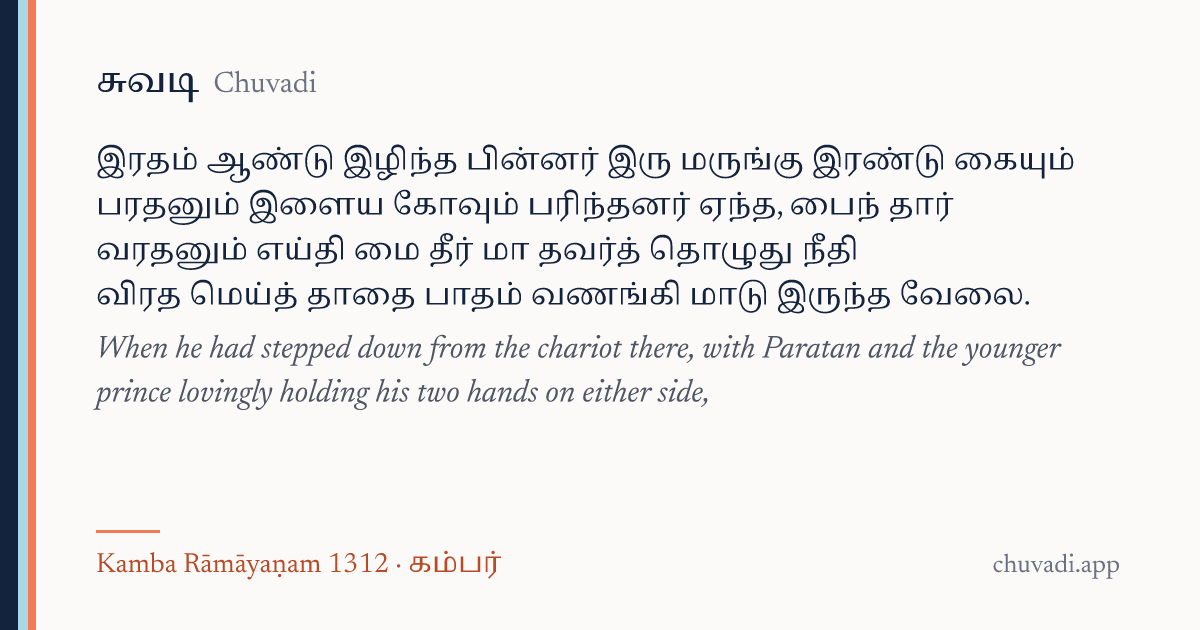
பாடல் · The poem
Tap a word to see its gloss in the commentary and where else it occurs.
பாட வேறுபாடு · Project Madurai reads
பொருள் · Meaning in Tamil
பைந்தார் வரதனும் - பசுமையான மலர் மாலைகளை யணிந்து வேண்டுவார்க்கு வேண்டும் வரம் ஈயவல்ல இராமபிரானும்; இரதம் ஆண்டு இழிந்த பின்னர் - அவ்விடத்தில் தேரின் நின்றும் இறங்கிய பின்பு; இருமருங்கு இரண்டு கையும் பரதனும் இளைய கோவும் பரிந்தனர் ஏந்த எய்தி - இரு பக்கங்களிலும், தனது இரு திருக்கரங்களையும் பரதனும் அவனுக்கு இளையவனான இலக்குவனும் அன்பு கொண்டு (தம் கரங்களால்) ஏந்தா நிற்க, (அந்த மண மண்டபத்தை) அடைந்து; மைதீர் மாதவர்த் தொழுது - குற்றமில்லாத (வசிட்டன், விசுவாமித்திரன் முதலிய) பெருந்தவ முனிவர்களைத் தொழுது; நீதி விரத மெய்த் தாதை பாதம் வணங்கி - முறை தவறாது (மக்கட்கு) நீதி செலுத்துவதையே தன் விரதம் ஆகக் கொண்டுள்ள சத்திய வேந்தனாகிய தன் தந்தை தசரதச் சக்கரவர்த்தியின் பாதங்களை வணங்கி; மாடு இருந்த காலை - (அத்தந்தையின்) பக்கத்திலே வீற்றிருந்த பொழுதில் (சீதா தேவி வந்தாள் எனும் வரும் பாடலோடு இயையும்).
துறவியரும் தந்தையரும் ஒருங்கிருந்தால் மக்கள் துறவியரையே முதலில் வணங்குதல் வேண்டும் எனும் மரபும் உணர்த்தியவாறு. பேரரசர்களை அழைத்துச் செல்கையில் கைலாகு (கையலகு) கொடுத்துச் செல்வது மரபாதலின் “இரு மருங்கு இரண்டு கையும் பரதனும் இளைய கோவும் பரிந்தனர் ஏந்த” என்றார். மாதவர்: வசிட்டர், கோசிகர், சதானந்தர் முதலாயினோர். சக்கரவர்த்தியைத் தொழுது அவனடிக் கீழ் வீற்றிருந்தான் இராமன் என்றது பெரியோர்கள் அநுமதி பெற்ற பின்பே மணத்தவிசு ஏற வேண்டும் என்னும் மரபு குறித்தது.
ஆங்கிலம் · English translationAI
Translation
- When he had stepped down from the chariot there, with Paratan and the younger prince
- lovingly holding his two hands on either side,
- the giver of boons with the fresh garland came in, bowed to the flawless great ascetics,
- bowed at the feet of his truthful father, whose vow is justice, and sat beside him; at that moment...
What the poem says
Irāmaṉ steps down from his chariot and walks into the hall, Paratan and Ilakkuvaṉ supporting him by the arms on either side, as was the custom when escorting a great king.
He bows first to the sages, Vacittaṉ, Vicuvāmittiraṉ, Catāṉantaṉ and the others, since ascetics are honoured even before one's father, and then at the feet of Tacarataṉ, whose vow is to rule justly. He sits beside his father, waiting for the elders' permission before taking the wedding seat. The sentence runs on into the next verse, which tells of Cītai's entrance.