



கம்பராமாயணம் 133 · பால 3.52
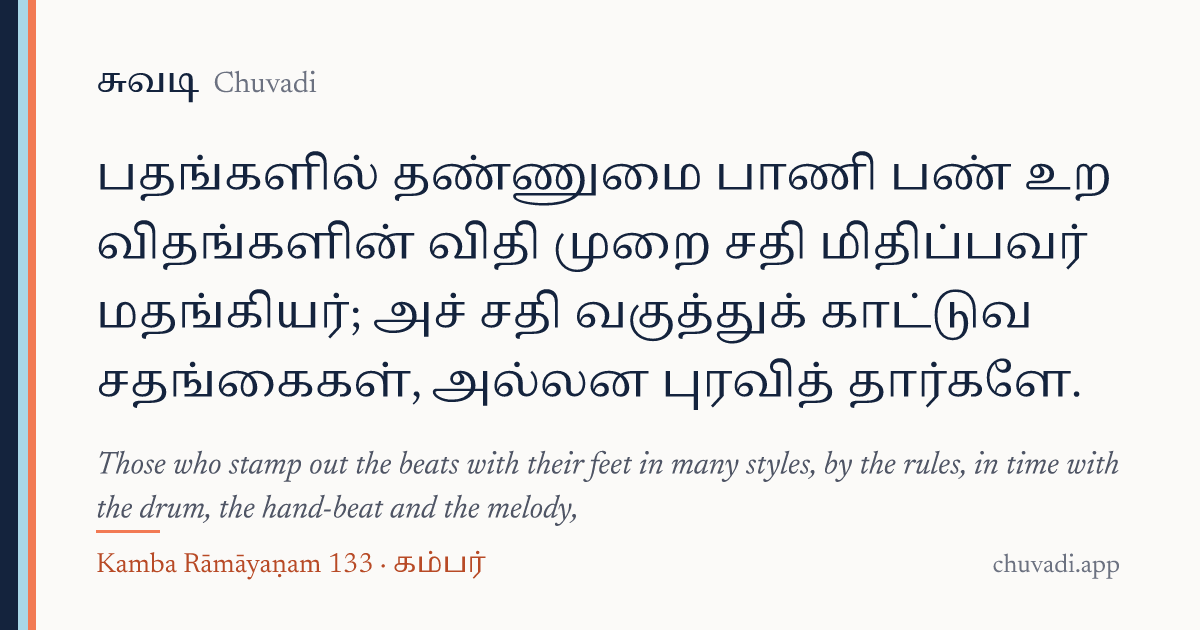
பாடல் · The poem
Tap a word to see its gloss in the commentary and where else it occurs.
பொருள் · Meaning in Tamil
தண்ணுமை, பாணி, பண், உற - மத்தள ஒலி, தாள ஓசை பாட்டு ஒலி இவைகளுக்குப் பொருந்த; விதிமுறை விதங்களின் - நாட்டிய நூல்முறைப்படி பல விதங்களாக; பதங்களில் சதிமிதிப்பவர் - பாதங்களால் சதிபெற வைத்து நடனம் ஆடுபவர்கள்; மதங்கியர் - ஆடல் பாடல்வல்ல பெண்கள் ஆவர்; அச் சதி வகுத்துக்காட்டுவ - அந்தத் தாளச் சதியை விவரித்துக் காட்டுபவை; சதங்கைகள் - அப்பெண்கள் கால்களில் அணிந்துள்ள சதங்கைகளும்; அல்லன புரவித்தாள்களே - அவ்வாறு ஆடுகின்ற குதிரைகளின் கால்களுமே.
அந்த நகரத்துப் பெண்களின் நாட்டியச் சிறப்பும், குதிரைகளின் ஆட்டச் சிறப்பும் கூறப்பட்டன. குதிரை தாளத்துக்கேற்ப ஆடும் என்பதை மேலே (751) எழுச்சிப் படலத்திலும் கூறுவார். பதங்கள்: பாதங்கள். தண்ணுமை: மத்தளம். பாணி: கைத்தலம். சதி: தாளஒத்து. மதங்கியர்: ஆடு மகளிர்.
ஆங்கிலம் · English translationAI
Translation
- Those who stamp out the beats with their feet in many styles, by the rules,
- in time with the drum, the hand-beat and the melody,
- are the dancing women; and what marks out those beats
- is their ankle-bells — and, besides them, the hooves of the horses.
What the poem says
Ayōttī is full of trained dancers who keep exact time with the drum, the clapping and the song, their ankle-bells marking every beat.
The city's horses are trained to step in rhythm as well, as the poet will describe again later in the book when the army sets out.