



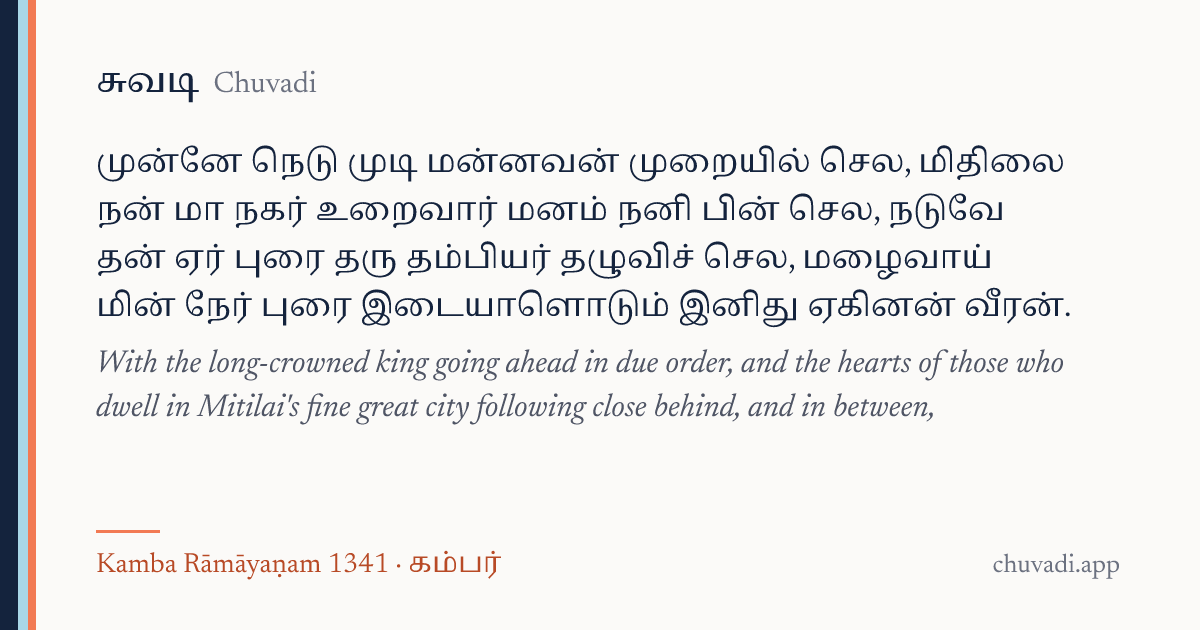
கம்பராமாயணம் 1341 · பால 22.4
பாடல் · The poem
Tap a word to see its gloss in the commentary and where else it occurs.
பாட வேறுபாடு · Project Madurai reads
பொருள் · Meaning in Tamil
நெடுமுடி மன்னவன் - பெரிய மணிமுடியணிந்த தசரத வேந்தன்; முறையின் முன்னே செல - (தனக்குரிய) மரபுப்படி முன்னே செல்லவும்; மிதிலை நல் மாநகர் உறைவார் மனம் - அழகிய மிதிலை மாநகரத்து மக்களின் மனங்கள் யாவும்; நனி பின் செல - (தன்) பின்னே மிகுதியாக வரவும்; நடுவே தன்ஏர்புரை தரு தம்பியர் தழுவிச்செல - இடை நடுவே, தன்னையே அழகில் ஒத்த தம்பியர்கள் தழுவி வரவும்; மழைவாழ் மின்னே புரை இடையாளொடும் - மேகத்தில் வாழ்கின்ற மின்னலையொத்த இடையுடையாளாகிய சானகியுடனே; வீரன் இனிது ஏகினன் - மாவீரனாகிய இராமபிரான் இனிதே சென்றான்.
முன்னே தசரதன்; பின்னே மிதிலை வாழ் மக்களின் மனங்கள்; இடையே தம்பியர் சூழ தான் மின்னிடையாளொடு சென்றான் எனக் கூறி, செல்லும் காட்சியை மன ஓவியப்படுத்துகிறார். வீரன் என்றால், அது இராமனையே குறிக்கும் ஆதலால், அடைமொழி எதுவும் இன்றி “வீரன்” என்றார். “வீரர்களுள் நான் இராமனாய் இருக்கிறேன்” (கீதை; 10;31) என்பது கண்ணன் வாக்கு. “எள்ளரிய குணத்தாலும் எழிலாலும் இந நின்ற வள்ளலையே அனைய” (கம்ப. 656) தம்பியர் ஆதலின், “தன் ஏர் புரை தம்பியர்” என்றார். தன் நேர்புரை எனப் பிரிக்கினுமாம். இராமன் மழைமேகம் அனைய நிறத்தினன்; சீதை மின்னைப்போன்ற நிறத்தினளும் இடையினளும் ஆதலின், “மழைவாழ் மின்னேபுரை இடையாளொடும் ஏகினன்” என்றார். இனி, இந்த மழை மேகத்திடம் அந்த மின்னற் கொடி வாழப்போகிறது என்பதைக் குறிப்பால் உணர்த்த, “மழை வாழ் மின்” என்றார். மிதிலை வாழ் மக்கள் இவர்கள் மேல் கொண்ட அன்பின் மிகுதியால், அவர்கள் உடல் திரும்பினும், உள்ளம் திரும்பாமல் தசரதக் குழுவோடு செல்கிறதாம். அதனை, “மிதிலை நன்மாநகர் உறைவார் மனம் நனிபின் செல” என்று அழகுறக் குறித்தார். இராமன் இருமருங்கினும் தம்பியர் பாதுகாப்புக் கவசம் போலச் சென்றனர் ஆதலின், “நடுவே, தம்பியர் தழுவிச் செல” என்று குறித்தார்.
ஆங்கிலம் · English translationAI
Translation
- With the long-crowned king going ahead in due order, and the hearts of those who dwell
- in Mitilai's fine great city following close behind, and in between,
- his brothers, who matched him in beauty, keeping close about him, with her whose waist
- was like the lightning in the rain cloud, the hero went happily on.
What the poem says
The wedding is over and Tacarataṉ's party leaves Mitilai for Ayōttī. The poet paints the procession: the king in front, the brothers flanking Irāmaṉ like a guard, Irāmaṉ walking with his bride, and the hearts of Mitilai's people trailing behind, though their bodies have turned back home.
Irāmaṉ is simply called "the hero", since no other hero needs naming. He is dark like a rain cloud and Cītai is slender and bright like lightning, so lightning that lives in the cloud hints that she will now live with him.