



கம்பராமாயணம் 1342 · பால 22.5
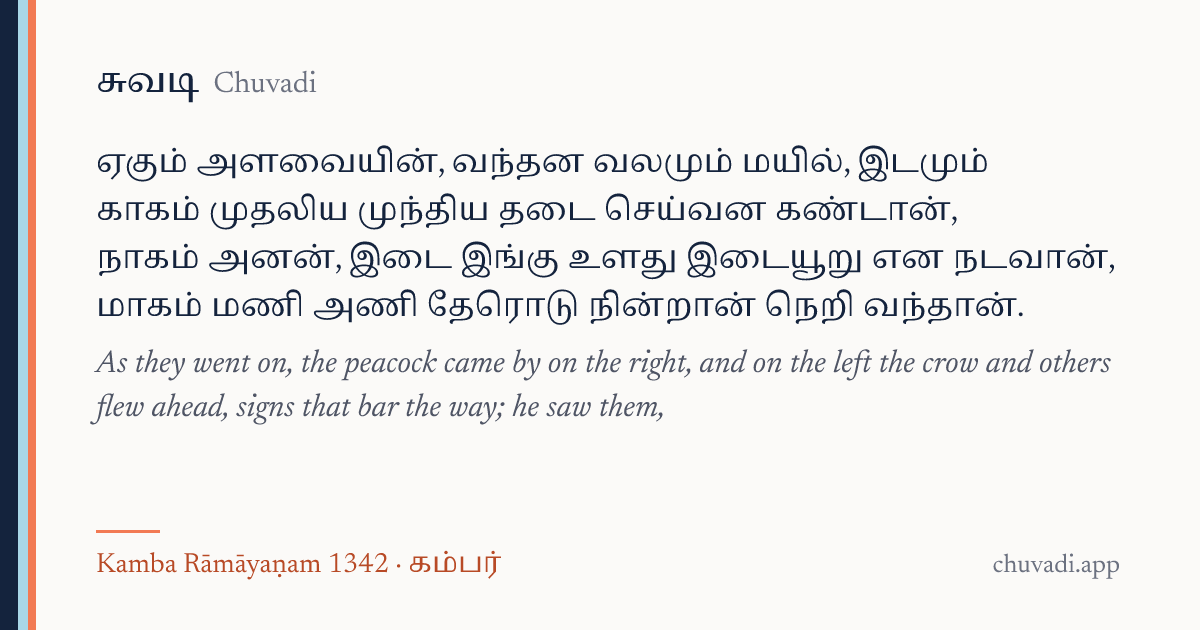
பாடல் · The poem
Tap a word to see its gloss in the commentary and where else it occurs.
பாட வேறுபாடு · Project Madurai reads
பொருள் · Meaning in Tamil
ஏகும் அளவையின் - (இவ்வாறு) செல்கின்ற போது; மயில் - மயில் (முதலிய சில பறவைகள்); வலமும் வந்தன - (சுபசகுனமாக) வலப்புறமாகவும் வந்தனவாகி; காகம் முதலிய - காகம் முதலான சில பறவைகள்; இடமும் - (தீய சகுனமாக) இடப்புறமாகவும், முந்திய - முற்பட்டுச் சென்றனவாகி, தடை செய்வன கண்டான் - தடை செய்வனவற்றைக் கண்டான்; நாகம் அனன் - (பெருமித நடையழகால்) யானையைப் போன்றவனான தசரத வேந்தன்; “இங்கு இடையூறு உளது” என - “இவ் வழியில் ஏதோ தடை ஏற்பட உள்ளது” என்று; நடவான் - (மேலும்) செல்லாதவனானான்; நெறிவந்தான் - அறநெறியின் வழி வந்தவனாகிய தசரதன்; மாகம்மணி அணி தேரொடு நின்றான் - விண் அளாவிய அழகிய தேரோடு அங்கேயே நின்று விட்டான்.
சகுன நூலார், கருடன், காடை, கழுகு, ஆந்தை, உடும்பு, கீரி, குரங்கு முதலியவை வலமிருந்து இடம் போயின் உத்தமம் என்றும், நாரை, காக்கை, செம்போத்து, கிளி, கொக்கு, மயில், கோழி, ஓணான், புள்ளிமான், புனுகுப்பூனை, புலி, நரி, முதலியவை வலமிருந்து இடமாயின உத்தமம் என்றும் உரைப்பவர். இவற்றுள் இடம் ஆகுபவை வலமும், வலம் ஆகுபவை இடமும் ஆயின் சகுனத்தடையாம். தசரதனுக்கு உத்தம சகுனமும் தடைச் சகுனமும் ஒருங்கு நிகழ்ந்தனவாதலின், மேலே பயணம் தவிர்ந்து நின்றான். மலை போன்றவன் எனினும் சகுனத்துக்கு அஞ்சினான்; “அஞ்சுவது அஞ்சாமை பேதைமை” (திருக். 422) யாதலின். தொன்றுதொட்டு அறநெறி தவறாத இட்சுவாகு குலத்து உதித்தவனாதலின் தசரதனை “நெறிவந்தான்” என்றார். “நெறி வந்தான் வலமும் வந்தன (எனினும்) காகம் முதலியன தடை செய்வன கண்டான், இடையூறுளதென நடவான், நின்றான்” என வினை முடிபு செய்க.
ஆங்கிலம் · English translationAI
Translation
- As they went on, the peacock came by on the right, and on the left
- the crow and others flew ahead, signs that bar the way; he saw them,
- and he who was like an elephant said, 'There is some hindrance here,' and went no further;
- he who came of the righteous line stood still with his tall, jewelled chariot.
What the poem says
On the road home Tacarataṉ sees mixed omens: a peacock on the auspicious right, but crows and other birds crossing on the left in a way that signals an obstacle. The king, majestic as an elephant, halts his chariot.
Mighty as he is, he respects the omens, since, as the Kuṟaḷ says, it is folly not to fear what ought to be feared. He is called "the one who came by the right path" because he belongs to the Ikṣvāku line that never strayed from dharma.