



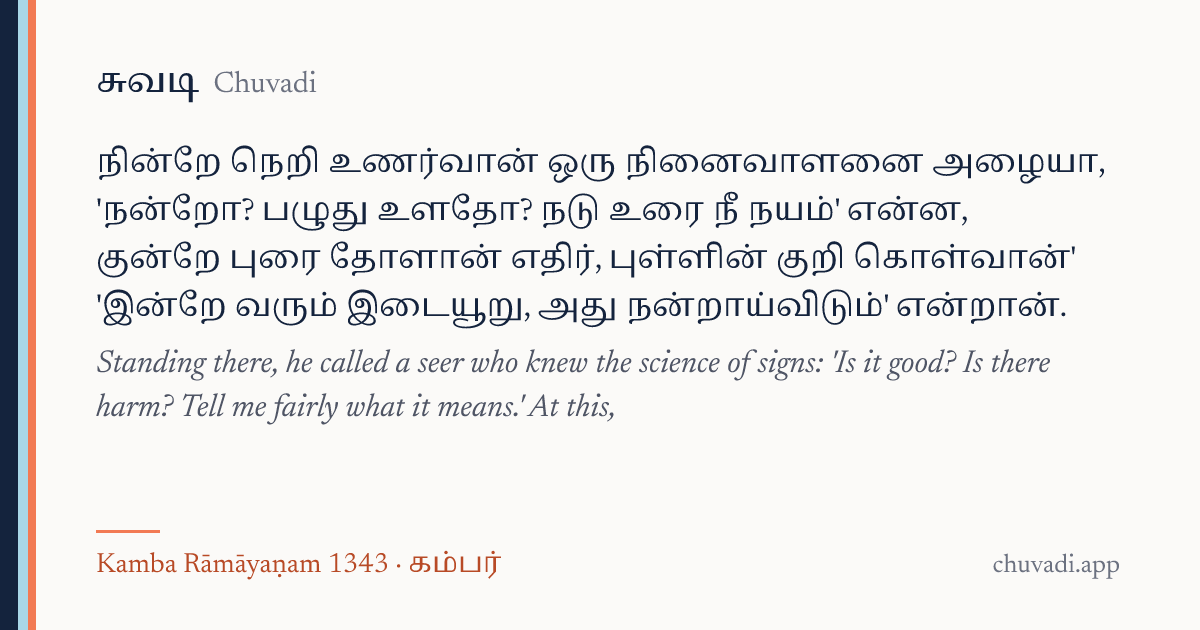
கம்பராமாயணம் 1343 · பால 22.6
பாடல் · The poem
Tap a word to see its gloss in the commentary and where else it occurs.
பொருள் · Meaning in Tamil
நின்று - தசரதன் (இவ்வாறு) நின்று; நெறியுணர்வான் ஒரு நினைவாளனை அழையா - சகுன நூலின் நெறி முறைமையை நன்கு அறிகின்ற ஆய்வாளன் ஒருவனை (நிமித்திகனை) அழைத்து; “நன்றோ? பழுது உளதோ?” - (இச்சகுனத்தால்) நன்மை விளையுமா? தீமை விளையுமா?; நீ நயம் நடு உரை - நீ விளைவை நடுநிலைமையுடன் சொல்வாய்; என்ன - என்று வினாவ; குன்றே புரை தோளான் எதிர் - மலையினையே போன்ற தோள்களையுடைய அத்தசரத வேந்தனின் எதிரில்; புள்ளின் குறி கொள்வான் - பறவைகளின் (நிமித்தக்) குறிகளை அறிபவனாகிய அந்நிமித்திகன்; இடையூறு இன்றே வரும் - இடையூறு ஒன்று இப்பொழுதே வரும்; அது நன்றாய் விடும் என்றான் - (வந்த விரைவிலேயே) அவ்விடையூறு நன்றாகவும் முடிந்துவிடும் என்று கூறினான்.
நிமித்தம் - காரணம். சகுனத்தின் காரணங்களை அறிந்து கூறுவான் நிமித்திகன் ஆதலின், அவனை “நெறியுணர்வான் நினைவாளன்” என்றார். அழையா - செய்யா என்னும் வினை எச்சம். காகம் முதலியன இடம் ஆதலின், இடையூறு வரும் என்றும், மயில் முதலிய வலம் ஆதலின் அது நன்மையாய் முடியும் என்றும் நிமித்திகன் கூறினான்.
ஆங்கிலம் · English translationAI
Translation
- Standing there, he called a seer who knew the science of signs:
- 'Is it good? Is there harm? Tell me fairly what it means.' At this,
- before the king whose shoulders were like hills, the reader of bird-omens
- said, 'A hindrance will come this very day, and it will turn out well.'
What the poem says
Tacarataṉ summons an omen-reader and asks him to judge the signs impartially. The seer reads both kinds: the crows on the left mean an obstacle is coming at once, and the peacock on the right means it will end well.
The prophecy prepares for the sudden arrival of Paracurāmaṉ in the verses that follow.