



கம்பராமாயணம் 1344 · பால 22.7
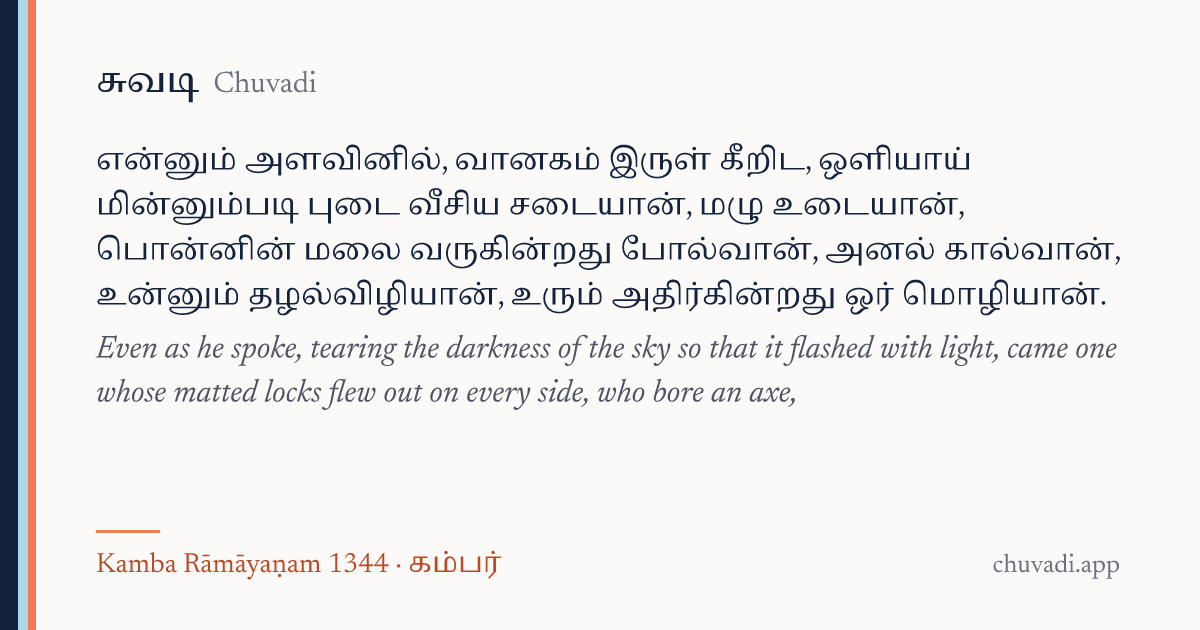
பாடல் · The poem
Tap a word to see its gloss in the commentary and where else it occurs.
பாட வேறுபாடு · Project Madurai reads
பொருள் · Meaning in Tamil
என்னும் அளவினில் - என்று (நிமித்திகன்) சொல்லி முடிக்கும் போதிலே; வான் அகம் இருள் கீறிட - ஆகாயத்தில் பொருந்தியிருந்த இருள் சிதைந்து ஒழிந்து; ஒளிஆய் மின்னும்படி - ஒளி செய்து விளங்கும்படி; புடை வீசிய - பக்கங்களில் எல்லாம் பரவுமாறு; சடையான் - சடையினை யுடையவனும்; மழுவுடையான் - கோடரிப் படையையுடையவனும்; பொன்னின் மலை வருகின்றது போல்வான் - பொன் மயமான மேரு மலை நடந்து வருவது போல் வருபவனும்; அனல் கால்வான் - மூச்சில் நெருப்புச் சிந்துபவனும்; உன்னும் தழல் விழியான் - (யாரிடம் இத்துணை வெகுளியென்று காண்பார் நினைக்குமாறு) தழல் சிந்தும் விழிகளையுடையவனும்; உரும் அதிர்கின்றது ஒர் மொழியான் - இடியும் அஞ்சி நடுங்கும் தன்மையுடன் கூடிய ஒப்பற்ற சொற்களையுடையவனும்.
இவை யனைத்தும் பரசுராமனுக்கு அடைமொழிகள். “என்னும் அளவினில்” எனும் இத்தொடர் மேல் வரும் “மழுவாளவன் வந்தான்” (கம்ப.) என்பதோடு முடியும். “சடையான்” என்பதனால் முனிவன் என்பதையும் “மழு உடையான்” என்பதனால் அம் முனிவன் பரசுராமன் என்பதனையும் முதலிலேயே தோன்ற வைத்த திறம் காண்க. மழு - பரசு. “சடையான் மழு உடையான்” என்பதனில் உள்ள சொல் இன்பம் நினைக்க இனிப்பது. நடவாதது மலை; இவனோ நடக்கும் பொன்மலை என்பார், “பொன்னின் மலை வருகின்றது போல்வான்” என்றார். இல்பொருள் உவமை. அனல் மூச்சும், தழல் விழியும் இடி மொழியும் அவன் கொண்டுள்ள வெகுளியின் அளவு காட்டின. இனிப் பரசுராமனின் வண்ணனையாக வரும் பாடல்களின் சந்தம், வெகுளிப் பொருளுக்கேற்ற சந்தமும் மிடுக்கும் என அமைந்துள்ளன.
(இது முதல் ஒன்பது கவிகள் பரசுராமனின் வருணனை)
ஆங்கிலம் · English translationAI
Translation
- Even as he spoke, tearing the darkness of the sky so that it flashed
- with light, came one whose matted locks flew out on every side, who bore an axe,
- who came like a mountain of gold on the move, whose breath poured fire,
- whose eyes blazed with flame, whose every word was like rolling thunder.
What the poem says
The obstacle arrives at once. This verse begins a long portrait of Paracurāmaṉ, the Brahmin warrior with the axe; the sentence runs on through several verses before its main verb, "the axe-bearer came".
The matted hair marks him as a sage, and the axe (paracu) tells us which sage. A mountain does not walk, so "a walking mountain of gold" is a comparison with something that does not exist. His fiery breath, burning eyes and thunderous voice measure his fury, and the rhythm of these verses is made harsh and forceful to match.