



கம்பராமாயணம் 1350 · பால 22.13
பாடல் · The poem
Tap a word to see its gloss in the commentary and where else it occurs.
பாட வேறுபாடு · Project Madurai reads
பொருள் · Meaning in Tamil
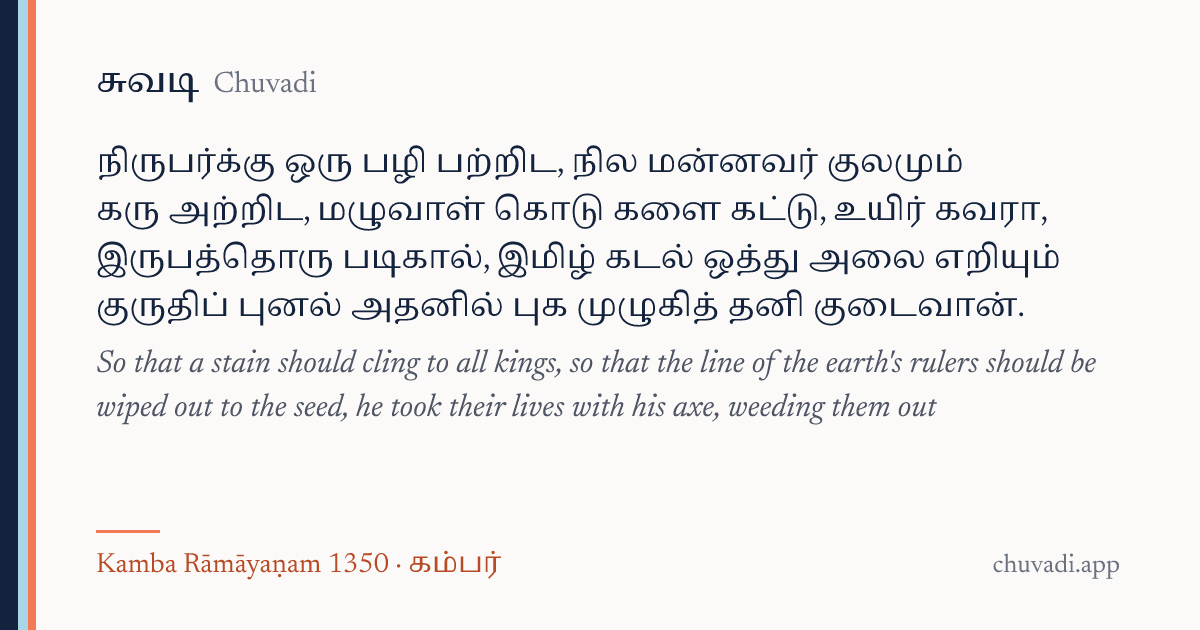
நிருபர்க்கு ஒருபழிபற்றிட - (உலகாளும்) அரசர்கட்கு எல்லாம் (தன் தந்தையைக் கொன்றதனால்) ஒப்பற்ற பழியொன்று பற்றிக்கொள்ள; நிலமன்னவர்குலமும் - அவ் அரசர்குலம் முழுவதும்; கரு அற்றிட - கரு அற்று ஒழியும்படி; இருபத்தொரு படிகால் - இருபத்தொரு தலைமுறை; மழுவாள் கொடு - (தன்) மழுவாயுதத்தைக் கொண்டு; உயிர் கவரா - அவர்களைக் கொன்று உயிர்களை வாங்கி; களைகட்டு - இங்ஙனம், (பூமியிலுள்ள) களைகளைப் பறித்து; எழுகடல் ஒத்து அலை எறியும் - (பொங்கி) எழும்கடலைப் போன்று அலை வீசுகின்ற; குருதிப் புனல் அதனில் - (அம் மன்னர்களின்) இரத்த வெள்ளத்தில்; புக முழுகித் தனி குடைவான் - (தன்னுடல்) அமிழும்படி மூழ்கித் தனியே நீராடுபவனும் -
பரசுராமன் கார்த்தவீரியார்ச்சுனனைக் கொன்றமைக்காக, கார்த்தவீரியனின் மக்கள், பரசுராமனின் தந்தையைக் கொன்று பழிவாங்கினர். பரசுராமனின் தாய், கணவன் இறந்தவுடன் இருபத்தொரு முறை, மார்பில் அடித்து அழுததற்காக, இருபத்தொரு தலைமுறை அரச குலத்தைப் பழிவாங்குவேன் எனப் பரசுராமன் சபதமிட்டதாகப் பாகவதம் கூறும். அரசர்கள் இரத்தத்தில் சியமந்த பஞ்சகம் எனும் ஐந்து இரத்தக் குளங்களை ஏற்படுத்தி, பரசுராமன் அதில் குளித்தான் ஆதலால், “இமிழ் கடல் ஒத்து அலை எறியும் குருதிப் புனல் அதனில் புக முழுகி” என்றார். ஓர் அரசன் ஒரு நிரபராதியைக் கொன்றதனால் வந்த பழி, அரச குலம் முழுவதையும் பாதித்த செயலுக்கு வருந்துபவராய், “நிருபர்க்கு ஒரு பழிபற்றிட” என்றார். படிகால் - தலை முறை. “ஏழேழ் படிகால் எமையாண்ட எம்மான்” (1086 - 9) என்பது தேவாரம்.
ஆங்கிலம் · English translationAI
Translation
- So that a stain should cling to all kings, so that the line of the earth's rulers
- should be wiped out to the seed, he took their lives with his axe, weeding them out
- for twenty-one generations, and in the stream of blood that heaved in waves
- like the roaring sea he plunged and bathed, alone;
What the poem says
Kārttavīryārjuṉaṉ's sons avenged their father by killing Paracurāmaṉ's father. Because his mother beat her breast twenty-one times in grief, Paracurāmaṉ vowed to destroy the royal line for twenty-one generations, and he bathed in pools filled with the blood of kings.
The commentary notes the poet's regret that one king's killing of an innocent man brought a curse on the whole royal class. The kings are pictured as weeds pulled from the field of the earth.