



கம்பராமாயணம் 1355 · பால 22.18
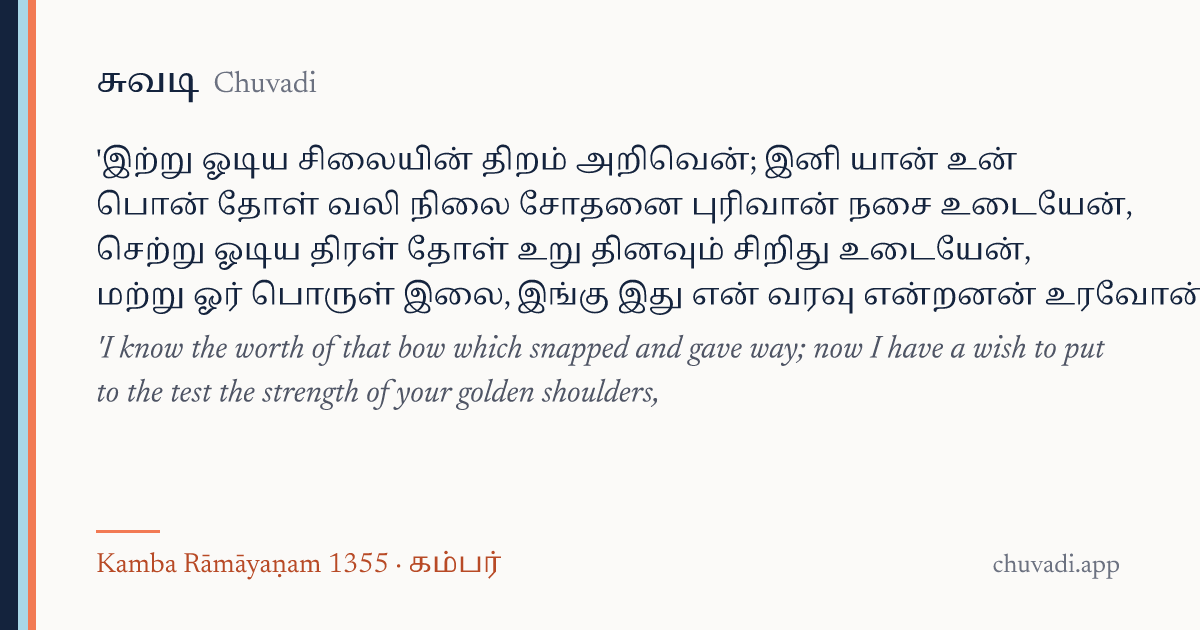
பாடல் · The poem
Tap a word to see its gloss in the commentary and where else it occurs.
பொருள் · Meaning in Tamil
யான், இற்று ஓடிய சிலையின் திறம் அறிவென் - நான், (முன்னமே நீ) முறித்து ஒழித்த வில்லின் திறத்தை (அது முன்பே முறிந்திருந்தது என்பதை) அறிவேன்; இனி உன் பொன் தோள்வலி நிலை - இப்பொழுது நான் உன்னுடைய அழகிய தோள் வலிமையின் நிலையை; சோதனை புரிவான் நசை உடையேன் - சோதித்து அறிய விருப்பம் சிறிது உடையேன்; செற்று - (அரசர்களை) அழித்து; ஓடிய - மேம்பட்ட; திரள் தோள் உறு தினவும் - திரண்ட தோள்களில் பொருந்தின தினவும் சிறிது எனக்கு உண்டு; இங்கு இது என் வரவு மற்று ஓர் பொருள் இலை - இங்கு எனது வருகைக்குக் காரணம் இதுவே, வேறு ஒரு காரணமும் இல்லை என்று; உரவோன் என்றனன் - வலிமை மிக்க பரசுராமன் கூறினான்.
சிவ பெருமான் வில் முன்பே முறிந்தவில், அதனை முறித்ததற்காகக் கர்வங் கொள்ளாதே எனக் குற்றம்கூறும் பரசுராமன் தான் மிகப்பெருங் கர்வத்தோடு பேசுகிறான்; கர்வங் கொள்பவர் தன் குற்றம் அறியார் என்பது குறித்தார். புரிவான் - பொருட்டுப்பொருளில் வந்த வினையெச்சம். உன் தோள் வலிவைச் சோதனையிடவும், என் தோள் தினவைச் சிறிது அடக்கி கொள்ளவும் ஆகிய இரு செயல்களுக்காகவே இங்கு வந்தேன்; வேறோர் காரியமில்லை என்கிறான் பரசுராமன்.
ஆங்கிலம் · English translationAI
Translation
- 'I know the worth of that bow which snapped and gave way; now I
- have a wish to put to the test the strength of your golden shoulders,
- and I have a little itch, besides, in my thick shoulders that have crushed so many;
- there is no other reason; this is why I have come here,' said the mighty one.
What the poem says
Paracurāmaṉ addresses Irāmaṉ with contempt. The bow of Civaṉ that Irāmaṉ broke at Mitilai was already cracked, he says, so there is nothing to be proud of. He has come only to test Irāmaṉ's strength and to ease the itch in his own arms for a fight.
The commentary points out the irony: the man who rebukes Irāmaṉ for pride is himself swollen with it, for the proud never see their own fault.