



கம்பராமாயணம் 1357 · பால 22.20
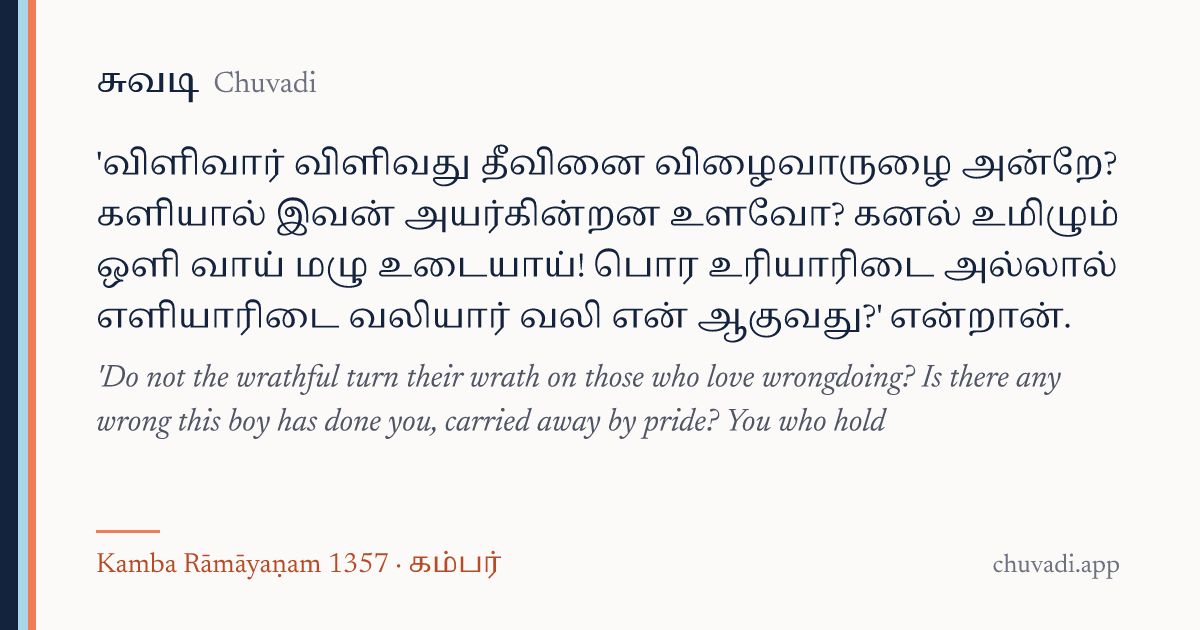
பாடல் · The poem
Tap a word to see its gloss in the commentary and where else it occurs.
பொருள் · Meaning in Tamil
கனல் உமிழும் ஒளிவாய் மழு உடையாய்! - “தீயைச் சிந்தும் ஒளியமைந்த மழு என்னும் படையை ஏந்தியவனே!; விளிவார் விளிவது - சினங் கொள்வார் சினங் கொள்வது; தீவினை விழைவார் உழை அன்றோ? - தீவினைகளை விரும்புவோரிடம் அன்றோ?; இவன் களியால் அயர்கின்றன உளவோ? - இந்த இராமன் (கல்வி, செல்வம், அதிகாரம் முதலியவற்றால் வரும்) செருக்கினால் அறிவு தளர்ந்து நின்பால் புரிந்த தீங்குகள் (எவையேனும்) உள்ளனவோ?; பொர உரியாரிடை அல்லால் - போரிடற்கு உரிய ஆற்றல் உடையாரிடத்து அன்றி; எளியாரிடை - வலிமையற்ற எளியோரிடத்தே; வலியார் வலி என் ஆகுவது? என்றான் - வலியோரின் ஆற்றல் என்ன பயனைச் செய்யவல்லது” என்றான் (தசரதன்).
விளிவு: கடுங்கோபம். “செல்லிடத்துக் காப்பான் சினங்காப்பான்” (திருக். 301) “செல்லா இடத்துச் சினம் தீது” (திருக். 302) என்ப ஆதலான், நின்கடுங்கோபம் அல்லா இடத்தில் செல்கின்றது என்றும் தீவினையே புரியாத இவனிடம் உள்ள செருக்கின் காரணம் ஆகச் சினமுறலாமே எனின் “களியால் இவன் அயர்கின்றன உளவோ?” என்றும் கெஞ்சிக் கேட்கிறான் தசரதன். போர் எனும் சொல்லே பொரு எனும் சொல்லடியாகப் பிறந்தது. பொருதல்: ஒத்திருத்தல் (பொருநர்: ஒத்த வேடம் இட்டிருப்போர்). நீ உனக்குச் சமமாகாத ஒரு பாலகனிடம் போரிட நினைப்பது உன் பேராற்றற்கு என்றும் தீராத இழுக்காக முடியும் என்பான், “பொர உரியாரிடையல்லால், எளியாரிடை வலியார் வலி என்னாகுவது?” என்றான். “மாறன் மையின் மறம் வாடும் என்று இளையோரையும் எறியான்” (சிந்தா. 2601) என்பார் பிறரும்.
ஆங்கிலம் · English translationAI
Translation
- 'Do not the wrathful turn their wrath on those who love wrongdoing?
- Is there any wrong this boy has done you, carried away by pride? You who hold
- the bright-edged axe that spits fire! Except against those fit to fight,
- what does the might of the mighty come to against the weak?' he said.
What the poem says
Tacarataṉ keeps pleading. Anger is rightly turned on wrongdoers, but Irāmaṉ has done nothing wrong, nor has he grown arrogant. Echoing the Kuṟaḷ, which says anger should be restrained where it can take effect and is evil where it cannot, the king suggests the sage's anger is out of place.
His last argument is about honour: a fight is a fight only between equals, and turning great strength on a mere boy would shame the strong. A line from the Cīvakacintāmaṇi makes the same point about a warrior who would not strike the young.