



கம்பராமாயணம் 1360 · பால 22.23
பாடல் · The poem
Tap a word to see its gloss in the commentary and where else it occurs.
பாட வேறுபாடு · Project Madurai reads
பொருள் · Meaning in Tamil
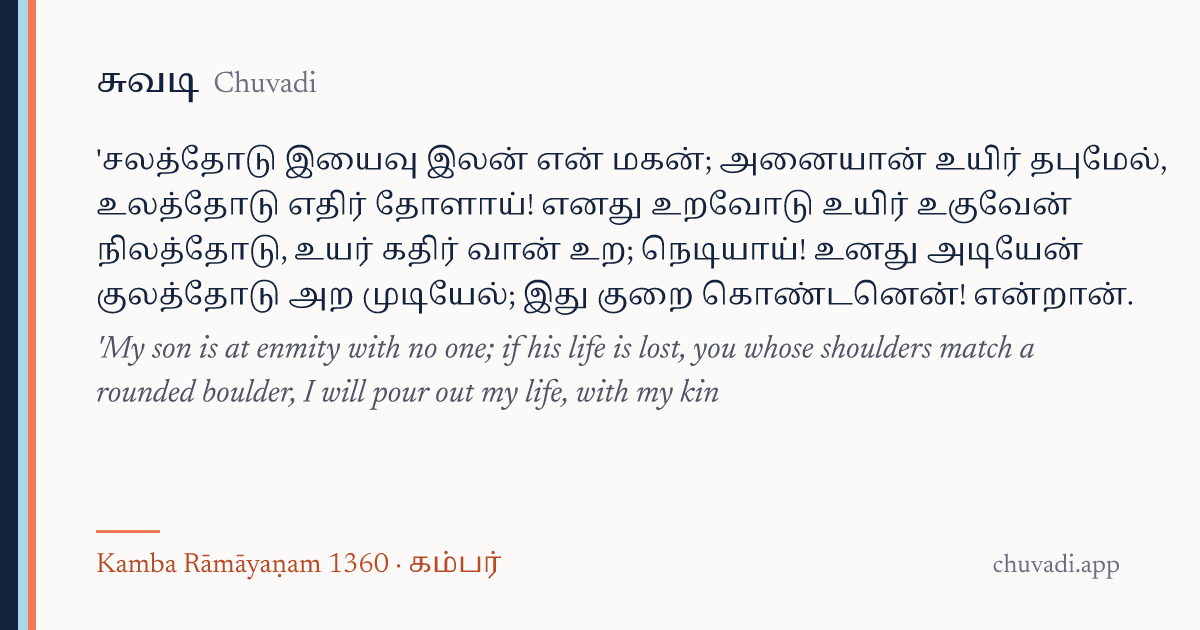
“என் மகன் சலத்தோடு இயைபு இலன் - “என் மகனாகிய இராமன் (உன்னோடு) பகைமை பூண்டவன் அல்லன்; அனையான் உயிர்தபுமேல் - அவனுடைய உயிர் உடலை விட்டு ஒழியுமாயின்; உலத்தோடு எதிர் தோளாய் - திரண்ட கல்லை ஒத்த தோளானே; எனது உறவோடு - என்னுடைய சுற்றத்தாரோடும்; நிலத்தோடு உயர் கதிவான்உற உயிர் உகுவேன் - என் நாட்டாரோடும் உயர் நிலையுடைய வானுலகையடையுமாறு என் உயிரை ஒழித்து இறப்பேன்; நெடியாய் - உயர்ந்தோங்கியவனே! உனது அடியேன் - நான் உன் அடியில் சரண் என்று கிடக்கிறேன்; குலத்தோடு அறமுடியேல் - என் குலத்தோடு என்னை அழித்தொழித்து விடாதே!; இது குறை கொண்டனன்” என்றான் - இவ் வேண்டுகோளை உன்னிடம் விண்ணப்பித்துக் கொண்டேன் என்று (இரந்து) வேண்டினான் (தசரதன்).
பகைவரையும் மன்னிப்பது தெய்வப்பண்பு; பகைவரை அழிக்க நினைப்பது மானுடப் பண்பு; பகையாதவரையும் அழிக்க நினைப்பது மிகத் தாழ்ந்த அசுரப்பண்பு ஆதலின், அதனை நினைவூட்டுவான் போல, “சலத்தோடு இயைவிலன் என்மகன்” என்றான். சலம்: பகைமை. இவனை மட்டும் அழித்தல் உன்னால் இயலாது: இவன் அழிவோடு என் அழிவும், என் நாட்டு மக்கள் அழிவும் பின்னிப் பிணைந்துள்ளது. “குலத்தோடு அற முடியேல்” என நெஞ்சுருக வேண்டினான். சினத்தோடு நிமிர்ந்து நிற்கும் பரசுராமன் பாதங்களின் மேல் தசரதன் கவலையால் சுருங்கி வீழ்ந்து கிடப்பதை “நெடியாய்! உனது அடியேன்” எனச் சொல் ஓவியமாக்கிக் காட்டுகிறார். உலம்: திரண்ட கல். தபுத்தல்: அழித்தல்.
ஆங்கிலம் · English translationAI
Translation
- 'My son is at enmity with no one; if his life is lost,
- you whose shoulders match a rounded boulder, I will pour out my life, with my kin
- and my land, to reach the high bright heaven. Lofty one, I am your servant;
- do not wipe me out with all my line; this is my plea to you,' he said.
What the poem says
Tacarataṉ's plea reaches its height. Irāmaṉ bears no one enmity, and to destroy someone who is not even an enemy is the way of demons, not of gods or even of men. If Irāmaṉ dies, the king, his family and his whole people die with him, so killing the boy means destroying the dynasty.
"Lofty one, I am at your feet" sketches the scene: the sage standing tall in his anger, the old king shrunk with grief at his feet.