



கம்பராமாயணம் 1364 · பால 22.27
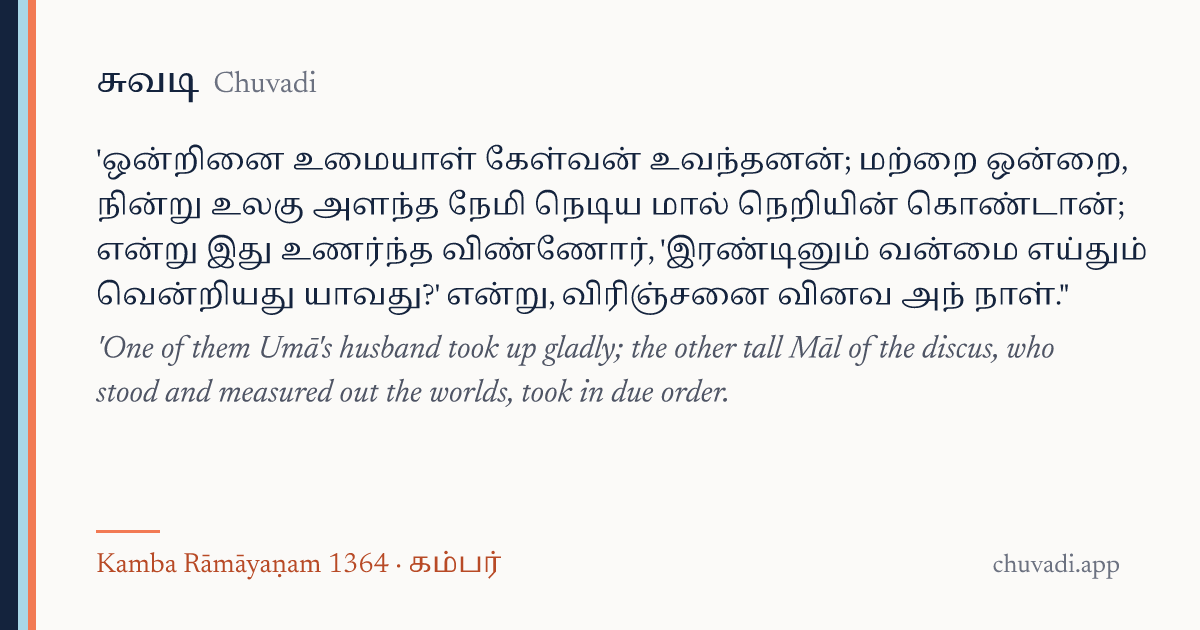
பாடல் · The poem
Tap a word to see its gloss in the commentary and where else it occurs.
பாட வேறுபாடு · Project Madurai reads
பொருள் · Meaning in Tamil
ஒன்றினை - (அவ்விரண்டு விற்களுள்) ஒரு வில்லை; உமையாள் கேள்வன் - உமையம்மையின் கொழுநனான சிவபெருமான்; உவந்தனன் - விரும்பியெடுத்துக் கொண்டான்; மற்றையொன்றை - மற்றொரு வில்லை; நின்று உலகு அளந்த நேமி நெடியமால் - (திரிவிக்கிரமனாய்) உயர்ந்து நின்று, உலகங்களைத் (திருவடியால்) அளவிட்ட சக்கரப் படையினை ஏந்திய நெடியோனாகிய திருமால்; நெறியின் கொண்டான் - முறைப்படி தன் கைகளில் கொண்டான்; என்று இது உணர்ந்த - என்ற இச்செய்தியை யறிந்து; விண்ணோர் - தேவர்கள்; “இரண்டினும் வன்மை எய்தும் வென்றியது எது” - “இவ்விரண்டு விற்களுள்ளும் வலிமை பொருந்திய வெற்றி தரும் வில் எது?”; என்று விரிஞ்சனை வினவ; அந்நாளில் - என்று பிரமனைக் கேட்ட அந்த நாளில் (அவன், “அமர் மூட்டிவிட்டான்” எனும் மேற் கவியோடு முடியும்).
இடப்பாகமாக உமையம்மையை ஏற்றுள்ள திறம் நோக்கி, “உமையாள் கேள்வன்” எனச் சிவபெருமானைச் சிறப்பித்தார். “ஓங்கி உலகளந்த உத்தமன்” (திருப்பா. 3) ஆன சிறப்புப் பற்றி “நின்று உலகு அளந்த நேமி நெடியமால்” என்று திருமாலைச் சிறப்பித்தார். விரிஞ்சன்: நான்முகன்.
ஆங்கிலம் · English translationAI
Translation
- 'One of them Umā's husband took up gladly; the other
- tall Māl of the discus, who stood and measured out the worlds, took in due order.
- The gods, learning of this, asked, “Of these two, which is the one
- that holds the greater might and victory?” They put this to Viriñcaṉ, and on that day...'
What the poem says
Civaṉ, Umā's husband, took one of the two bows, and Viṣṇu (Māl), who as Trivikrama grew tall and measured the worlds in his strides, took the other. The gods, curious, asked Brahmā, here called Viriñcaṉ, which of the bows was the stronger.
The sentence runs on into the next verse, which tells what Brahmā did.