



கம்பராமாயணம் 1363 · பால 22.26
பாடல் · The poem
Tap a word to see its gloss in the commentary and where else it occurs.
பாட வேறுபாடு · Project Madurai reads
பொருள் · Meaning in Tamil
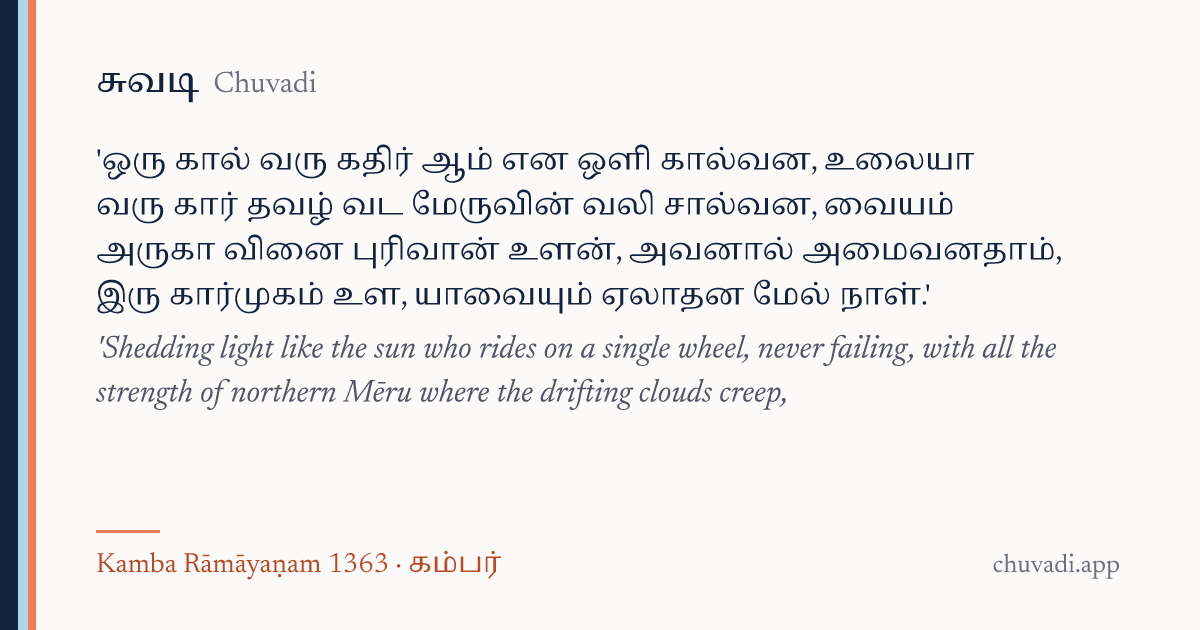
ஒருகால் வரு கதிராம் - ஒற்றைச் சக்கரத்தினையுடைய தேரின் மீது வருகிற சூரியன்; என ஒளிகால்வன - என்னுமாறு ஒளி விடுவனவும்; உலையா - (எளிதில்) அழிக்கப்படாதனவும்; வருகார் தவழ் வடமேருவின் வலி சால்வன - வானில் தவழும் மேகம் உலாவும் வடமேரு மலையினது வலிமை பொருந்தியனவும்; வையம் அருகா வினை புரிவான் உளன் அவனால் அமைவனதாம் - நிலவுலகத்தார் நெருங்குதற்கும் இயலாத (தெய்வத் தன்மையுள்ள) சிற்பத் தொழிலைப் புரிபவனான விசுவ கர்மாவினால் (வடிவு) அமைக்கப்பட்டனவும்; யாவையும் ஏலாதன - எவற்றையும் தமக்கு உவமையாக ஏற்காதவையுமாகிய; இருகார் முகம் - இரண்டு விற்கள்; மேல்நாள் உள - முற்காலத்தில் இருந்தன.
“ஒருகால் வரு கதிர்” என்பதில் கால் என்பது சினையாகுபெயராய், ஒரு காலையுடைய சூரியன் தேரினைக் குறித்தது. வையம் - இடவாகு பெயராய் வையத்து மக்களைக் குறித்து நின்றது. “அவன் திறமைக்குப் பக்கத்தில் யாரும் செல்ல முடியாது” எனும் வழக்கையும்கொண்டு, “வையம் அருகா வினைபுரிவான்” என்று விற்களையுருவாக்கிய விசுவகர்மனைப் புகழ்ந்தார்.
இது முதல் ஆறு கவிகள் - சிவதனுசின் வரலாறு.
ஆங்கிலம் · English translationAI
Translation
- 'Shedding light like the sun who rides on a single wheel, never failing,
- with all the strength of northern Mēru where the drifting clouds creep,
- fashioned by one who works a craft the world cannot come near,
- there were once two bows, which nothing could be likened to.'
What the poem says
Paracurāmaṉ begins his story. Long ago there were two bows, bright as the sun in his one-wheeled chariot and strong as Mount Mēru, made by Viśvakarmā, the divine craftsman whose skill no mortal can approach. Nothing could be compared to them.
This verse opens a run of six verses telling the history of Civaṉ's bow.