



கம்பராமாயணம் 1362 · பால 22.25
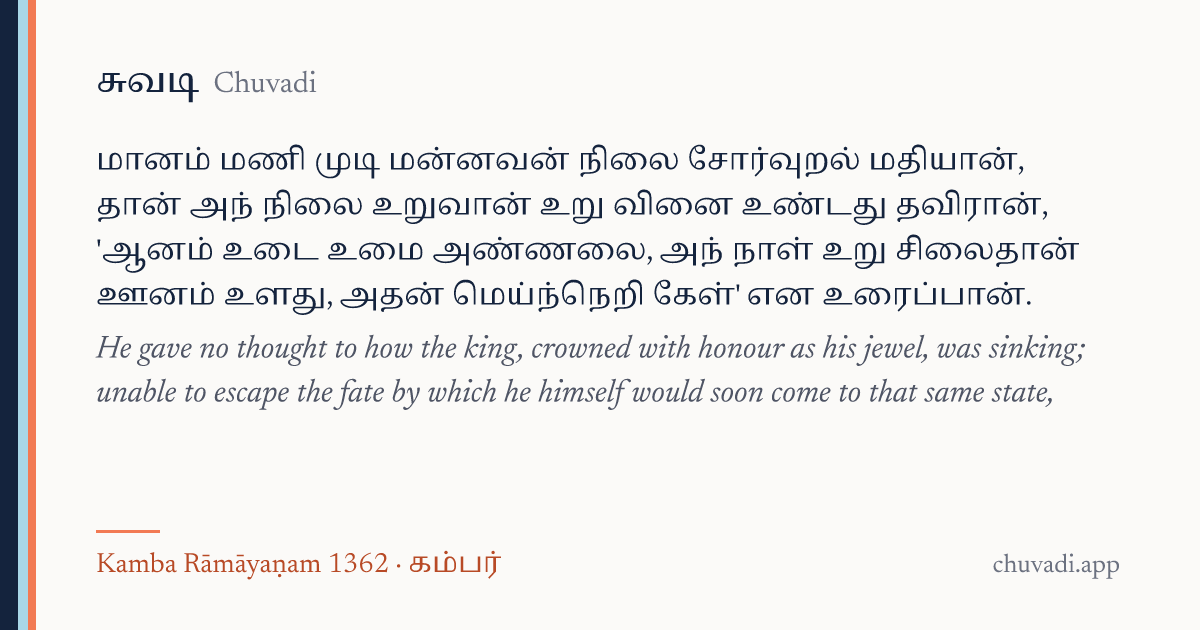
பாடல் · The poem
Tap a word to see its gloss in the commentary and where else it occurs.
பாட வேறுபாடு · Project Madurai reads
பொருள் · Meaning in Tamil
மானம் மணிமுடி மன்னவன் - மானத்தையே அணியாகக் கொண்ட மணி முடி சூடிய தசரதன்; நிலை சோர்வுறல் மதியான் - (அந்த மானம் நிலை தளர்வது எண்ணி) மயங்கும் நிலையடைவதைச் (சிறிதும்) கருதாதவன் ஆனான் (பரசுராமன்); அந்நிலை தான் உறுவான் உறுவினை உண்டது தவிரான் - அந்த நிலையை (விரைவில்) தான் அடைய இருப்பதற்கான ஊழ்வினை உண்டாயிருப்பதை விலக்க வகையற்றவனாய்; ஆனம் உடை - எருதை வாகனமாகவுடைய; உமை அண்ணலை - உமையவள் கேள்வனாகிய சிவ பெருமானை; அந்நாள் உறுசிலை தான் - அக்காலத்தில் அடைந்த வில்லானது; ஊனம் உளது - குறைபாடுடையது; அதன் மெய்ந் நெறிகேள்! - (அதனால் அதனை முறித்துவிட்டாய்) அந்த வில் வந்த உண்மையான வழியை (இப்போது உரைக்கிறேன்) கேள்! என உரைப்பான் - என்று பரசுராமன் கூறத் தொடங்கினான்.
அரசர்கட்கு, மானமே அணியாக உடையவர் எனும் பொருளுடைய “மானாபரணர்” என ஒரு பெயருள்ளமை கருதி, “மானம் அணி முடி மன்னவன்” என்றார். செய்யுளாதலின் ஓசை யின்பங்கருதி, “மானம் அணி” என்பது “மானம்மணி” என விரிந்து வந்தது. மூன்றாம் அடியில் “மானம் உடை” என்பதும் இவ்வாறே “மானம்முடை” என ஆயிற்று. பரசுராமன் பின்வருவதை முன் அறியும் திறம்வல்ல முனிவன் ஆக இருந்தும் தனக்குச் சில விநாடிகளின் பின் வரவுள்ள தீமையையும் அகங்காரத்தால் அறியாதவன் ஆனான் என்பார், “தான் அந்நிலையுறுவான்...... அது தவிரான்” என்றார்.
ஆங்கிலம் · English translationAI
Translation
- He gave no thought to how the king, crowned with honour as his jewel, was sinking;
- unable to escape the fate by which he himself would soon come to that same state,
- he began: 'The bow that came long ago to Umā's lord, who rides the bull,
- had a flaw. Hear the true story of how it came to be.'
What the poem says
Paracurāmaṉ pays no heed to the king's collapse. The poet points to the irony: this seer who can foretell the future cannot see that, through his own pride, he is moments away from the same humiliation he is inflicting.
He now begins the history of Civaṉ's bow, to show that it was flawed and that breaking it proved nothing. Kings were called "those whose ornament is honour", which explains the epithet given to Tacarataṉ.