



கம்பராமாயணம் 1369 · பால 22.32
பாடல் · The poem
Tap a word to see its gloss in the commentary and where else it occurs.
பொருள் · Meaning in Tamil
ஊனவில் இறுத்த - பழுதுபட்ட ஒரு வில்லை முறித்த; மொய்ம்பை நோக்குவது - வலிமையைப் (பெரிதாகக்) கருதுவது; ஊக்கம் அன்று - சிறந்த ஆற்றல் ஆகாது; மானவ! - (வைச்சுத) மனுகுலத்து உதித்த மன்னவனே!; மற்றும் கேளாய் - இன்னும் கேட்பாய்; நும்பால் வழிப் பகையுடையன் - (அரசர் குல வழிவந்தவர்களாகிய) உம்மிடத்துத் தொடர் பகையுடையவன் (நான்); ஈனம் இல் எந்தை - (ஒரு) குற்றமும் புரியாத என் தந்தை; “சீற்றம் நீக்கினான்” என்ன - சினத்தை யழித்தவனாகிய முனிவன் ஆதலின், (சினவான் என்று கருதி); முன் ஓர் தானவன் அனைய - முன்னொரு நாளில் அரக்கனைப் போன்ற; மன்னன் கொல்ல - ஒரு மன்னன் (என் தந்தையைக்) கொன்றுவிட; யான் சலித்து - நான் மனங்கலங்க; (“வேந்தையெல்லாம் வேரறக்களை கட்டு” எனவரும் பாடலில் முடியும்)
ஆல், மன், ஓ - அசைகள். முனிவர் என்பதற்குச் சீற்றத்தை முனிந்தவர் என்பது பொருளாதலின், “சீற்றம் நீக்கினான்” என, சமதக்கினி முனிவரைக் குறித்தார். முனியாத முனிவரைச் செந்து கொன்றது, மானுட மன்னனை அரக்கன் ஆக்கிற்று ஆதலால், “தானவன் அனைய மன்னன்” என்றார். அரக்கத் தன்மை குணத்தால் வருவது எனக் குறித்தவாறு.
ஆங்கிலம் · English translationAI
Translation
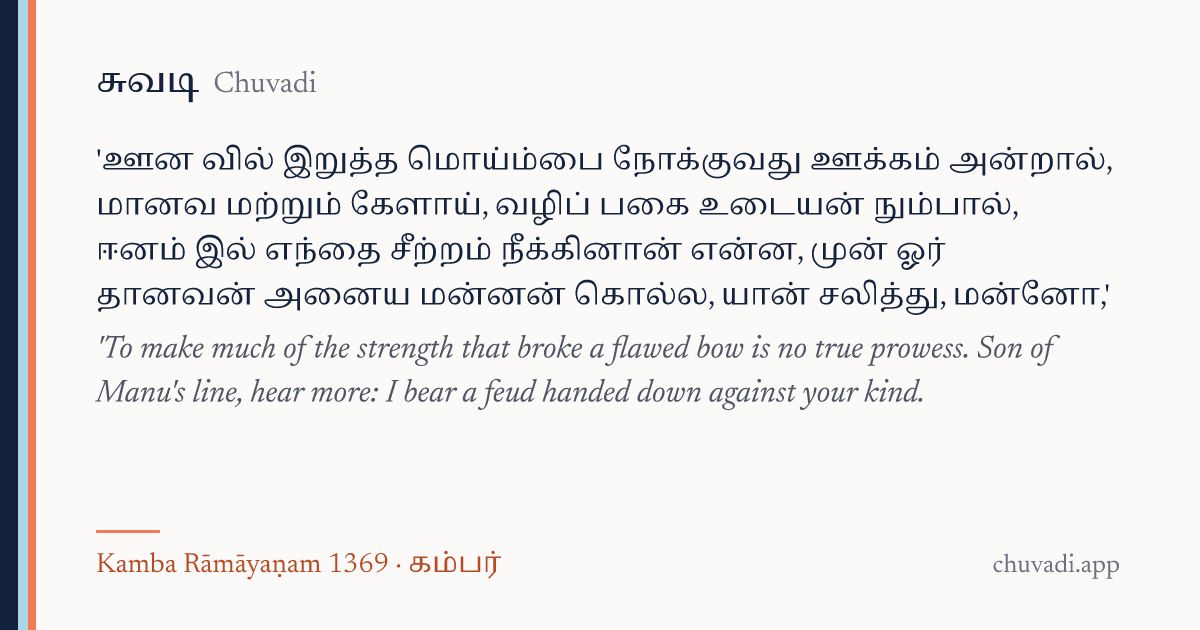
- 'To make much of the strength that broke a flawed bow is no true prowess.
- Son of Manu's line, hear more: I bear a feud handed down against your kind.
- Because my faultless father had cast off all anger, once
- a king like a demon killed him, and I, shaken to the core...'
What the poem says
Paracurāmaṉ dismisses the breaking of Civaṉ's bow as no great feat, since it was already damaged. He then explains his hereditary feud with the warrior kings.
His father Jamadagni, a sage who had renounced anger and so would not resist, was murdered by a king. The commentary notes that killing a man who would not even resent it turned a human king into a demon: being a demon is a matter of character, not birth. The sentence concludes in the next verse.