



கம்பராமாயணம் 1370 · பால 22.33
பாடல் · The poem
Tap a word to see its gloss in the commentary and where else it occurs.
பாட வேறுபாடு · Project Madurai reads
பொருள் · Meaning in Tamil
மூ எழு முறைமை - இருபத் தொரு தலைமுறைகள்; பாரில் - உலகத்தில்; முடியுடை வேந்தை எல்லாம் - முடி சூடிய வேந்தர்கள் அனைவரையும்; வேவு எழு மழுவின் வாயால் - (பகைவர் தசை மேல்) வெம்மை கொண்டெழும் பரசு எனும் கருவியின் முனையால்; வேர் அறக் களை கட்டு - வேரோடு நீங்கக் களையெடுத்துக் கொன்று; அன்னார்தூ எழு குருதி வெள்ளத் துறையிடை - அவர்கள் தசையிலிருந்து பெருகிய (குருதியினைக் குளமாக்கி) அக்குருதித் துறையிலே; எந்தைக்கு முறையின் ஆவன கடன்கள் நேர்ந்தேன் - (இறந்தார்க்குச் செய்ய வேண்டிய) முறைப்படி என் தந்தைக்குச் செய்யத்தக்க கடன்களைச் செய்து முடித்தேன்; அருஞ்சினம் அடக்கி நின்றேன் - (அதன் பிறகு) என் அரிய வெகுளியை அடக்கி வந்துள்ளேன்.
வேவு: வெம்மை. தூ: தசை. குருதி வெள்ளத்துறை பரசுராமன் மன்னர்களை வெட்டி, அவர் குருதியால் உருவாக்கிய “சியமந்த பஞ்சகம்” எனும் ஐந்து குருதிக் குளங்கள். இருபத்தொரு தலைமுறை மன்னரை யழித்தும் சினம் ஆறவில்லையாம்; அடக்கிக் கொண்டானாம்! “அடக்கிநின்றேன்” என்றான். சினத்திற்கு உணவிட இட, அது, குறையாது வளரும் ஆதலால், தீ என உருவகித்துத் திருவள்ளுவரும், “சினம் என்னும் சேர்ந்தாரைக்கொல்லி” (திருக். 306) என்றார். முனிவனாயிருந்தும், அருளைப் பொருள் என்று கொள்ளாது, சினத்தைப் பொருள் என்று கொண்டவன் பரசுராமன் என்பது, இருபத்தொரு தலைமுறை முடியுடை வேந்தரையெல்லாம் வேர் அறக் களைகட்டு, அருஞ்சினம் அடக்கினேன் என்பதனால் தெளியலாம். “சினத்தைப் பொருள் என்று கொண்டவன் கேடு நிலத்து அறைந்தான் கைபிழையாது அற்று” (திருக். 307) என்பது வள்ளுவ வாசகம்.
ஆங்கிலம் · English translationAI
Translation
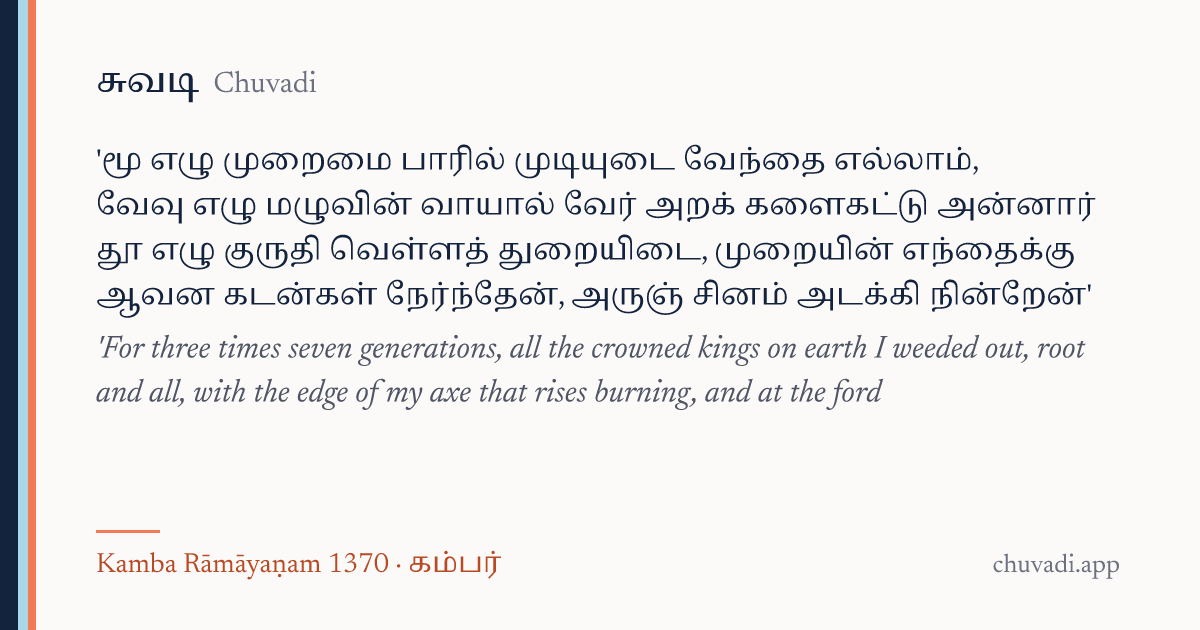
- 'For three times seven generations, all the crowned kings on earth
- I weeded out, root and all, with the edge of my axe that rises burning, and at the ford
- of the flood of blood that welled from their flesh, I performed for my father in due order
- the rites owed to him; and then I held back my fierce anger.'
What the poem says
Paracurāmaṉ recounts his vengeance: twenty-one generations of crowned kings cut down with his axe, and his father's funeral rites performed in pools of their blood. Even after all that, his anger did not die; he says only that he held it in check.
The commentary recalls the Kuṟaḷ: anger is a fire that consumes those who come near it, and one who treasures anger is ruined as surely as a hand that strikes the ground is hurt. A sage should prize grace, but Paracurāmaṉ has prized wrath.