



கம்பராமாயணம் 1371 · பால 22.34
பாடல் · The poem
Tap a word to see its gloss in the commentary and where else it occurs.
பாட வேறுபாடு · Project Madurai reads
பொருள் · Meaning in Tamil
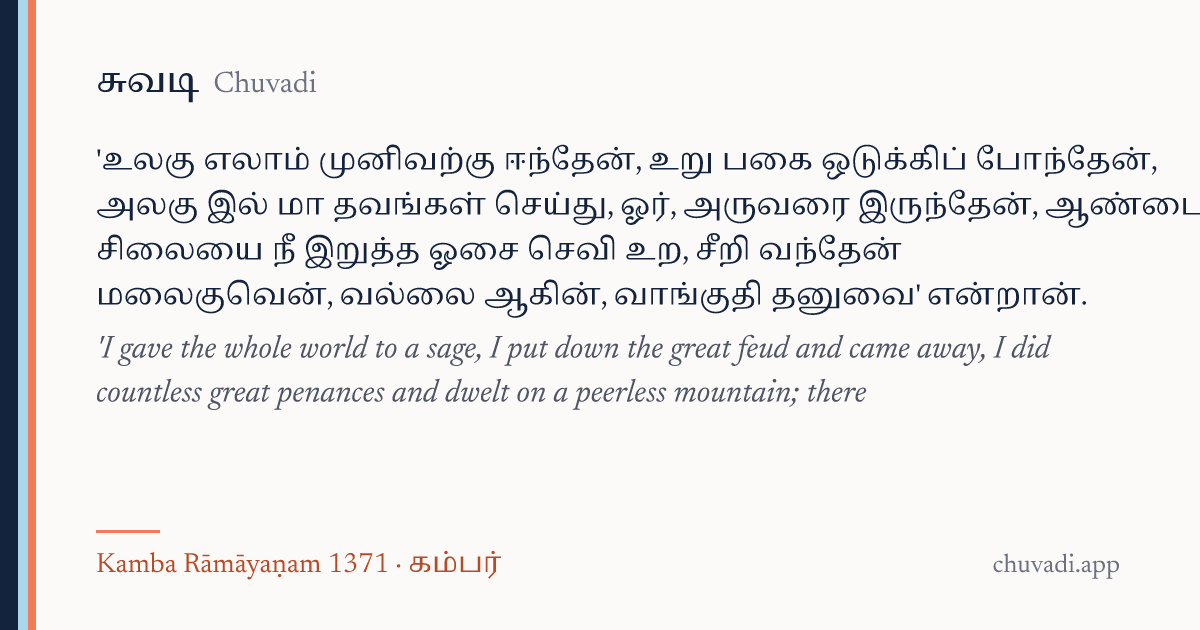
உலகுஎலாம் முனிவற்கு ஈந்தேன் - அதன்பின்பு (நான் வென்ற) உலகங்களையெல்லாம் காசிப முனிவருக்குத் தானமாகத் தந்தேன்; உறுபகை ஒடுக்கிப் போந்தேன் - பெரும்பகைகள் அனைத்தையும் அடக்கி வந்தேன்; அலகு இல் மாதவங்கள்செய்து - அளவற்ற பெருந்தவங்களைப் புரிந்து; ஓர் அருவரை இருந்தேன் - ஒப்பற்றதான அரிய மகேந்திர மலையிலே தங்கியிருந்தேன்; நீ சிலையை இறுத்த ஓசை - நீ வில்லை முறித்ததனால் எழுந்த ஓசை; ஆண்டை செவிஉற - அவ்விடத்தில் வந்து என் காதுகளில் மோதியதால்; சீறி வந்தேன் - (அதுகேட்டு) வெகுண்டு (இங்கு) வந்தடைந்தேன்; வல்லை ஆகின் - வலிமையுடையவன் நீஎன்றால்; தனுவை வாங்குதி - (இந்த) வில்லை வளைத்திடு; மலைகுவென் என்றான் - (உன்னோடு) யான் போர் செய்ய உள்ளேன் என்றான் (பரசுராமன்).
உறுபகை - பெரும்பகை; பல அரசர்களது பகை. இது போலவே, வில் ஒடித்த ஓசை அயோத்திக்கு எட்டியது என்பதைத் தசரதன் கூற்றாக, “தக்கன் வேள்வியில், கற்றை வார்சடைக் கணிச்சி வானவன், முற்ற ஏழ் உலகையும் வென்ற மூரிவில் இற்ற பேர் ஒலிகொல் அன்று இடித்தது ஈங்கு” (கம்ப. 736) என்று குறிப்பிடுவார். இவ் வில் முறிந்த ஓசை இலங்கையிலும் கேட்டுளது என்பதனை, மாலியவான் கூற்றாக, “கங்கை சூடிதன் கடுஞ்சிலை ஒடித்த அக்காலம், உங்கள் வான்செவி புகுந்திலதோ முழங்கு ஓதை?” (கம்ப. 9288) என்று குறிப்பிடுவர்.
வில் ஒடித்த அமயத்தில், வில்ஒலி கேட்டு, அண்டகோளம் பிளந்தது; பாதலம் நடுங்கிற்று; “பாரிடையுற்ற தன்மை பகர்வது என்?” (கம்ப. 700) எனப் பொதுவாகக் கூறிச் சென்ற கவிஞர்பிரான், வில் ஒடித்த ஆற்றலை மனத்துட் பொதிந்து வைத்திருந்து, இடம் அறிந்து காண்டங்கள் கடந்து நினைவாற்றலோடு பொருந்த இணைக்கும் திறம் நினைந்து நினைந்து மகிழ்தற்குரியது.
ஆங்கிலம் · English translationAI
Translation
- 'I gave the whole world to a sage, I put down the great feud and came away,
- I did countless great penances and dwelt on a peerless mountain; there
- the sound of your breaking the bow reached my ears, and I came here in rage.
- I will fight you; if you have the strength, bend this bow,' he said.
What the poem says
Paracurāmaṉ finishes his account. After giving the earth to Kāśyapa he retired to do penance on Mount Mahēndra, but the crack of Civaṉ's bow breaking at Mitilai carried all the way there and roused his anger again.
The commentary admires how the poet keeps the echo of that sound alive across the epic: Tacarataṉ heard it in Ayōttī, and much later Māliyavāṉ reminds the demons that it was heard even in Ilaṅkai.