



கம்பராமாயணம் 1374 · பால 22.37
பாடல் · The poem
Tap a word to see its gloss in the commentary and where else it occurs.
பொருள் · Meaning in Tamil
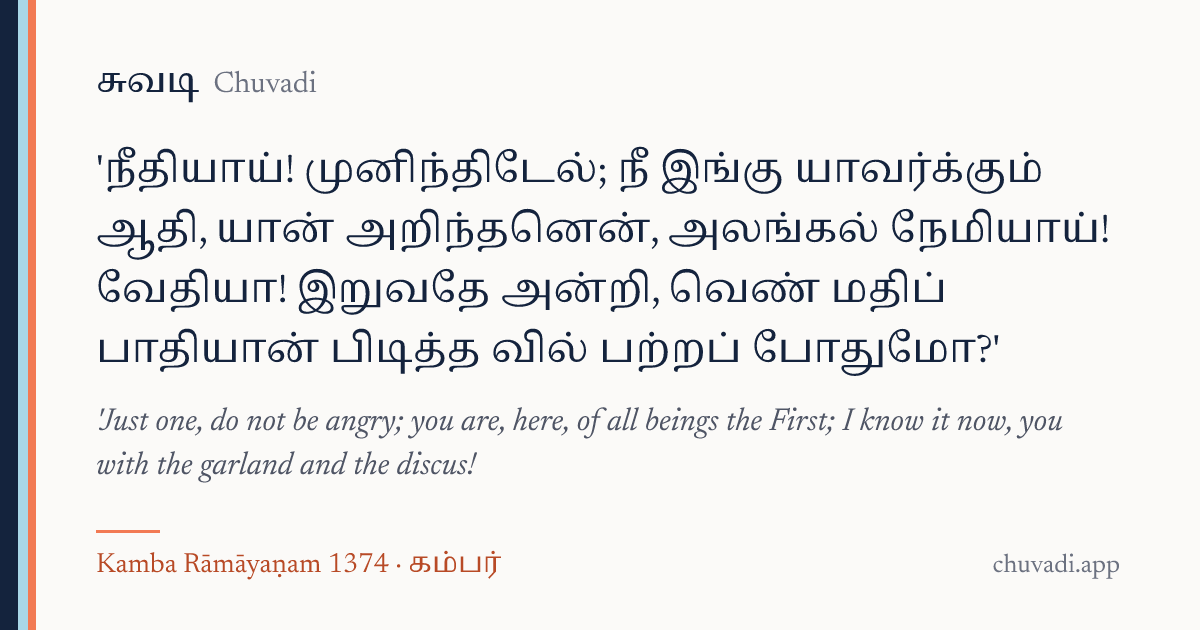
நீதியாய்! - நன்னெறி பூண்டவனே!; முனிந்திடேல் - நீ வெகுளாதே!; நீ இங்கு யாவர்க்கும் - நீ இவ்வுலகில் உள்ளோர் யாவர்க்கும்; ஆதி, யான் அறிந்தனென் - முதல்வன் என்பதனை யான் (கண்கூடாக) அறிந்தேன்; அலங்கல் நேமியாய் - துழாய் மாலையணிந்த சக்கரம் ஏந்திய திருமாலே; வேதியா! - வேதியனே!; வெண்மதிப் பாதியான் - வெள்ளிய மதியின் பகுதியைச் சூடியுள்ள சிவபெருமான்; பிடித்த வில் - (முன்பு கையில்) பற்றிய வில்லானது; இறுவதே அன்றி - பிளந்து முறிவதேயல்லாமல்; பற்றப் போதுமோ? - உனது கையிற் பிடித்தற்கும் போதுமோ? (போதாது) (என்றான் பரசுராமன்)
திருமாலின் கூறல்லாத எவரும் இவ்வில்லைப் பற்றி எடுக்கவும் கூடுமோ எனப் புகழ்ந்தான் எனினுமாம். இராம பிரானை வேதியன் என்று பல இடங்களில் கம்பர் பெருமான் குறிப்பிடுவார். “அரசர் உருக்கொண்டமைந்த வேதியா!” (கம்ப. 7625) எனவும், “நீ செப்பும் வேத நாயகன்” (கம்ப. 6994) எனவும், “விராவரும் புவிக்கெலாம் வேதமே யன இராமன்” (கம்ப. 1453) எனவும் வருவன காண்க.
ஆங்கிலம் · English translationAI
Translation
- 'Just one, do not be angry; you are, here, of all beings
- the First; I know it now, you with the garland and the discus!
- Lord of the Vedas! The bow once held by him who wears half the white moon,
- was it fit for anything but to break? Was it even fit to be grasped by you?'
What the poem says
Paracurāmaṉ's tone changes completely. Seeing Irāmaṉ bend Viṣṇu's bow with ease, he recognises him as Viṣṇu himself, the First of all beings, wearing the tulasi garland and bearing the discus. Civaṉ's bow, he now says, was never strong enough even to be held in such hands; naturally it broke.
The commentary notes that Kampaṉ often calls Irāmaṉ "the one of the Vedas", the Vedic lord in the form of a king.