



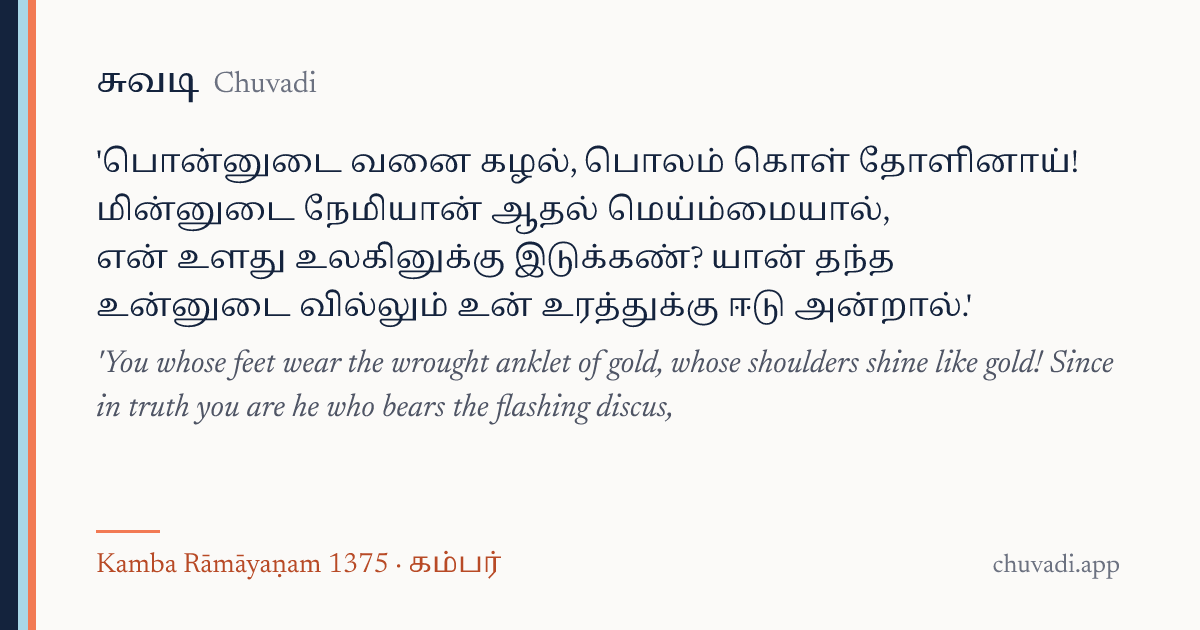
கம்பராமாயணம் 1375 · பால 22.38
பாடல் · The poem
Tap a word to see its gloss in the commentary and where else it occurs.
பொருள் · Meaning in Tamil
பொன்னுடை வனைகழல் - பொன்னால் செய்யப்பட்டு அணிதற்குரிய வீரக் கழலையும்; பொலம் கொள் தாளினாய் - அழகினையும் கொண்ட திருவடிகளையுடையவனே!; மின் உடை நேமியான் ஆதல் மெய்ம்மையால் - நீ மின்னுகின்ற சக்கரப் படையை ஏந்திய திருமால் என்பது உண்மையானதால்; உலகினுக்கு இடுக்கண் என் உளது? - இனி, உலகத்து மக்கட்கு (நிகழவுள்ள) துன்பங்கள் எப்படி இருக்கும்?; யான் தந்த உன்னுடை வில்லும் - நான் இப்பொழுது உனக்குத் தந்த (பழைய) உன்னுடைய வில்லும்; உன் உரத்துக்கு ஈடு அன்று - உன்னுடைய வலிமைக்கு ஏற்றது ஆகாது.
இராமனை இறைவனாகக் கொண்டு திருவடிகளை முதலில் வருணித்தான். உரம்: வலிமை. மார்பு எனக் கொண்டு, வில் வளைத்த நேர்த்தி கண்டு மார்பினைப் புகழ்ந்தவாறுமாம். ஆகவே, இராமன் “கைவண்ணமும் கால்வண்ணமும்” (கம்ப. 475) கண்டு கௌசிக முனிவர், “இனி இந்த உலகுக்கு எல்லாம் உய்வண்ணம் அன்றி மற்றோர் துயர்வண்ணம் உறுவதுண்டோ?” (கம்ப. 475) என்று மகிழ்ந்தது போலவே அவை கண்டு, பரசுராமனும் இங்கு, “என் உளது உலகினுக்கு இடுக்கண்?” என்கின்றான் என்க.
ஆங்கிலம் · English translationAI
Translation
- 'You whose feet wear the wrought anklet of gold, whose shoulders shine like gold!
- Since in truth you are he who bears the flashing discus,
- what trouble can there be for the world? And this bow of yours that I gave you
- is no match for your strength.'
What the poem says
Paracurāmaṉ now praises Irāmaṉ as a worshipper praises a god, beginning with the feet. If Irāmaṉ is truly Viṣṇu, the bearer of the discus, the world has nothing more to fear. Even Viṣṇu's own bow, which Paracurāmaṉ has just handed back to its rightful owner, is unequal to his strength.
The commentary compares Vicuvāmittiraṉ's joy earlier in the story, when he saw the power of Irāmaṉ's hands and feet and declared that no sorrow could befall the world any more.