



கம்பராமாயணம் 1376 · பால 22.39
பாடல் · The poem
Tap a word to see its gloss in the commentary and where else it occurs.
பொருள் · Meaning in Tamil
அம்பு - (நீ இப்போது) எய்யப் பிடித்திருக்கிற அம்பானது; இடை பழுது எய்திடாமல் - இடையிலே வீணாகாதபடி; என் செய்தவம் யாவையும் - என்னால் செய்யப்பட்ட தவத்தின் பயன் அனைத்தையும்; சிதைக்கவே என - (இலக்காகக் கொண்டு) அழிக்க வேண்டுகிறேன் என்று பரசுராமன் கூற; அவண் கை நெகிழ்தலும் - அப்போது, இராமனின் கை நெகிழ்ந்த உடனே; கணையும் சென்று - அம்பும் உடனே சென்று; அவன் மையறு தவம்எலாம் - பரசுராமன் ஈட்டியிருந்த தவத்தின் பயன்கள் யாவற்றையும்; வாரி மீண்டது - வாரிக் (கவர்ந்து கொண்டு) (அம்பறாத் தூணியை) மீண்டும் வந்தடைந்தது.
எய்யவிருக்கிற அம்பு விரைவு கருதி, “எய்த அம்பு” எனப்பட்டது கால வழுவமைதி. இராமன் அம்பு பூட்டிய பிறகு, இலக்கையடையாமல் திரும்பியதில்லை என்னும் மரபு இடையே என்னால் பழுதடைய வேண்டா என்பான், “இடை பழுது எய்திடாமல்” என்றான். தவம்: தவத்தின் பயனைக் குறித்து நின்றது. இராமன் அம்பு பரசுராமன் தவத்தின் பயனையெல்லாம் கவர்ந்தது என்பதனால் உருவற்ற அருவத்தையும் அது இலக்காகக் கொள்ளும் வன்மையது என்பது உணர்த்தியவாறு.
ஆங்கிலம் · English translationAI
Translation
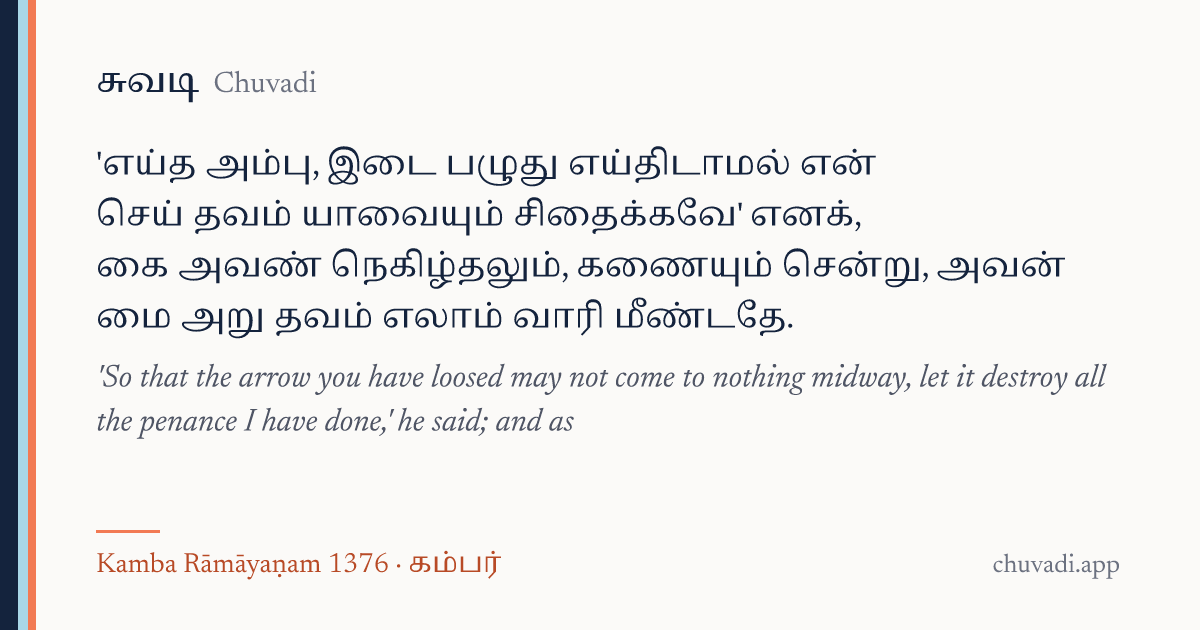
- 'So that the arrow you have loosed may not come to nothing midway, let it
- destroy all the penance I have done,' he said; and as
- the hand let go there, the arrow sped off, swept up
- all of that man's spotless penance, and came back.
What the poem says
Paracurāmaṉ names his own store of merit as the target, so that Irāmaṉ's arrow, which never returns without striking, will not be wasted on his account. The arrow flies, carries off the fruits of all his penance, and returns to the quiver.
The commentary observes that Irāmaṉ's arrow can strike even something without bodily form. Calling it "the arrow you have loosed" before it has flown stresses how swiftly it will go.