



கம்பராமாயணம் 1381 · பால 22.44
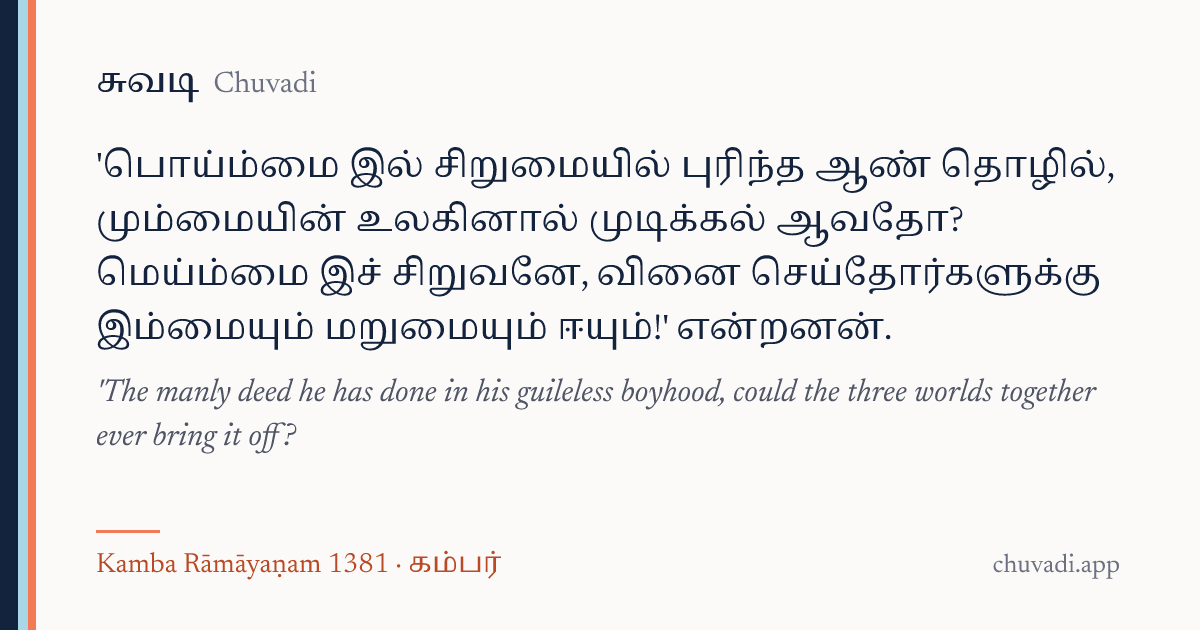
பாடல் · The poem
Tap a word to see its gloss in the commentary and where else it occurs.
பொருள் · Meaning in Tamil
பொய்ம்மை இல் - வஞ்சனையில்லாத; சிறுமையில் - (இந்த) இளம் பருவத்தில்; புரிந்த ஆண் தொழில் - (இச்சிறுவனாகிய இராமன் ஆற்றியுள்ள) இவ்வீரச் செயல்; மும்மையின் உலகினால் - மூன்று உலகத்தாராலும் (சேர்ந்தாயினும்); முடிக்கல் ஆவதோ? - செய்து முடித்தற்கு இயலுவதோ? (இயலாது); இச்சிறுவனே - இவ்விளைஞனே; வினை செய்தோர்களுக்கு - நல்வினை தீவினைகளைப் புரியும் உயிர்கட்கு; இம்மையும் மறுமையும் ஈயும் - அவரவர் வினைகட்கு ஏற்ப இம்மைப் பயனையும் மறுமைப் பயனையும் அளித்தருளுகின்றவன்; மெய்ம்மை என்றனன் - (இது) உண்மை என்றுரைத்தான் (தசரதன்).
மூவுலகத்தாரும் ஒருங்கு கூடி முயன்றாலும் முடித்தற்கு அரியதொரு செயலை, மிக எளிதாக ஓர் இளைஞன் இயற்றியுள்ளான் எனின், அவன் மூவுலகத்தவரிலும் உயர்ந்தவன் என்பது தெளிவு; அவ்வாறு உயர்ந்தவன் இறைவன் ஒருவனே. ஆகவே இராமன் இறைவன் எனும் முடிவுக்குத் தயரதன் வந்தான் என்க. வினைகள் சடப் பொருள்கள் ஆதலால் அவரவர் செய்த வினைப் பயன்களை நுகர, அறிவுமான வடிவான இறைவனே வழிவகுக்கின்றான் என்னும் தத்துவ உண்மை பற்றி, “இச்சிறுவனே வினைசெய்தோர்களுக்கு இம்மையும் மறுமையும் ஈயும்” என்றார். இம்மை மறுமை - ஆகுபெயர்கள்.
ஆங்கிலம் · English translationAI
Translation
- 'The manly deed he has done in his guileless boyhood,
- could the three worlds together ever bring it off?
- In truth it is this boy who, to all who do deeds,
- grants the fruits of this life and the next!' he said.
What the poem says
Tacarataṉ, marvelling, draws the conclusion. If a mere boy has easily done what all three worlds together could not, he must be greater than all of them, and only God is that. So the king recognises his son as the Lord who gives every being the fruits of its deeds, good and bad, in this life and the next.
The commentary explains the reasoning behind this: deeds are inert and cannot deliver their own results, so a conscious God must apportion them.