



கம்பராமாயணம் 1382 · பால 22.45
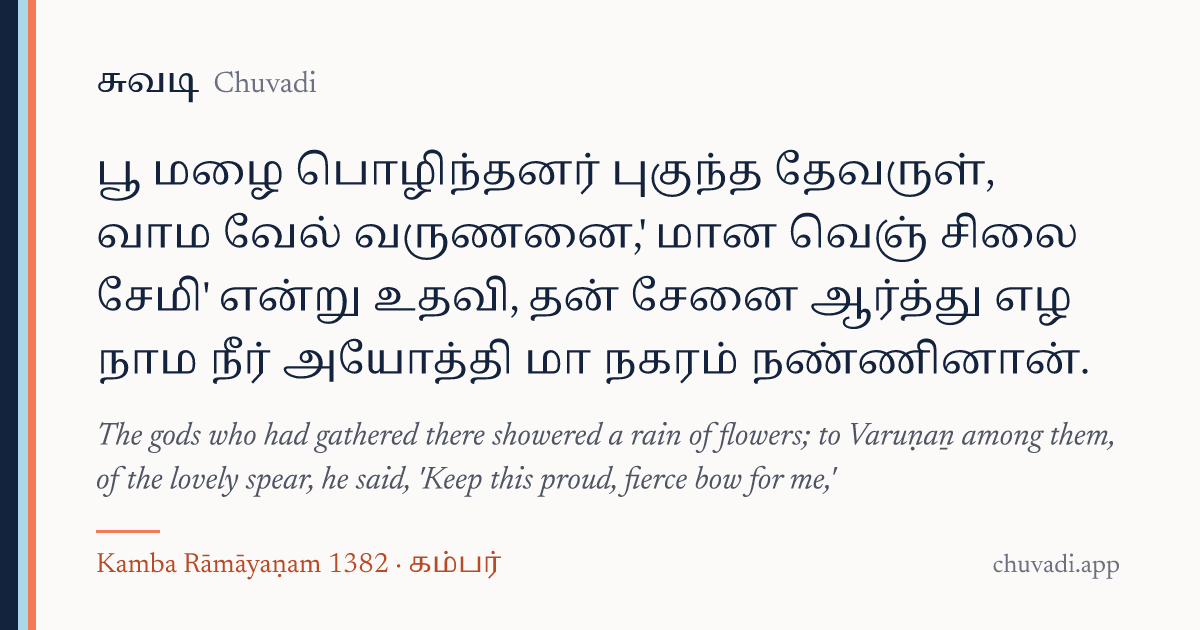
பாடல் · The poem
Tap a word to see its gloss in the commentary and where else it occurs.
பொருள் · Meaning in Tamil
பூ மழை பொழிந்தனர் - (அப்பொழுது) பூமாரி பொழிந்தனராக; புகுந்த தேவருள் - அங்கு வந்து அடைந்த தேவர்கூட்டத்துள்; வாம வேல் வருணனை - அழகிய வேற்படையினையுடைய வருண தேவனை (நோக்கி இராமபிரான்); “மான வெஞ்சிலை சேமி” - பெருமையும் கடுமையுமுடைய இந்த வில்லைப் பாதுகாத்து வைத்திரு; என்று உதவி - என்று கூறி, அவன்பால் அவ்வில்லைத் தந்து; தன் சேனை ஆர்த்து எழ - தன் சேனைகள் (வெற்றிக் களிப்பால்) ஆரவாரித்து (உடன்) புறப்பட; நாமநீர் அயோத்தி மாநகரம் நண்ணினான் - புகழ் மிகும் நீர்வளமுள்ள அயோத்தி மாநகரத்தைச் சென்றடைந்தான்.
இங்கு வருணனிடம் ஒப்படைக்கப்பட்ட வில் இராமன் கரனிடம் போரிடும் போது பெறப்படுகிறது. “அண்டர் நாதன் தடக்கையின் அத்துணைம் பண்டுபோர் மழு வாளியைப் பண்பினால் கொண்ட வில்லை வருணன் கொடுத்தனன்” (கம்ப. 3052) என்று பின்னர் மறவாமல் குறிப்பார். பொழிந்தனர் - முற்றெச்சம். வாமம்: அழகு. நாமம்: புகழ். அச்சமெனக் கொண்டு பகைவர் அஞ்சும் அகழிகளையுடைய அயோத்தி எனினுமாம். வருணனிடம் தந்தது அவன் அவதாரப் பணியில் (சேதுசமைக்க) பின்னர் உதவ உள்ளான் என்னும் திருவுளக் குறிப்பை யுட்கொண்டது.
ஆங்கிலம் · English translationAI
Translation
- The gods who had gathered there showered a rain of flowers; to Varuṇaṉ among them,
- of the lovely spear, he said, 'Keep this proud, fierce bow for me,'
- and gave it to him; and with his army rising in a roar,
- he reached the great city of Ayōttī, famed and rich in water.
What the poem says
The gods celebrate with a rain of flowers. Irāmaṉ entrusts Viṣṇu's bow to Varuṇaṉ, god of the waters, to keep for him, and the army marches home to Ayōttī with shouts of triumph.
The poet does not forget this detail: much later, when Irāmaṉ fights the demon Karaṉ in the forest, Varuṇaṉ gives this very bow back to him. The commentary also sees a hint that Varuṇaṉ will help Irāmaṉ again when the causeway to Ilaṅkai is built.