



கம்பராமாயணம் 1383 · பால 22.46
பாடல் · The poem
Tap a word to see its gloss in the commentary and where else it occurs.
பொருள் · Meaning in Tamil
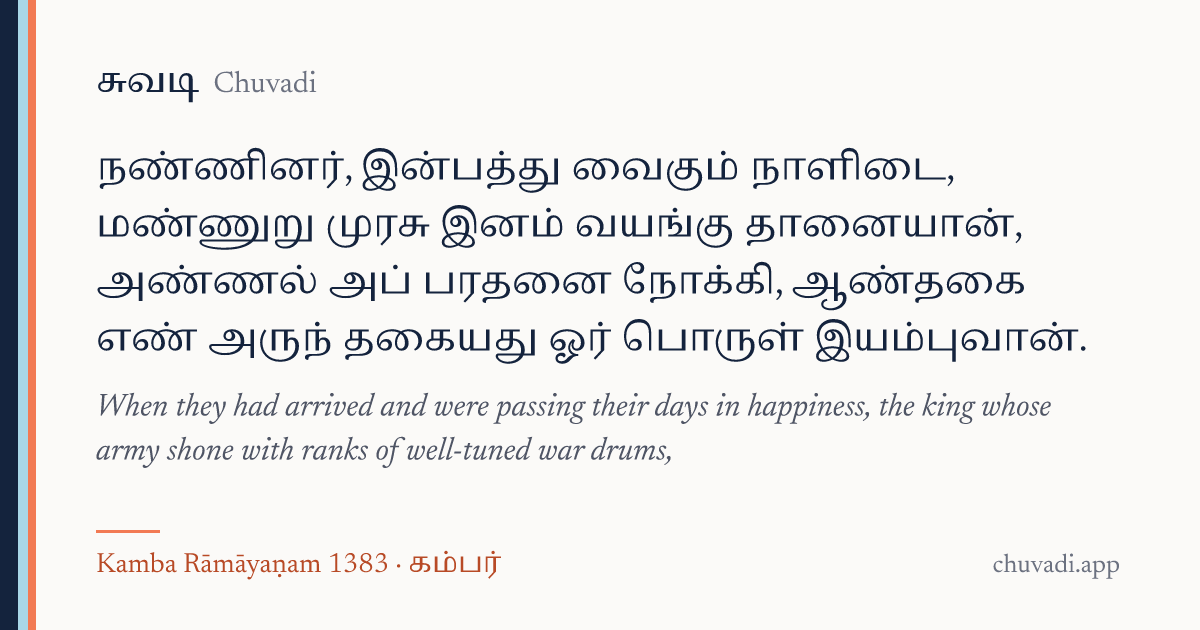
நண்ணினர் - (யாவரும் அயோத்தியை) அடைந்தவர்களாய்; இன்பத்து வைகும் நாளிடை - இன்பத்தில் திளைக்கும் நாளில் (ஒரு நாள்); ஆண்தகை - ஆண்மைப் பண்புகள் நிறைந்தவனும்; மண்ணுறு முரசு இனம் வயங்கு தானையான் - மார்ச்சனை பொருந்திய பேரிகைகளின் கூட்டம் விளங்குகின்ற சேனையையுடையவனுமான தயரதன்; அண்ணல் அப்பரதனை நோக்கி - பெருமைக்குரிய அப்பரதனைப் பார்த்து; எண்ணருந் தகையது ஓர் பொருள் - யாவரும் எண்ணாத ஒரு பொருளை; இயம்புவான் - சொல்லலானான்.
மார்ச்சனை: தோற்கருவிகள் சிலவற்றுள் தக்கவாறு ஒலியெழும்புதற்கேற்ப அடிக்கும் இடத்தைத் தகுதியாக அமைத்தற்கு உதவுவது. “அண்ணல் அப்பரதன்” எனும் தொடரில் அடைமொழிகள் பரதன் மாட்டுக் கவிஞர் பிரானுக்குரிய மதிப்பினைக் குறித்து நின்றன. இராமனுக்குப் பட்டம் சூட்ட வேண்டும்; அதற்குப் பரதன் தடையாய் இருத்தல்கூடும் என்று தயரதன் எண்ணியிருக்கலாம் என்பதை, ஒருவாறு உய்த்துணருமாறு, “எண்ணருந்தகையது ஓர்பொருள்” எனும் தொடரைக் கவிஞர் பிரான் அமைத்தார் எனக் கருதலாம்.
ஆங்கிலம் · English translationAI
Translation
- When they had arrived and were passing their days in happiness,
- the king whose army shone with ranks of well-tuned war drums,
- that man of manly worth, looking at noble Paratan,
- began to speak of a matter no one would have thought of.
What the poem says
Back in Ayōttī, life settles into happiness. One day Tacarataṉ turns to Paratan, his son by Kaikēyi, with an unexpected proposal.
The commentary suggests that "a matter no one would have thought of" hints at the king's private plan: he may already mean to crown Irāmaṉ and fear that Paratan's presence could stand in the way. The epithet "noble" shows the poet's own high regard for Paratan.