



கம்பராமாயணம் 1474 · அயோத்தியா 1.87
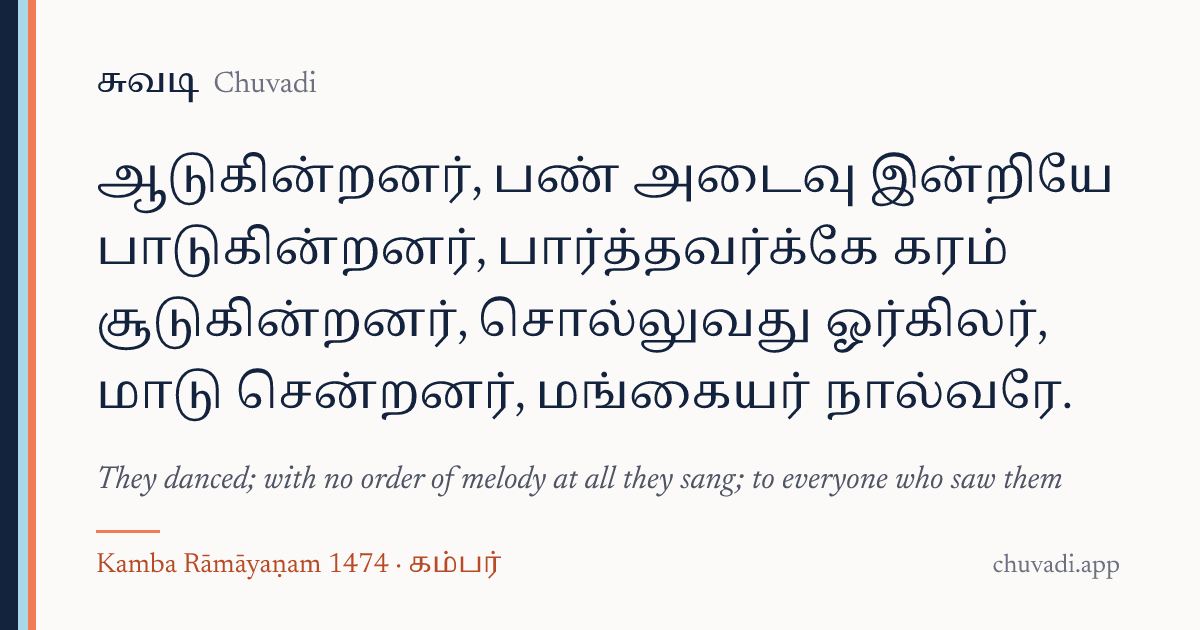
பாடல் · The poem
Tap a word to see its gloss in the commentary and where else it occurs.
பொருள் · Meaning in Tamil
மங்கையர் நால்வர் - நான்கு மகளிர் (இராமன் முடிபுனை செய்தியை அறிந்த மகிழ்ச்சியராய் அதனால்); ஆடுகின்றனர் - ஆடிக் கொண்டு; பண் அடைவு இன்றியே பாடுகின்றனர் - இசை முறைக்குச் சிறிதும் ஒழுங்கு இல்லாமல் பாடிக்கொண்டு; பார்த்தவர்க்குக் கரம் சூடுகின்றனர் - தம்மைப் பார்த்தவர்களையெல்லாம் கைகளைத் தலைமேல் சூடி வணங்கிக்கொண்டு; சொல்வது ஓர்கிலர் - என்ன சொல்வது என்று சிந்தியாதவர்களாக; மாடு சென்றனர் - கோசலை பக்கல் சென்று சேர்ந்தார்கள்.
மேற்பாட்டின் தொடர்ச்சி இதுவாதலின் மங்கையர் நால்வர் ஓடினர் என உரைத்தார். ஆடி, பாடி, பார்த்தவர்க்குக் கரம் சூடி, சொல்லுவது ஓராது, கோசலை பக்கலில் சென்றனர் என முடித்துக் காட்டுக. மகிழ்ச்சி மிகுதி உடையவர்கள் எதிரிற் கண்டவர்களை எல்லாரையும் கும்பிடுதலும், ஆடிப் பாடுதலும் சொல்லுவது அறியாதிருத்தலும் இயல்பு. “வேதியர் தமைத்தொழும்; வேந்தரைத் தொழும், தாதியர் தமைத்தொழும்; தன்னைத் தான் தொழும்; ஏதும் ஒன்று உணர்குறாது இருக்கும்; நிற்குமால்; காதல் என்றதுவும் ஓர் கள்ளின் தோன்றிற்றே” எனவும், “ஆடும் பாடுமால்”, எனவும் (கம்ப. 10202. 10201) பரதனது மகிழ்ப்பெருக்கைக் கம்பர் பின்னர்க் காட்டியுள்ளமை கண்டும் அறிக. ‘ஏ’ இரண்டும் அசைகள்.
ஆங்கிலம் · English translationAI
Translation
- They danced; with no order of melody at all
- they sang; to everyone who saw them
- they raised their hands to their heads; they could not think what to say;
- and so the four women came to her side.
What the poem says
The four women, wild with joy, dance and sing out of tune, salute everyone they meet with hands raised to their heads, and cannot find words, until they reach Queen Kōcalai.
Kampaṉ uses the same picture of overwhelming joy much later, when Paratan hears that Irāmaṉ is returning: worshipping everyone in sight, dancing and singing, unable to think, as if love itself were an intoxicating drink.