



கம்பராமாயணம் 1532 · அயோத்தியா 2.49
பாடல் · The poem
Tap a word to see its gloss in the commentary and where else it occurs.
பாட வேறுபாடு · Project Madurai reads
பொருள் · Meaning in Tamil
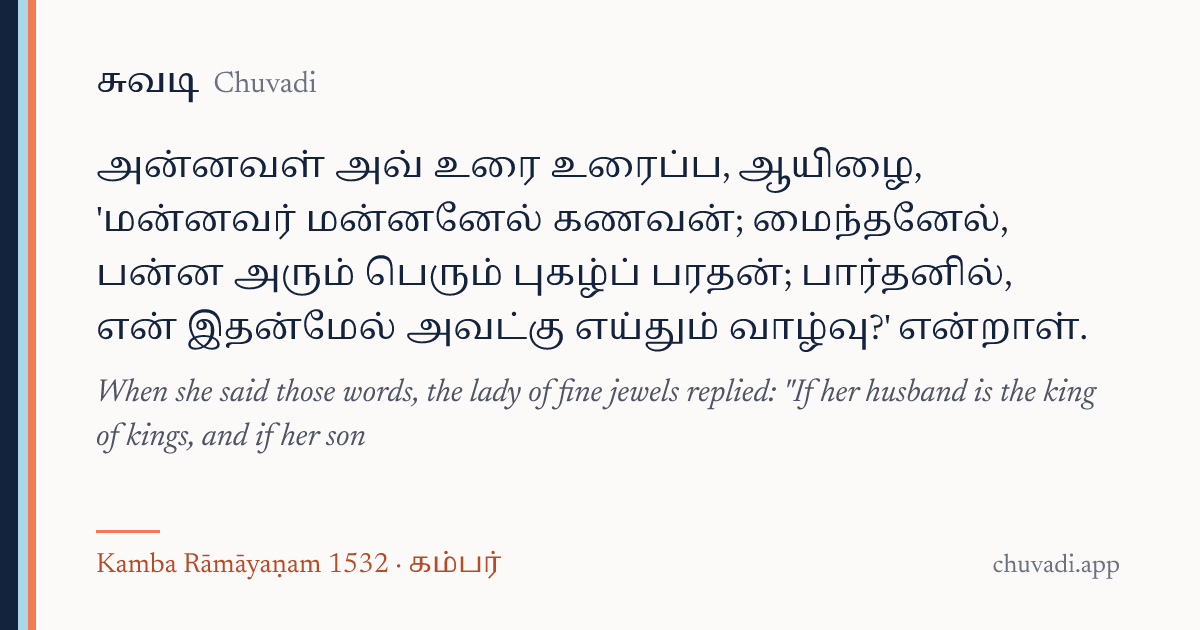
அன்னவள் - மந்தரை; அவ் உரை உரைப்ப - (வாழ்ந்தனள் கோசலை என்ற) அந்த வார்த்தைகளைச் சொல்ல; ஆயிழை - ஆராய்ந்த அணிகளை அணிந்த கைகேயி; கணவன் - நாயகன்; மன்னவர் மன்னனேல் - அரசர்களுக்கு அரசனாகிய சக்கரவர்த்தி தயரதனானால்; பன்ன அரும் - எடுத்துரைத்தற்கரிய; பெரும் புகழ்ப் பரதன் - பெரிய புகழை உடைய பரதன்; மைந்தனேல் - மகனானால்; பார்தனில் - இவ்வுலகில்; இதன்மேல் - இதற்கும் மேலாக; அவட்கு - கோசலைக்கு; எய்தும் வாழ்வு - கிடைக்கக்கூடிய புதிய வாழ்வு; என்? - என்ன இருக்கிறது; என்றாள் - என்று கூறினாள்.
கோசலையின் நாயகனோ சக்கரவர்த்தி; மகனோ புகழுடைய பரதன்; இதற்குமேல் அவளுக்கு வரக்கடவதாகிய வாழ்வு என்ன? ஏற்கெனவே மிகச் சிறப்பாக வாழ்ந்துகொண்டுதானே உள்ளாள் என்று கைகேயி கூறினாள். முன்பு “இராமனைப் பயந்த எற்கு” என்று இராமனைத் தன்னோடு இணைத்துக் கூறிக்கொண்டது போலவே, வளர்த்தமை பற்றிப் பரதனைக் கோசலை மகன் என்று கூறிப் பாராட்டினாள். இனி இதனைக் கைகேயிமேற்றாகவே உரைப்பாரும் உளர். ‘என் நாயகன் சக்கரவர்த்தி; என் மகன் பரதன்; என்றால் கோசலைக்கு என்னைக் காட்டிலும் என்ன புதுவாழ்வு வந்துவிடப் போகிறது’ என்றாள் என்பதாக விளக்குவர். முன்னர் இராமனைத் தன் மகன் என்று கூறியுள்ளாள் என்பதை நோக்க அப்பொருள் சிறவாது. இச்செய்யுளிலும் ‘என்னின் மேல் அவட்கு எய்தும் வாழ்வு’ என்னாது, ‘இதன்மேல் அவட்கு எய்தும் வாழ்வு’ என்று கூறியதும் அப்பொருளுக்கு நேரே உதவாமை காண்க. பரம் - பாரம் சுமப்பவன் பரதன். அரசைத் திருவடி நிலையில் வைத்து ஆள்பவன் என்னும் பொருளில் பரதன் எனும் பெயர் பொருந்துமாறு அறிக.
ஆங்கிலம் · English translationAI
Translation
- When she said those words, the lady of fine jewels replied:
- "If her husband is the king of kings, and if her son
- is Paratan, whose great fame is beyond telling, then on this earth
- what more good fortune could come to her than this?"
What the poem says
Kaikēyi is not provoked. Kōcalai, she says, already has everything: the emperor as her husband and the famous Paratan as her son. What more could she gain?
Just as Kaikēyi called Irāmaṉ her own son, she now calls her own son Paratan Kōcalai's, since Kōcalai helped raise him; the four princes belong to all the queens. Some read the verse as Kaikēyi speaking of herself, but the commentary prefers the generous reading.