



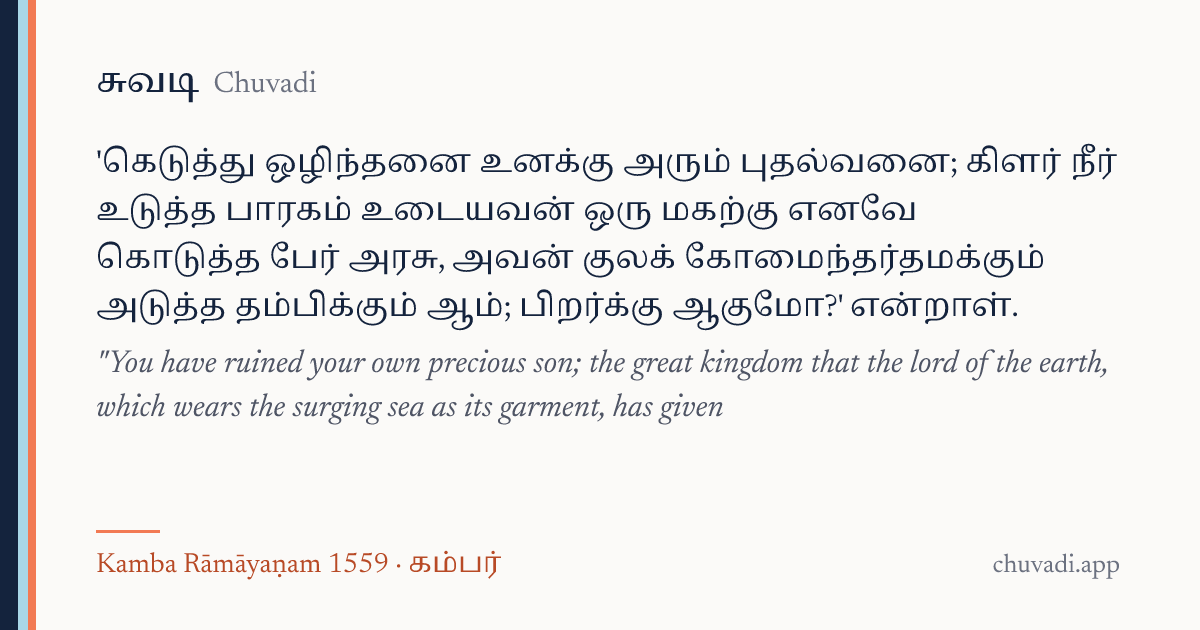
கம்பராமாயணம் 1559 · அயோத்தியா 2.76
பாடல் · The poem
Tap a word to see its gloss in the commentary and where else it occurs.
பொருள் · Meaning in Tamil
உனக்கு அரும் புதல்வனை - உன்னுடைய பெறுதற்கரிய மகனாகிய பரதனை; கெடுத்து ஒழிந்தனை - வீணாக்கி அழிந்தாய்; கிளர் நீர் - மேலெழும்புகின்ற நீரையுடைய கடலை; உடுத்த பாரகம் - ஆடையாக உடுத்த நிலவுலகத்தை; உடையவன் - தன்னுடைமையாகப் பெற்ற சக்கரவர்த்தி தயரதன்; ஒரு மகற்கு எனவே - ஒப்பற்ற தன் இராமனுக்காக; கொடுத்த பேர் அரசு - ஆட்சியுரிமை கொடுத்துவிட்ட கோசல அரசு; அவன் குலக் கோமைந்தர்தமக்கும் - இராமன் குலத்தில் தோன்றும் அரசகுமாரர்களுக்கும்; அடுத்த தம்பிக்கும் - இராமனை எப்பொழுதும் சார்ந்து கிடக்கின்ற தம்பியாகிய இலக்குமணனுக்கும்; ஆம் - ஆகும்; பிறர்க்கு ஆகுமோ? - (அப்படியல்லாது) வேறு பிறருக்கு (பரதனுக்கு) மீள வருமோ? (வராது); என்றாள் - என்று கூறி முடித்தாள்.
இராமனுக்குப் பின் பரதன் ஆள்வான் என்று நினைத்தாயாயின் அதுவும் இயலாது என்றாள் கூனி. இப்பொழுதே பரதனை அரசனாக்குவதே விவேகம்; இல்லையேல் எப்போதும் பரதன் அரசனாக இயலாது என்று கூறி முடித்தாள் கூனி. மகன்மேல் உள்ள பாசம், பிறந்த வீட்டுப் பாசம் இவற்றை அடியாக வைத்து மந்தரை கைகேயியின் மனத்தைத் திரித்தாள் என்க. ‘பிறர்க்கும் ஆகுமோ’ என்ற பாடம் ஓசைக்கு ஒத்து வராது ஆதலின் கொள்ளப் பெறவில்லை.
ஆங்கிலம் · English translationAI
Translation
- "You have ruined your own precious son; the great kingdom
- that the lord of the earth, which wears the surging sea as its garment, has given
- to his one son will pass to the princes of that son's line
- and to the brother who keeps close by him; will it ever go to another?" she said.
What the poem says
Mantarai closes her argument. If Kaikēyi imagines Paratan might rule after Irāmaṉ, she is wrong: once given to Irāmaṉ, the kingdom will pass to his own sons, or to Ilakkuvaṉ, who never leaves his side, but never to Paratan.
Either Paratan becomes king now, or never. By working on Kaikēyi's love for her son and for her birth family, Mantarai has turned her mind.