



கம்பராமாயணம் 1587 · அயோத்தியா 3.20
பாடல் · The poem
Tap a word to see its gloss in the commentary and where else it occurs.
பாட வேறுபாடு · Project Madurai reads
பொருள் · Meaning in Tamil
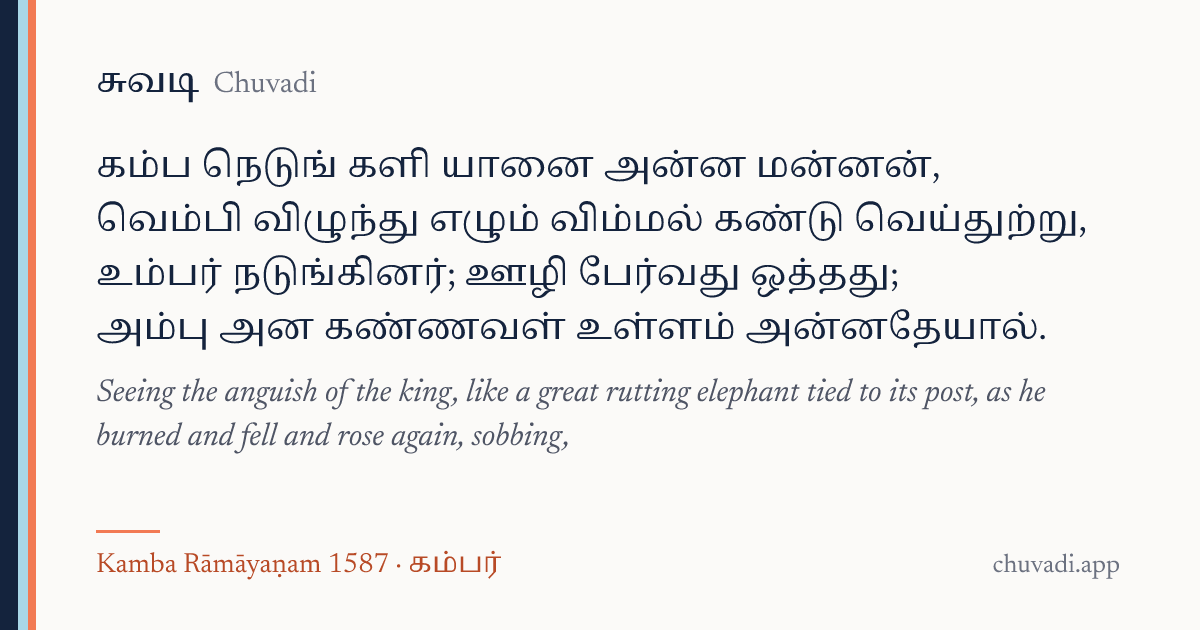
கம்ப நெடுங் களி யானை அன்ன மன்னன் - கட்டுத்தறியில் கட்டுண்ட மிக்க மதத்தையுடைய களிற்றை யொத்த அரசனாகிய தயரதன்; வெம்பி விழுந்து எழும் விம்மல் - மனம் நொந்து கீழே விழுந்து எழுகின்ற துன்ப நிலையினை; உம்பர் கண்டு - தேவர்கள் பார்த்து; வெய்துற்று நடுங்கினர் - மனம் புழுங்கி நடுங்கினார்கள்; ஊழி பேர்வது ஒத்தது - பிரளய காலம் வந்தது போன்றிருந்தது; அம்பு அன கண்ணவள் உள்ளம் - (அந்நிலையிலும்) அம்பு போன்ற கண்களையுடைய கைகேயியினது மனம்; அன்னதே - முன்பு இருந்த அதே தன்மையில் இருந்தது.
தயரதன் சம்பரனைத் தொலைத்துத் தங்களுக்கு உதவியவன் ஆதலால் அவனது துன்பத்தைக் கண்டு தேவர்கள் வருந்தினர். உலகத்தவர் யாவரும் வருந்துதலால் ‘ஊழி பேர்வது ஒத்தது’ என்றார். அந்நிலையிலும் கைகேயி சிறிதும் மனம் இளகாமல் உறுதியோடு இருந்தாள் என்று அவளது கொடுமை குறித்தார். கட்டுத்தறியில் கட்டப்பட்ட யானை போல என்னும் உவமை வரத்தால் பிணிப்புண்ட தயரதன் நிலையினைக் காட்டுவது. ஏ, ஆல் - அசை.
ஆங்கிலம் · English translationAI
Translation
- Seeing the anguish of the king, like a great rutting elephant tied to its post,
- as he burned and fell and rose again, sobbing,
- the gods in heaven trembled in distress; it was as if the end of the age had come;
- yet the heart of her with arrow-like eyes stayed just as it was.
What the poem says
Tacarataṉ, bound by his promise like a powerful elephant chained to its post, falls and rises in torment. The gods, whom he once helped by slaying the demon Campara, tremble at the sight, and the whole world seems to be shaken as at the end of an age.
Against this cosmic upheaval the poet sets one unmoved thing: Kaikēyi's heart, which stays exactly as hard as before.