



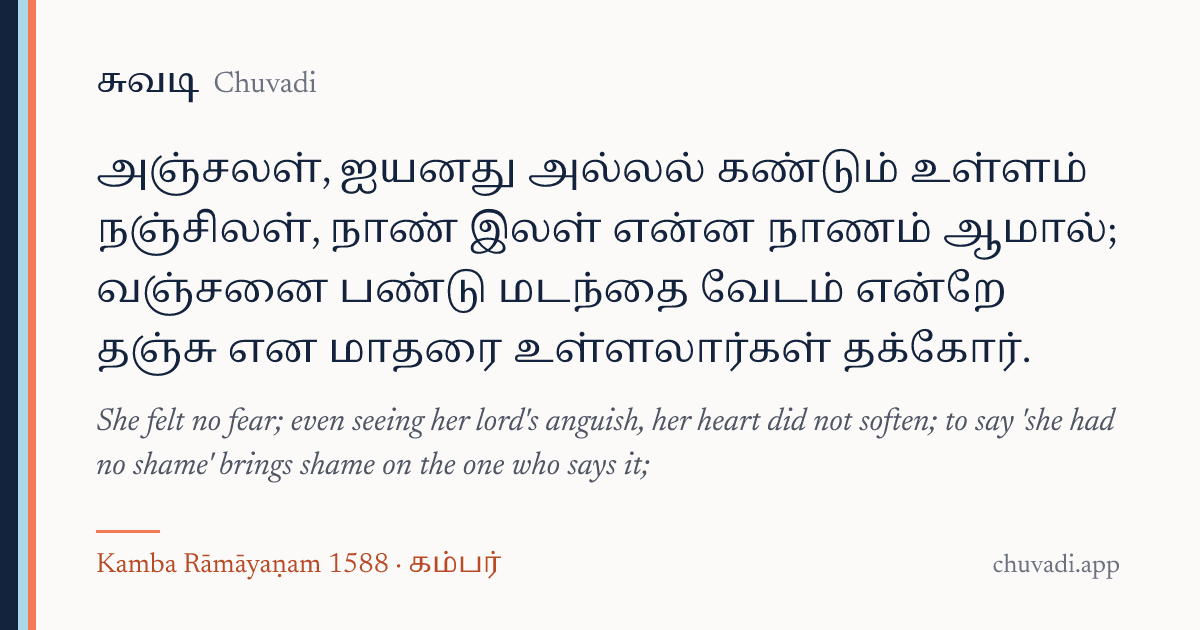
கம்பராமாயணம் 1588 · அயோத்தியா 3.21
பாடல் · The poem
Tap a word to see its gloss in the commentary and where else it occurs.
பொருள் · Meaning in Tamil
ஐயனது அல்லல் கண்டும் அஞ்சலள் - (தன்) கணவனது துன்பத்தைக் கண்டும் அவள் அச்சம்கொள்ளவில்லை; உள்ளம் நஞ்சிலள் - மனம் இரங்கவில்லை; “நாண் இலள்” என்ன - ‘வெட்கப்படவும் இல்லை’ என்று அவள் நிலையைக் கூற; நாணம் ஆம் - (சொல்லும்) நமக்கே வெட்கம் உண்டாகும்; தக்கோர் - சால்புடைய பெரியோர்; “பண்டு - தொன்றுதொட்டே; வஞ்சனை - வஞ்சனை என்பது; மடந்தை வேடம் - பெண்ணுருவம்;” என்றே - என்று எண்ணியே; மாதரை - பெண்களை; தஞ்சு என - பற்றுக்கோடு என்று; உள்ளலார்கள் - நினையார்கள்.
பெண்மைக் குணங்கள் யாதுமின்றி இருந்த கைகேயி நிலைபற்றிக் கூறுவது நாணம் தருகிறது என்கிறார் கம்பர். ஐயன் - கணவன், தலைவன். நஞ்சிலள் - நைந்திலள் என்பதன் போலி. தஞ்சு - தஞ்சம் என்பதன் விகாரம். ‘ஆல்’ - அசை.
ஆங்கிலம் · English translationAI
Translation
- She felt no fear; even seeing her lord's anguish, her heart
- did not soften; to say 'she had no shame' brings shame on the one who says it;
- it is because they think that deceit has from of old worn a woman's guise
- that the wise do not hold women to be a refuge.
What the poem says
Even seeing her husband's agony, Kaikēyi is neither afraid nor moved. The poet says that merely to report that she felt no shame makes him ashamed.
He then adds a generalising remark of his day: the wise, he says, have long held that deceit takes a woman's form, and so do not treat women as a sure refuge. It is a harsh aside, prompted by the spectacle of a woman who has, for the moment, abandoned every gentle quality.