



கம்பராமாயணம் 16 · பால 1.16
பாடல் · The poem
Tap a word to see its gloss in the commentary and where else it occurs.
பொருள் · Meaning in Tamil
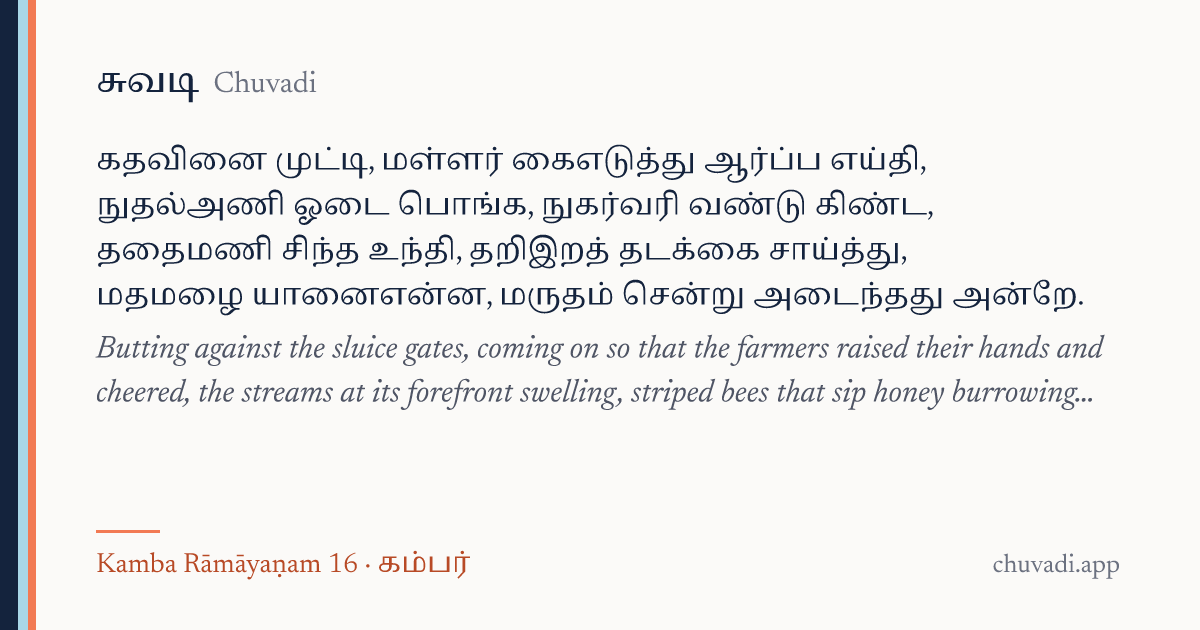
கதவினை முட்டி - (சரயுவின் வெள்ளம் அங்குள்ள மதகுகளின்) கதவுகளை மோதி; மள்ளர் கை எடுத்து ஆர்ப்ப எய்தி - உழவர்கள் கைகளை உயர்த்தி (மகிழ்ச்சியால்) ஆரவாரம் செய்யும்படி வந்து; நுதல் அணி ஓடை பொங்க - முன்னணியிலுள்ள ஓடைகள் பெருகுமாறு; நுகர் வரி வண்டு கிண்ட - (தேன் உண்ணும்) கோடுகளமைந்த (உடம்பினையுடைய) வண்டுகள் குடைய; ததை மணி சிந்த உந்தி - நெருங்கிய மணிகள் சிதறும்படி நீரைத் தள்ளிச் சென்று; தறி இறத் தடக்கை சாய்த்து - (இரு கரையிலும் நடப்பட்ட) பெரிய கழிகளை முறியும்படி அலைகளாகிய பெரிய கைகளால் சாய்த்து; மத மழை யானை என்ன - மத மழை பொழிகின்ற யானை போல; மருதம் சென்று அடைந்தது - மருத நிலத்தைச் சென்று சேர்ந்தது.
சரயுவின் வெள்ளத்தின் செயல்கள் மதயானையின் செயல்களோடு பொருத்திக் கூறிய நயம் பாராட்டத்தக்கது. மதகின் கதவுகளை மோதுவது நீர் வெள்ளம்; பகைவர் மதிற் கதவுகளை மோதுவது மத யானை. வெள்ளப் பெருக்கைக் கண்டு உழவர் மகிழ்ச்சியால் ஆரவாரம் செய்வர் இக்கருத்தினைக் கூறும் கவித் தொடர் யானையைக் குறிக்கும்போது, தெருக்களில் நடமாடும் மக்களை எச்சரித்து விலகிப் போய்விடும்படி வீரர்கள் கை உயர்த்தி விலக்குதலைக் குறிக்கும். மள்ளர்: உழவர் வீரர் நுதல் அணி ஓடை: சரயுவின் முன்னுள்ள அழகிய நீரோடைகள் எனவும் யானையின் நெற்றியில் அணியப்படும் முகபடாஅம் எனவும் கொள்க. ஆற்றுப் பெருக்கில் கிடைக்கும் தேன் உண்ட வண்டுகள் மொய்ப்பது வெள்ளத்தில்; மதநீர் உண்ண வண்டுகள் மொய்ப்பது யானையிடத்தில் வண்டுகளின் உடலிலுள்ள கோடுகள் குறித்து வரி வண்டு என்றார்; வரி (இசை) பாடும் வண்டுகள் என்றும் கொள்ளலாம். அடித்து வரும் வெள்ளத்தில் மணிகளும் இருக்கும்; யானைக்கு மணி கட்டுவது வழக்கம். தறி: வெள்ளப்போக்கைக் கட்டுப்படுத்த குதிரை மரங்கள் எனப்படும் தூண்கள்; யானை கட்டப்பட்டிருக்கும் கம்பம். தடக்கை; ஆற்றின் அலைகளாகிய பெரிய கைகள் எனவும் யானையின் பெரிய துதிக்கைகள் எனவும் காண்க. கவிச்சக்கரவர்த்தி சொல்லணியையும் கற்பனைக் களமான பொருளணியையும் சிலேடை வகையால் இணைத்த திறம் உணர்ந்து மகிழத் தக்கது.
'கொடிச்சியர்' எனத் தொடங்கும் பாடலில் குறிஞ்சி, அடுத்துப் பாலை, முல்லை ஆகிய பகுதிகளில் பாய்ந்த வெள்ளத்தை இப் பாடலில் மருதத்தைச் சேரச் செய்து வருணிக்கிறார் கம்பர். இனி, வரும் பாடலில் திணை மயக்கம் காணலாம்.
ஆங்கிலம் · English translationAI
Translation
- Butting against the sluice gates, coming on so that the farmers raised their hands and cheered,
- the streams at its forefront swelling, striped bees that sip honey burrowing into it,
- scattering the crowded gems as it surged, bending down with great hands till the stakes broke,
- like an elephant pouring the rain of musth, it went on and reached the farmlands.
What the poem says
Having followed the flood through the hills, the dry tracts and the pasture country, the poet now brings it to the marutam, the fertile land of rice fields. It arrives like a rutting elephant, and every phrase fits both. The flood batters sluice gates as a war elephant batters fortress gates. Farmers raise their hands and cheer at the water, while soldiers raise their hands to clear the streets before the elephant. The streams at the river's front match the ornament on the elephant's forehead. Bees swarm to the honey in the water and to the elephant's musth. Gems tumble in the flood as bells swing on the elephant. And the waves, like a trunk, snap the posts set up to check the water, as the elephant snaps its tethering post.