



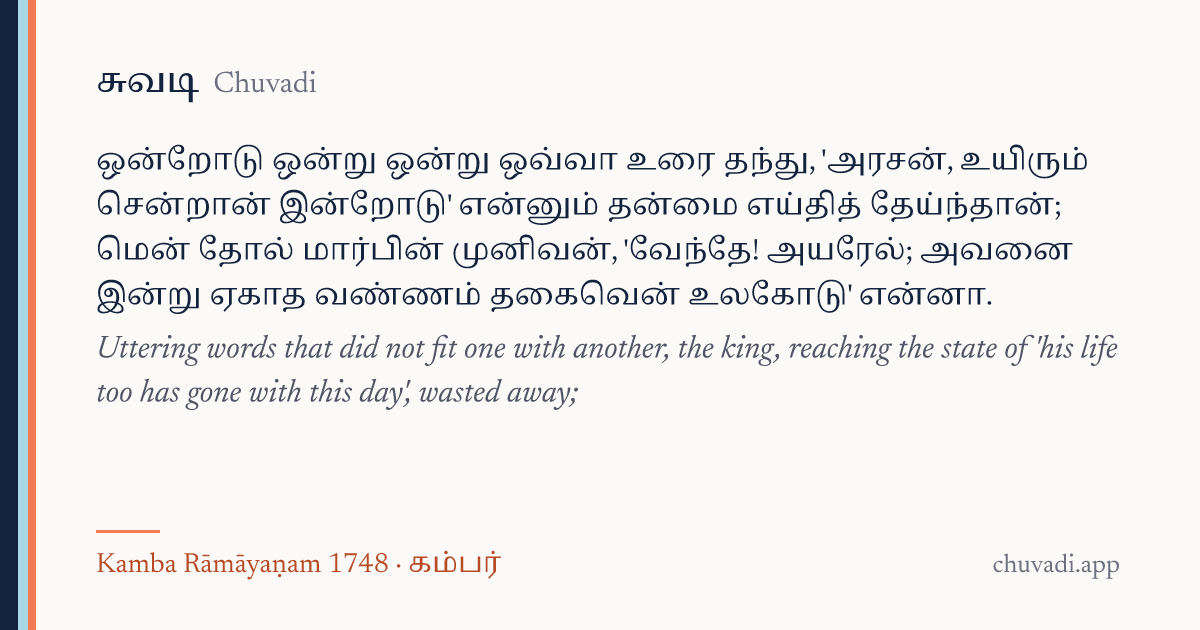
கம்பராமாயணம் 1748 · அயோத்தியா 4.66
பாடல் · The poem
Tap a word to see its gloss in the commentary and where else it occurs.
பொருள் · Meaning in Tamil
அரசன் - தயரத மன்னன்; ஒன்றோடு ஒன்று ஒன்று ஒவ்வா உரை தந்து - ஒன்றுக்கொன்று தொடர்பில்லாமல் புலம்பி; “உயிரும் இன்றோடு சென்றான்” என்னும் தன்மை எய்தித் தேய்ந்தான் - உயிரும் இன்றோடு போகப் பெற்றான் என்கின்ற நிலை அடைந்து அழிந்தான்; மென் தோல் மார்பின் முனிவன் - மெல்லிய தோல் போர்த்திய மார்பினை உடைய வசிட்டன்; “வேந்தே - தசரத மன்னனே; அயரேல் - சோர்வடையாதே; அவனை - இராமனை; இன்று - இன்றைக்கு; ஏகாத வண்ணம் - காடு செல்லாதபடி; உலகோடு தகைவென் - நாட்டு மக்களோடு சேர்ந்து தடுப்பேன்; என்னா - என்று.
தானே சென்று சொன்னால் இராமனைத் தடுத்தல் இயலாது என்பதால் உலகோடு சென்று தகைவென்' என்றான்.
ஆங்கிலம் · English translationAI
Translation
- Uttering words that did not fit one with another, the king,
- reaching the state of 'his life too has gone with this day', wasted away;
- the sage, his chest covered in soft skin, said, 'King! Do not despair; him
- I shall hold back, together with the world, so that he does not go today.'
What the poem says
The king's laments become disjointed, and he sinks toward death. Vacittaṉ, wearing the soft deerskin of a sage, tries to comfort him: he will go and, with the people of the land behind him, stop Irāmaṉ from leaving today.
The commentary notes that the sage knows he alone cannot dissuade Irāmaṉ, which is why he plans to take the whole people with him.