



கம்பராமாயணம் 1749 · அயோத்தியா 4.67
பாடல் · The poem
Tap a word to see its gloss in the commentary and where else it occurs.
பொருள் · Meaning in Tamil
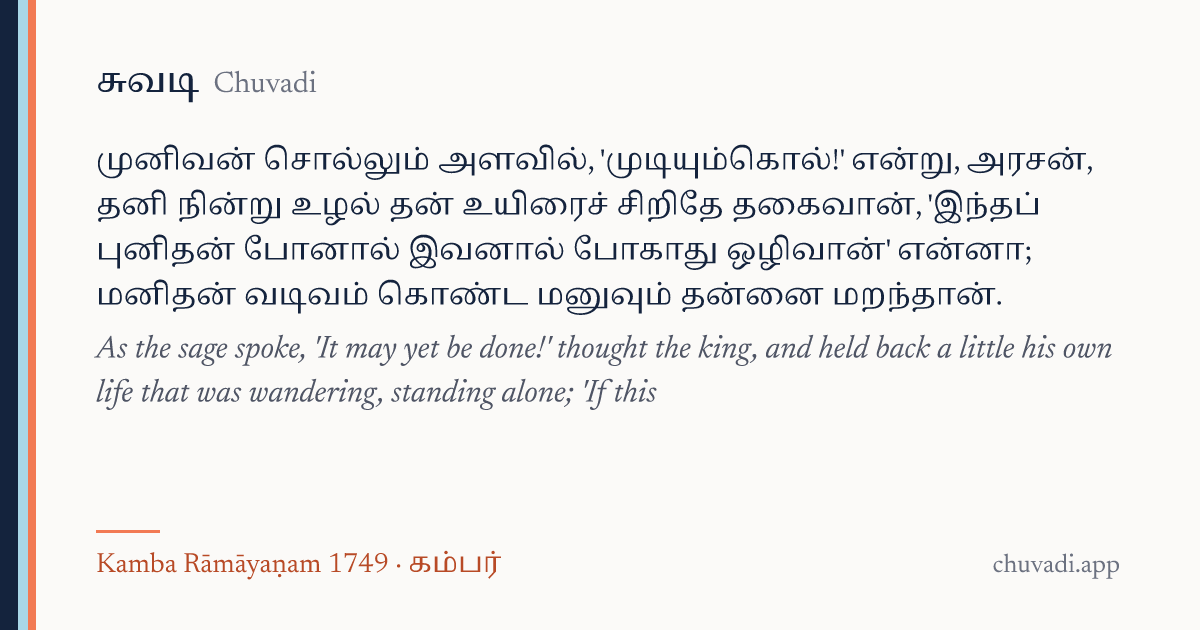
முனிவன் சொல்லும் அளவில் - முனிவன் இவ்வாறு (இராமனை வனம்போகாது தடுப்பேன் என்று சொல்லுகின்ற போது; “முடியும் கொல'- (இது இவனால்) முடியும்போலும்; என்று- எனக் கருதி; அரசன்- தயரதன்; தனி நின்று உழல் தன் உயிரைச் சிறிதே தகைவான்- தனியாக நின்று (வருந்துகிற போவது வருவதாய் உள்ள தன்னுடைய உயிரைச் சிறிதளவு தடுத்து நிறுத்தி; இந்தப் புனிதன் போனால் - இந்த வசிட்டன் போய்ச் சொன்னால்; இவனால் போகாது ஒழிவான்' என்னா - இவன் சொற்கேட்டு இராமன் வனம் போகாமல் தங்குவான் என்று கருதி; மனிதன் வடிவம் கொண்ட மனுவும் - மானுடவடிவம் தாங்கியுள்ள வைவஸ்வத மனுச் சக்ககரவர்த்தியாகிய தயரதனும்; தன்னை மறந்தான் - நினைவிழந்தான்.
வசிட்டன் வார்த்தை கேட்டு நம்பிக்கை எய்திப் போகிற உயிரைத் தடுத்து நிறுத்தி மூர்ச்சையானான் தயரதன். வைவஸ்வதமனு - சூரியன் மகன் - தயரதன் குலத்து முன்னோன். ஆட்சிச் சிறப்பாலும், ஆற்றல் முதலியவற்றாலும் அவனை ஒத்தவன் என்றார்.
ஆங்கிலம் · English translationAI
Translation
- As the sage spoke, 'It may yet be done!' thought the king,
- and held back a little his own life that was wandering, standing alone; 'If this
- holy man goes, through him he will stay and not go,' he thought;
- and that Maṉu in human form lost his senses.
What the poem says
Hearing Vacittaṉ's promise, Tacarataṉ hopes it may succeed. He holds back his departing life for a while, believing that if the holy sage goes, Irāmaṉ will listen to him and stay.
Then, with that hope, he faints. The poet calls him Maṉu in human form: Maṉu, son of the Sun and founder of his line, is the model of a just and mighty ruler, and Tacarataṉ is his equal.