



கம்பராமாயணம் 1750 · அயோத்தியா 4.68
பாடல் · The poem
Tap a word to see its gloss in the commentary and where else it occurs.
பொருள் · Meaning in Tamil
மன்னன் நினைவும் உயிரும் மறந்தான்' என்ன மறுகா - அரசன் ஞாபகமும் உயிரும் மறக்கப்பெற்றான் என்று கருதி மனம் கலங்கி; “அரசன் இறந்தான் கொல்லோ” என்னா இடர் உற்று அழிவாள் - அரசன் இறந்தான் போலும் என்று துன்பமுற்று வருந்தும் கோசலை; “மகன் முன் எனையும் துறந்தான்” - மகனாகிய இராமனும் முன்னால் என்னைக் கைவிட்டான்; “நீயும் துறந்தாய்' - கணவனாகிய நீயும் என்னைக் கைவிட்டாய்; துணைவா! - என் துணைவனே!; ஐயா! - ஐயனே!; அரசர்க்கு அரசே! - இராச இராசனே!; அறம்தான் இதுவோ' - அறம் என்பது இதுதானோ; என்றாள் -.
தாயை மகன் துறப்பதும், மனைவியைக் கணவன் துறப்பதும்தான் தருமமா? என்று வினாவிப் புலம்பினாள். 'கொல்' ஐயம், 'ஓ' வினாப் பொருளில் வந்தது. “எனையும்” என்பதிலுள்ள உம்மை 'மகன்' என்பதனோடு கூட்டிப் பொருள் கொள்ளப்பட்டது.
ஆங்கிலம் · English translationAI
Translation
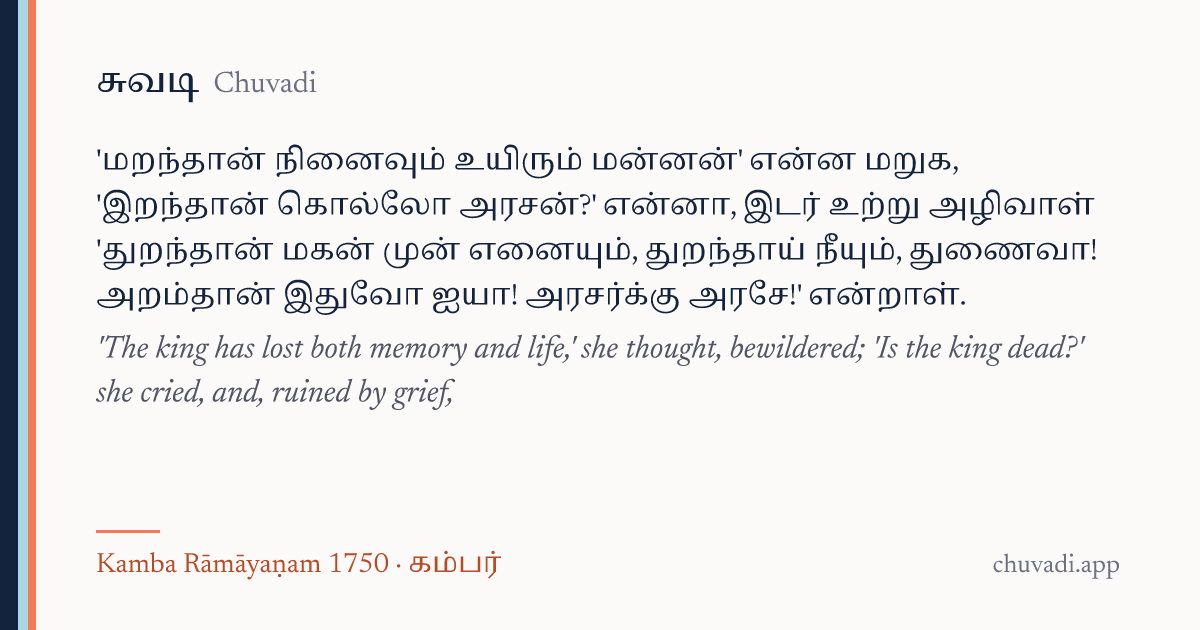
- 'The king has lost both memory and life,' she thought, bewildered;
- 'Is the king dead?' she cried, and, ruined by grief,
- 'My son left me first, and now you too have left me, my companion!
- Is this dharma, my lord? King of kings!' she said.
What the poem says
Seeing the king fall senseless, Kōcalai fears he has died. Her son has already abandoned her, and now her husband seems to have done the same.
She asks bitterly whether it can be right for a son to forsake his mother and a husband his wife. The commentary notes that the 'too' in 'me too' links back to the son: first he, then you.