



கம்பராமாயணம் 175 · பால 5.7
பாடல் · The poem
Tap a word to see its gloss in the commentary and where else it occurs.
பாட வேறுபாடு · Project Madurai reads
பொருள் · Meaning in Tamil
சுடுதொழில் அரக்கரால் - சுடுகின்ற தொழிலை உடைய அரக்கர்களால்; வான் உளோர் தொலைந்து - வானுலகில் வாழும் தேவர்கள் வாழ்வழிந்து; கடு அமர்களன் அடிகலந்து கூறலும் - நஞ்சுதங்கிய மிடற்றை உடைய சிவபெருமானது பாதங்களை அடைந்து தமது துன்பத்தைக் கூறலும், படு பொருள் உணர்ந்த அப்பரமன் - மேலே நிகழவேண்டியவைகளை முன்னரே உணர்ந்துள்ள அப்பெருங்கடவுளான சிவபெருமான்; இனியான் அடுகிலேன் எனமறுத்து - இனி யான் அரக்கருடன் போர்புரிய மாட்டேன் என மறுத்து உரைத்து; அவரொடும் ஏகினான் - அவ்வமரர்களுடன், நான்முகனது இருப்பிடம் நோக்கிச் சென்றான்.
நினைக்கும் மனத்தையும் சுடக்கூடிய அத்துணைக் கொடுந்தொழில் என்பார் ‘சுடு தொழில்’ என்றார். கடு: நஞ்சு. களன்: கழுத்து. பிறர்க்குத் துன்பம் விளைவிக்கும் நஞ்சைத் தானுண்டு, தேவர்களைக் காத்தார் என்பதைக் குறிப்பிடுவதிது. படுபொருள்: மேல்நிகழும் நிகழ்ச்சி. சிவபெருமானைப் பரமன் (பெருங்கடவுள்) எனக் கூறும் கம்பரது சமய சமரசக் கொள்கை அறிந்து மகிழ்தற்குரியது. ‘படுபொருள்’ என்றது ‘அரக்கர் இனி இன்னாரால் அழிபடுவார்கள்’ என்ற அவ் உண்மையை அறிந்தமையால் தான் அடுகிலேன் என்றான் என்றார்.
ஆங்கிலம் · English translationAI
Translation
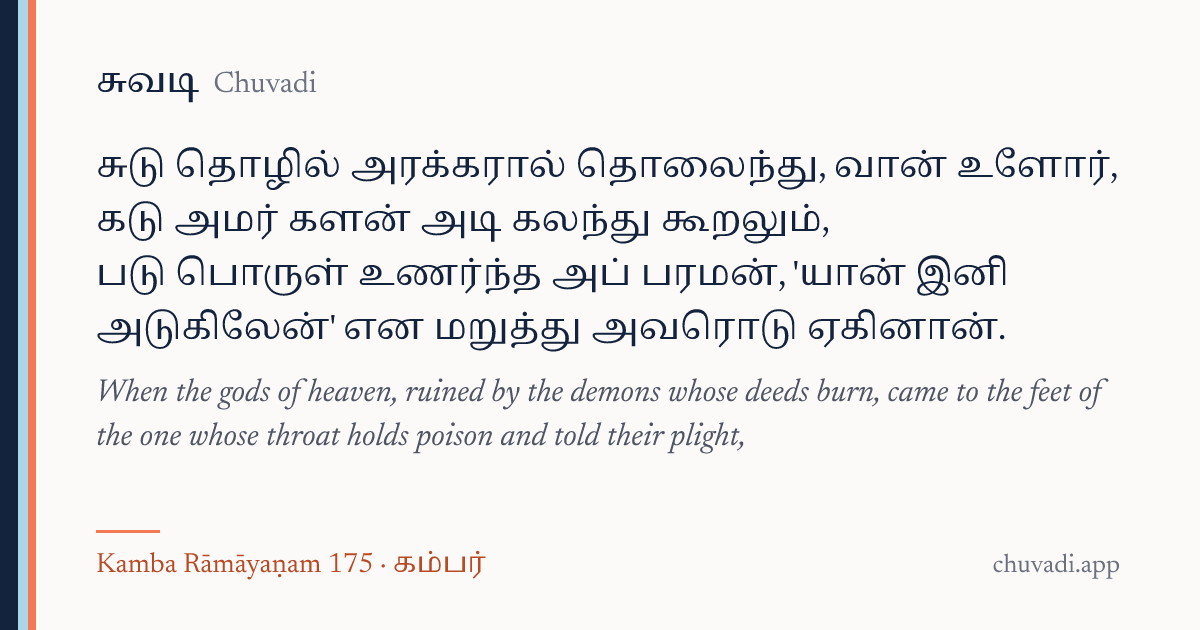
- When the gods of heaven, ruined by the demons whose deeds burn,
- came to the feet of the one whose throat holds poison and told their plight,
- that Supreme One, who knew what was to come, refused, saying, 'I will not
- slay them now,' and went along with them.
What the poem says
The flashback begins. Ruined by the demons, the gods first go to Śiva, whose throat is dark from the poison he swallowed to save the world.
Śiva already knows that the demons are fated to die at someone else's hands, so he declines to fight. Instead he goes with the gods to see Brahmā. The commentary notes Kampaṉ's even-handedness here in calling Śiva the Supreme One.