



கம்பராமாயணம் 1769 · அயோத்தியா 4.87
பாடல் · The poem
Tap a word to see its gloss in the commentary and where else it occurs.
பாட வேறுபாடு · Project Madurai reads
பொருள் · Meaning in Tamil
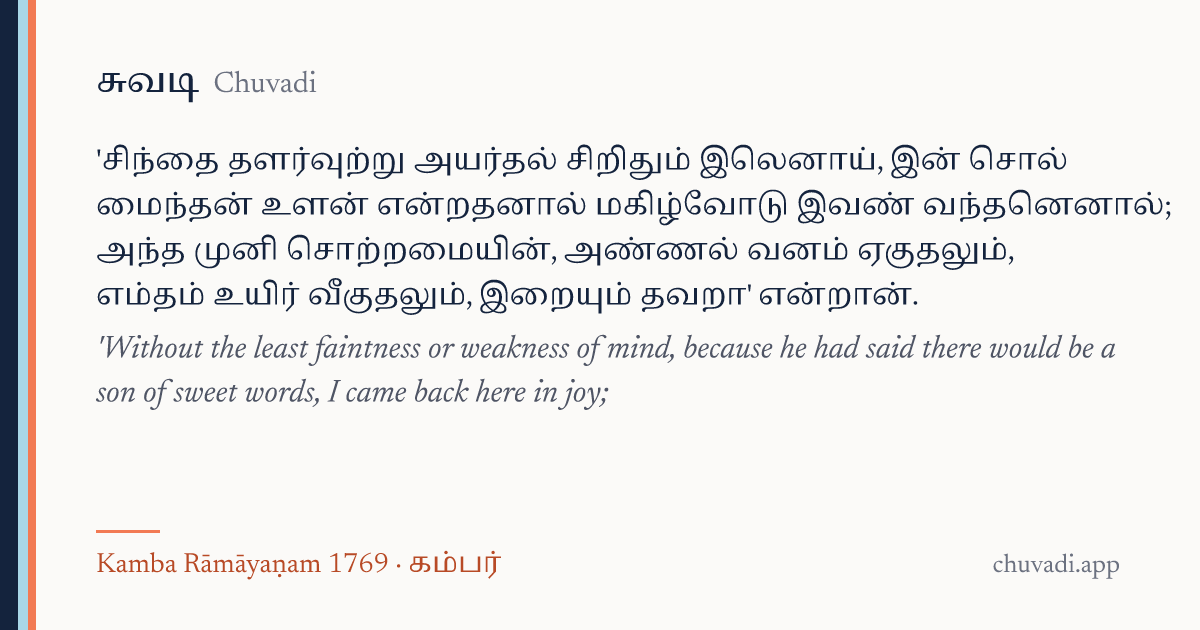
“சிந்தை தளர்வுற்று அயர்தல் சிறிதும் இலெனாய் - மனம் தளர்ந்து சோர்வடைதல் சிறிதும் இல்லாமல்; இன் சொல் மைந்தன் உளன்” என்றதனால் - இனிய சொற்களைப் பேசும் மகன் பிறப்பான்” என்பது அவன் சாபத்தால் ஏற்பட்டதனால்; இவண் - நகரத்துக்கு; மகிழ்வோடு வந்தனென் - மகிழ்ச்சியோடு வந்து சேர்ந்தேன்; அந்த முனி சொற்றமையின் - அந்த முனிவன் சொன்னபடியால்; அண்ணல் வனம் ஏகுதலும் - இராமன் (என்னைப்) பிரிந்து காடு செல்லுதலும்; எம்தம் உயிர் வீகுதலும் - என்னுடைய உயிர் போவதும்; இறையும் தவறா' - சிறிதளவும் மாறா; என்றான் -
மகன் இன்றி இருந்த தயரதனுக்கு முனிவன் சாபம் மகன் உண்டு என்பதை உணர்த்திற்று என்பதால் அப்போதைக்கு அது மகிழ்ச்சியானதாகவே ஆயிற்று என்றானாம். மகன் பிறப்பது முனிவன் சாபத்தால் உண்மையாகி நிறைவேறியமையின் மகன் பிரிவதும், தன்னுயிர் போவதும் கூட அச்சாபப்படி நிறைவேறுவது உறுதி என்றான். 'ஆல்' அசை. 'என்றான்' என்றமையவேண்டியது எதுகை நோக்கி எந்தம் என நின்றது.
ஆங்கிலம் · English translationAI
Translation
- 'Without the least faintness or weakness of mind, because he had said
- there would be a son of sweet words, I came back here in joy;
- because that sage said it, the noble one's going to the forest
- and my life's departing will not fail in the least,' he said.
What the poem says
Tacarataṉ ends his story. At the time he was childless, so the curse actually pleased him: it implied that he would one day have a son, and he went home happy.
The first part of the curse has come true, since the son was born. Therefore, he tells Kōcalai, the rest will surely follow: Irāmaṉ will go to the forest, and the king will die.