



கம்பராமாயணம் 1768 · அயோத்தியா 4.86
பாடல் · The poem
Tap a word to see its gloss in the commentary and where else it occurs.
பொருள் · Meaning in Tamil
தாவாது ஒளிரும் குடையாய்! - கெடாது ஒளிவீசும் வெண்குடை வேந்தே; “இங்கு இது தவறு, நின் சரணம், காவாய்” என்றாய் - இங்கு நான் செய்த இச்செயல் என் தவறே, நின் திருவடியைப் புகலாக அடைந்தேன், என்னைக் காப்பாற்று என்று சொன்னாய்; அதனால் - (குற்றத்தை ஒப்புக்கொண்டு) சரணம் அடைந்தமையால்; கடிய சாபம் கருதேம் - கொடிய சாபம் கொடுக்கக் கருதவில்லை; ஏவா மகவைப் பிரிந்து - கட்டளை இடவேண்டாது குறிப்பறிந்து செய்யும் நன்மகனைப் பிரிந்து; இன்று எம்போல் - இன்று நாங்கள் துன்பப்படுவது போல்; இடர் உற்றனை - துன்பம் அடைந்தனையாய்; நீ அகல் வான் போவாய் - நீ அகன்ற வானத்தை அடைவாய்; என்னா - என்று சாபம் தந்து; பொன் நாட்டிடை போயினர் - விண்ணுலகம் சென்றார்கள்.
கடிய சாபம் என்பது “பிள்ளை இறக்க என்று சொல்லாமல், பிள்ளை பிரிய என்று சொல்லியது கருதி. “எம்போல்' என்றாலும், பிள்ளை இறப்பதை நீக்கிய உவமை, நாங்கள் உயிர்துறப்பது போல் நீயும் உயிரிழப்பாய் என்று சுட்டும் அளவில் நின்றது. 'ஆல்' ஈற்றசை.
ஆங்கிலம் · English translationAI
Translation
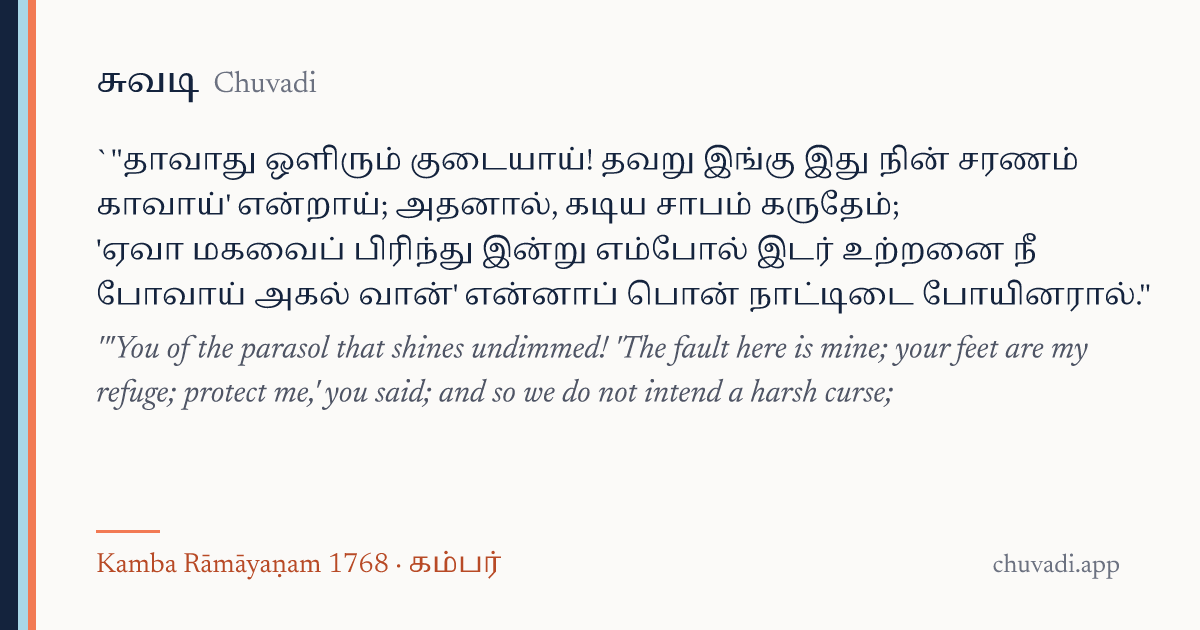
- '"You of the parasol that shines undimmed! 'The fault here is mine; your feet are my refuge;
- protect me,' you said; and so we do not intend a harsh curse;
- parted from a child who needs no bidding, suffering today as we do, you
- shall go to the wide heaven," they said, and went to the golden world.'
What the poem says
The sage explains why his curse is mild. Tacarataṉ admitted his fault and sought refuge at his feet, so the couple will not curse him with the death of his son.
Instead they say he will be parted from a son who does what is needed without being told, will suffer as they suffer, and will die of it. Having spoken, they died and went to heaven. The commentary notes that the comparison 'as we do' stops short of the son's death and applies only to the parents' dying of grief.