



கம்பராமாயணம் 1767 · அயோத்தியா 4.85
பாடல் · The poem
Tap a word to see its gloss in the commentary and where else it occurs.
பாட வேறுபாடு · Project Madurai reads
பொருள் · Meaning in Tamil
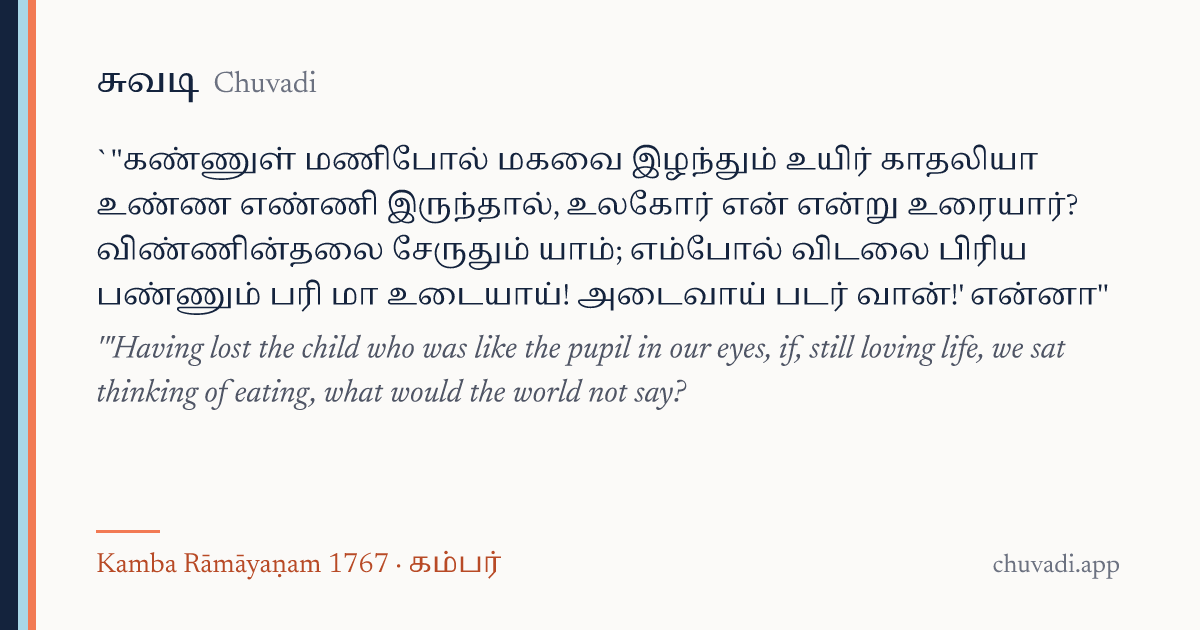
“கண் உள் மணி போல் மகவை இழந்தும் - கண்ணிற்குள்ளே உள்ள கருமணிப் பாவைபோன்ற சிறந்த மகனை இழந்த பிறகும்; உயிர் காதலியா - உயிர்மேல் ஆசை வைத்து; உண்ண எண்ணி இருந்தால் - உண்பதற்கு நினைத்து (உலகில் வாழ்ந்து) இருந்தால்; உலகோர் என் என்று உரையார்? - உலகில் உள்ளவர்கள் (எங்களை) என்னவென்று பழியார்; யாம் விண்ணின்தலை சேருதும் - நாங்களும் (இறந்து) மேல் உலகம் சேர்கிறோம்; பண்ணும் பரிமா உடையாய் - அலங்கரிக்கப் பெற்ற குதிரையை உடைய மன்னனே; எம்போல் - எங்களைப் போல; விடலை பிரிய - மகன் பிரிந்து செல்ல; படர்வான் அடைவாய்” - அகன்ற வானுலகை அடைவாயாக; என்னா - என்று சொல்லி.
உலகோரது பழிமொழிக்கு அஞ்சி யாங்கள் வானுலகு சேர்வோம் என்று மனைவியையும் உளப்படுத்தி முனிவன் கூறினான். “கண்ணிற் கருமணி” என்றான் மகனை; இதுவரை இவர்களுக்குப் பார்வையாக இருந்தவன் ஆதலின்.
ஆங்கிலம் · English translationAI
Translation
- '"Having lost the child who was like the pupil in our eyes, if, still loving life,
- we sat thinking of eating, what would the world not say?
- We shall go to the top of heaven; and like us, with your son parted from you,
- you who own adorned horses, you shall reach the wide heaven," he said.'
What the poem says
The sage refuses the king's offer. Their son was as precious to them as the pupil of an eye, indeed he was their sight; to go on living and eating after losing him would bring the world's scorn.
So he and his wife will die and go to heaven. Then comes the curse: Tacarataṉ too will die, parted from his son, as they are dying now.