



கம்பராமாயணம் 1766 · அயோத்தியா 4.84
பாடல் · The poem
Tap a word to see its gloss in the commentary and where else it occurs.
பொருள் · Meaning in Tamil
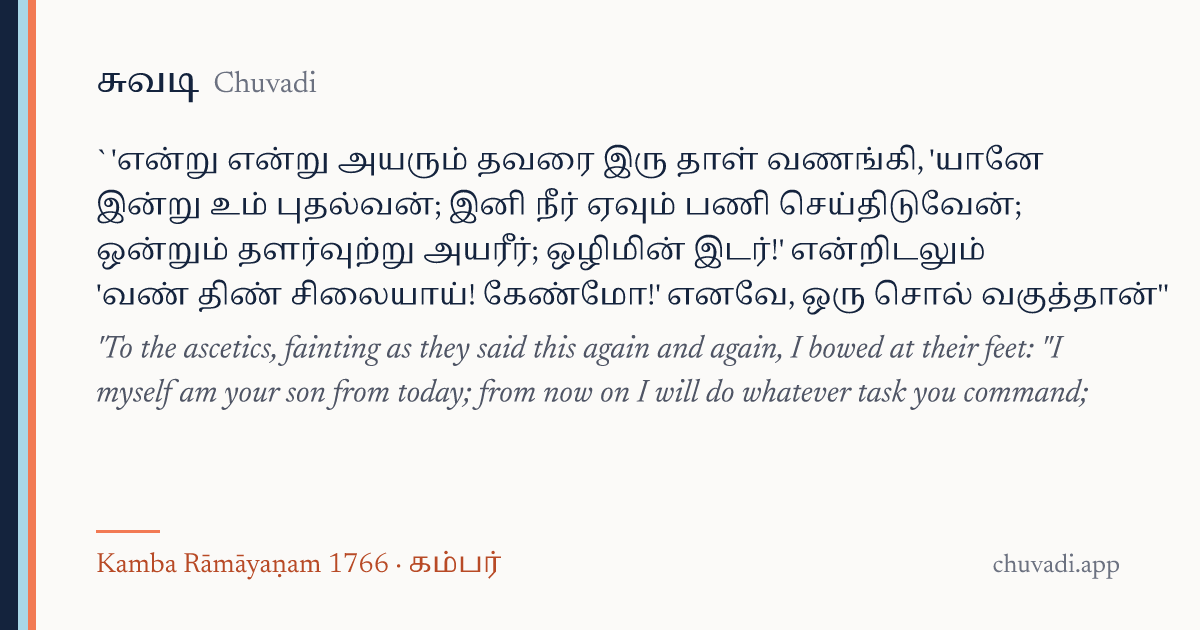
“என்று என்று - இவ்வாறு பலபடியாகப் புலம்பி; அயரும் - சோர்வடைகிற; தவரை - முனிவரை; இருதாள் வணங்கி - திருவடிகளில் வணங்கி; யானே இன்று உம் புதல்வன் - நான் இன்று முதல் உங்கள் மகன் ஆவேன்; இனி நீர் ஏவும் பணி செய்திடுவேன் - இனி மேல் நீங்கள் இடும் கட்டளையைச் செய்து முடிப்பேன்; ஒன்றும் தளர்வுற்று அயர்ரர் - சிறிதும் சோர்வடையாதீர்; இடர் ஒழிமின்'- துன்பம் நீங்குங்கள்; என்றிடலும் - என்று சொல்லவும்; “வன் திண் சிலையாய்! - வலிய கட்டமைந்த வில்லை உடையவனே; கேண்மோ - கேட்பாயாக; எனவே - என்று; ஒரு சொல் வகுத்தான் - (அம்முனிவன்) ஒரு வார்த்தை சொன்னான்.
'யானே' 'ஏ' காரம் தேற்றம். ஒழிமின் - முன்னிலைப் பன்மை வினைமுற்று. “கேண்மோ' - “மோ' முன்னிலை அசைச்சொல். காமம் செப்பாது கண்டது மொழிமோ' (குறுந். 2) என்புழிப் போல.
ஆங்கிலம் · English translationAI
Translation
- 'To the ascetics, fainting as they said this again and again, I bowed at their feet: "I myself
- am your son from today; from now on I will do whatever task you command;
- do not faint in despair at all; put away your grief," I said; and
- "You of the strong, firm bow! Hear!" he said, and spoke a word.'
What the poem says
Tacarataṉ bowed to the grieving parents and offered himself as their son, promising to serve them in every way and begging them to give up their grief.
The sage answered, 'Hear me,' and spoke a single fateful sentence, which follows in the next verse. The commentary adds grammatical notes on the imperative forms.