



கம்பராமாயணம் 1765 · அயோத்தியா 4.83
பாடல் · The poem
Tap a word to see its gloss in the commentary and where else it occurs.
பொருள் · Meaning in Tamil
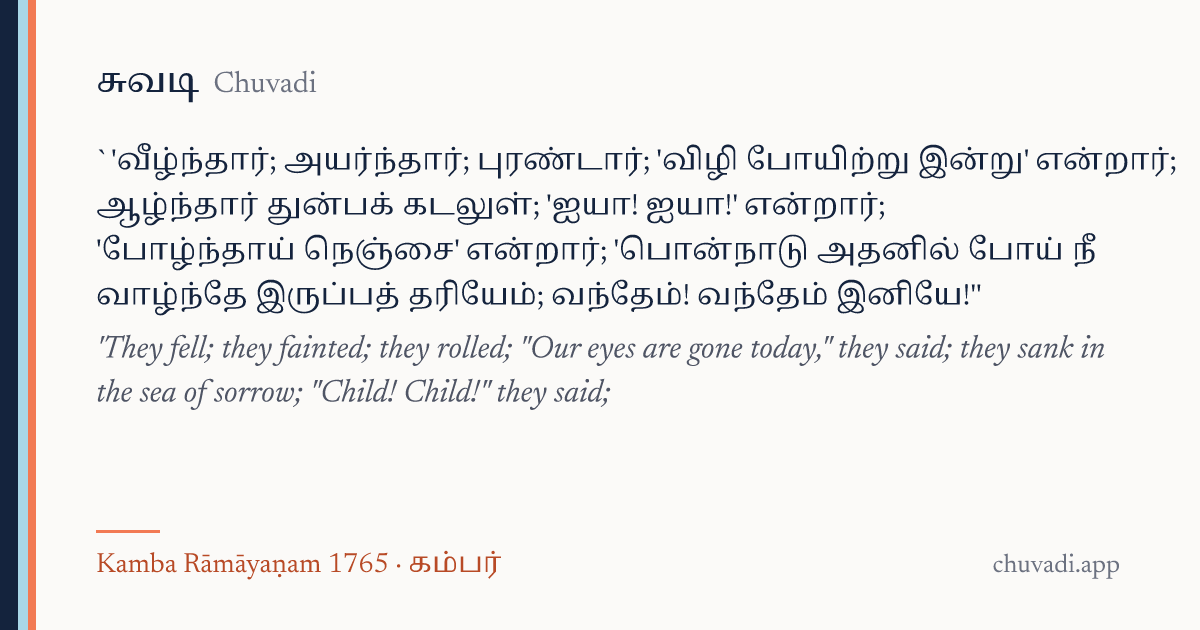
(மகன் இறந்தான் என்பது கேட்ட அவ் இரு முதுகுரவரும்) “வீழ்ந்தார் அயர்ந்தார் புரண்டார் - தரையில் விழுந்து சோர்வு அடைந்து புரண்டார்கள்; “இன்று விழி போயிற்று” என்றார் - இன்றைக்கு எங்கள் கண்கள் போயின என்றார்; துன்பக் கடலுள் ஆழ்ந்தார் - துன்பம் எனும் பெருங்கடலுள் மூழ்கினர்; “ஐயா! ஐயா” என்றார் - (மகனை நினைத்து) ஐயனே ஐயனே என்றார்; “நெஞ்சைப் போழ்ந்தாய்” என்றார் - (எங்கள்) மனத்தைப் பிளந்துவிட்டாய் என்றார்; “நீ பொன்நாடு அதனில் போய் வாழ்ந்தே இருப்பத் தரியேம்'- நீ பொன்னுலகம் சென்று அங்கு வாழ்ந்து இருப்ப நாங்கள் தனித்திருக்க மாட்டேம்; இனியே வந்தேம், வந்தேம்- இப்பொழுதே வந்துவிட்டோம், வந்து விட்டோம் (என்று புலம்பினர்)
இறந்த மகனின் பெற்றோர்கள் புலம்பினர். இனி ஒரு தங்கு பத செய்ய இயலாதவர்களாக ஆனோம் என்பது கருத்து.
ஆங்கிலம் · English translationAI
Translation
- 'They fell; they fainted; they rolled; "Our eyes are gone today," they said;
- they sank in the sea of sorrow; "Child! Child!" they said;
- "You have split our hearts," they said; "while you go to the golden world
- and live there, we cannot bear to stay; we come, we come, now!"'
What the poem says
Hearing of their son's death, the old couple collapse, roll on the ground and cry that today they have truly lost their eyes, since their son was their sight.
They call to him and say he has split their hearts. They cannot bear to live while he is in heaven, and declare they are coming to join him at once.