



கம்பராமாயணம் 1764 · அயோத்தியா 4.82
பாடல் · The poem
Tap a word to see its gloss in the commentary and where else it occurs.
பொருள் · Meaning in Tamil
“ஐயா! - ஐயனே; கணையால் அறுத்தாய் எனவே - (என் மகனை அம்பால் எய்து அழித்தாய் என்று; அடியேன் தன்னை - அடியேனை; கறுத்தே அருளாய் - கோபித்து விடாமல் இருப்பாயாக; மறுத்தான் இல்லான் - களங்கம் சிறிதும் இல்லாதவனாய நின்மகன்; வனம் மொண்டிடும் ஓதையின் - நீரை முகக்கின்ற ஓசையினால்; எய்தது அலால் - அம்பு எய்தது அல்லாமல்; யானோ கண்ணில் கண்டேன் அல்லேன் - யான் கண்ணால் பார்த்து (அம்பு எய்தேன் அல்லேன்); பொறுத்து அருள்வாய்” - (இந்த எனது பிழையைப்) பொறுத்தருள்வாயாக; என்னா - என்று; இரு தாள் - (அம்முனிவனது) இரு திருவடிகளையும்; சென்னி புனைந்தேன் - (விழுந்து வணங்கி) என் தலைமேல் சூடிக்கொண்டேன்.
கறுத்தல்- கோபித்தல். “கறுப்பும் சிவப்பும் வெகுளிப்பொருள்” (தொல். சொல்.372.) என்பது காண்க. அருளுதல் துணைவினை. கறுத்தருளாய் என ஒன்றாக்குக. பெரியோர் செயலைச் சொல்லும் இடத்து “அருளாய் ' எனும் சொல் வரும். அருளாய் என்பதில் ஆகாரம் எதிர்மறை.
ஆங்கிலம் · English translationAI
Translation
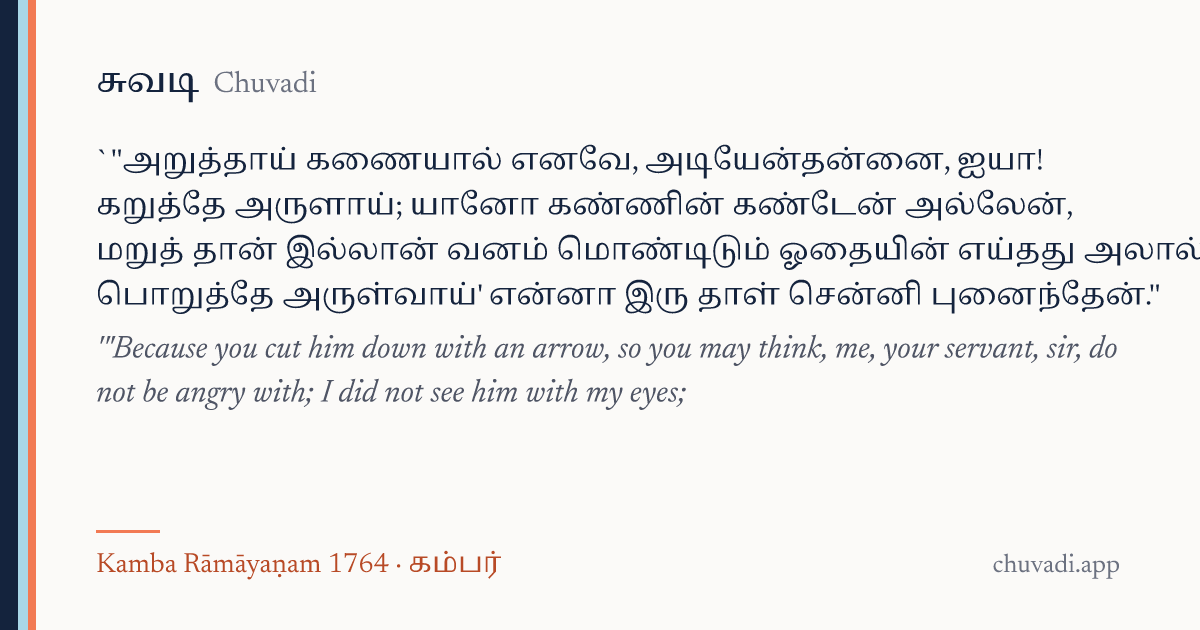
- '"Because you cut him down with an arrow, so you may think, me, your servant, sir,
- do not be angry with; I did not see him with my eyes;
- it was only that I shot at the sound of your flawless son drawing water;
- forgive me, be gracious," I said, and placed his two feet upon my head.'
What the poem says
Tacarataṉ begged the sage not to be angry: he had not seen the boy, only shot at the sound of water being drawn. He asked forgiveness and fell at the sage's feet, placing them on his head.
The commentary explains that kaṟuttal means to be angry, citing the Tolkāppiyam, and that 'be gracious' is the respectful form used when speaking of the great.