



கம்பராமாயணம் 1763 · அயோத்தியா 4.81
பாடல் · The poem
Tap a word to see its gloss in the commentary and where else it occurs.
பொருள் · Meaning in Tamil
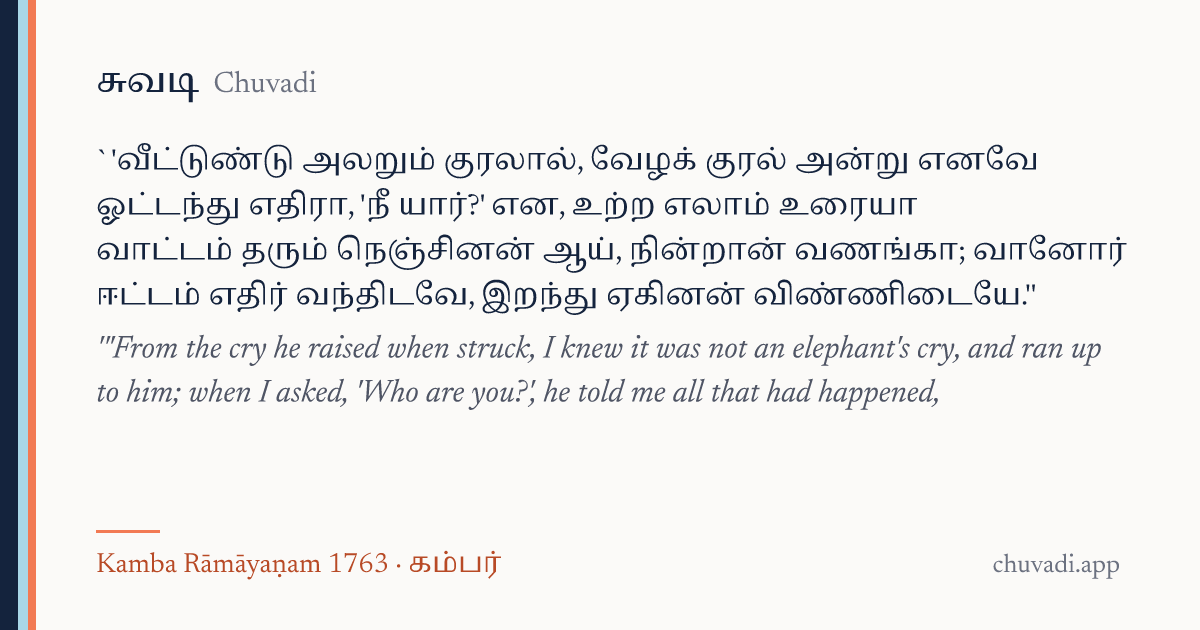
“வீட்டு உண்டு - அம்பு விடுதலால் அடிபட்டு; அலறும் குரலால்- கதறுகின்ற சப்தத்தால்; வேழக் குரல் அன்று எனவே - யானையின் குரல் அன்று என்று கருதி; ஓட்டந்து - ஓடி; எதிரா - (உங்கள் மகனைக் சந்தித்து; “நீ யார்' என - நீ யார் என்று (நான் கேட்க குமரன்); உற்ற எலாம் உரையா - நடந்தவை அனைத்தையும் சொல்லி; வாட்டம் தரு நெஞ்சினனாய் - வாடிப் போன மனம் உடையவனாகி; வணங்கா நின்றான் - உங்களிருவருக்கும் வணக்கம் தெரிவித்து, பேச்சு அடங்கினான்; வானோர் ஈட்டம் எதிர் வந்திட - தேவர்கள் கூட்டம் எதிர்வந்து வரவேற்க; இறந்து விண்ணிடை - இறந்து மேல் உலகத்தின்கண்; ஏகினன் - சென்றான்.
வாட்டம் தரும் நெஞ்சு - தன்னைப் பிரிந்தமையால் கண் இழந்த பெற்றோர் முதுமையில் உதவுவாரின்றி வாடுவர் என்பது பற்றிய வாட்டம் என்க. இறுதி 'ஏ' காரம் ஈற்றசை.
ஆங்கிலம் · English translationAI
Translation
- '"From the cry he raised when struck, I knew it was not an elephant's cry,
- and ran up to him; when I asked, 'Who are you?', he told me all that had happened,
- and with a withering heart he bowed to you; and as the host of the gods
- came out to meet him, he died and went to heaven."'
What the poem says
Tacarataṉ completes his confession to the parents. Hearing the cry, he ran to the boy, who told him everything, sent his parents his last salutation, and died, welcomed by the gods.
The commentary explains the boy's 'withering heart': it withered not for himself but at the thought of his blind parents left with no one to care for them in their old age.