



கம்பராமாயணம் 1762 · அயோத்தியா 4.80
பாடல் · The poem
Tap a word to see its gloss in the commentary and where else it occurs.
பொருள் · Meaning in Tamil
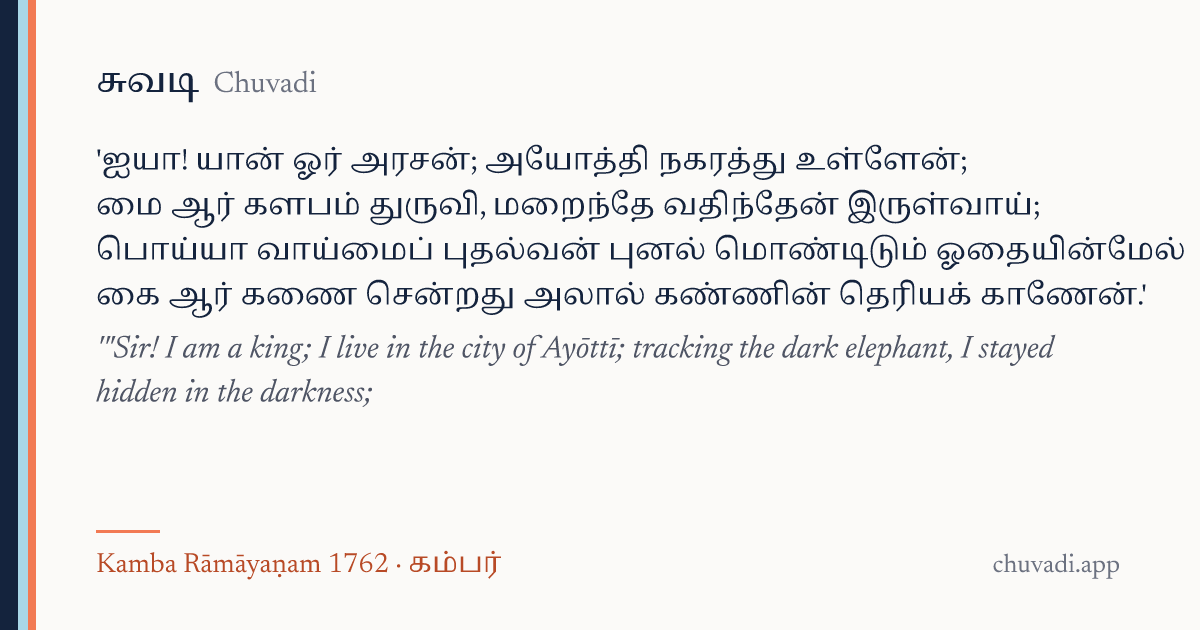
“ஐயா!- சுவாமி; யான் அயோத்தி நகரத்து உள்ளேன் ஓர் அரசன் - அயோத்தி நகரத்தில் உள்ள ஓர் அரசனாவேன்; மை ஆர் களபம் துருவி மறைந்து வதிந்தேன்- கருமை பொருந்திய யானையைத் தேடி மறைந்து தங்கியிருந்தேன்; இருள்வாய் - இருட்டில்; பொய்யா வாய்மைப் புதல்வன் - சத்திய வாக்கினை உடைய உங்கள் மகன்; புனல் மொண்டிடும் ஓதையின்மேல்- நீரை முகக்கும் ஓசையினிடமாக; கை ஆர் கணை சென்றது அலால் - கையில் உள்ள அம்பு சென்றதே அல்லாமல்; கண்ணில் தெரியக் காணேன்” - (நீர் முகப்பாரைக்) கண்ணில் விளங்கப் பார்த்ததறியேன்' ஆயினேன்.
ஓசையின் மூலம் அம்பு எய்தேன். பார்த்து எய்தேனில்லை என்பதால் அறிவுபூர்வமாக நிகழ்ந்த கொலை அன்று என்றானாம். “மறைந்தே” 'ஏ' காரம் தேற்றம்.
ஆங்கிலம் · English translationAI
Translation
- '"Sir! I am a king; I live in the city of Ayōttī;
- tracking the dark elephant, I stayed hidden in the darkness;
- upon the sound of your son of unfailing truth drawing water,
- the arrow went from my hand; but I did not clearly see with my eyes."'
What the poem says
Tacarataṉ tells the blind sage who he is: a king of Ayōttī who lay hidden in the dark, waiting for elephants.
He shot at the sound of their son filling his pot, without seeing him. The commentary notes the point of his confession: since he aimed by sound and not by sight, the killing was not deliberate.