



கம்பராமாயணம் 1761 · அயோத்தியா 4.79
பாடல் · The poem
Tap a word to see its gloss in the commentary and where else it occurs.
பாட வேறுபாடு · Project Madurai reads
பொருள் · Meaning in Tamil
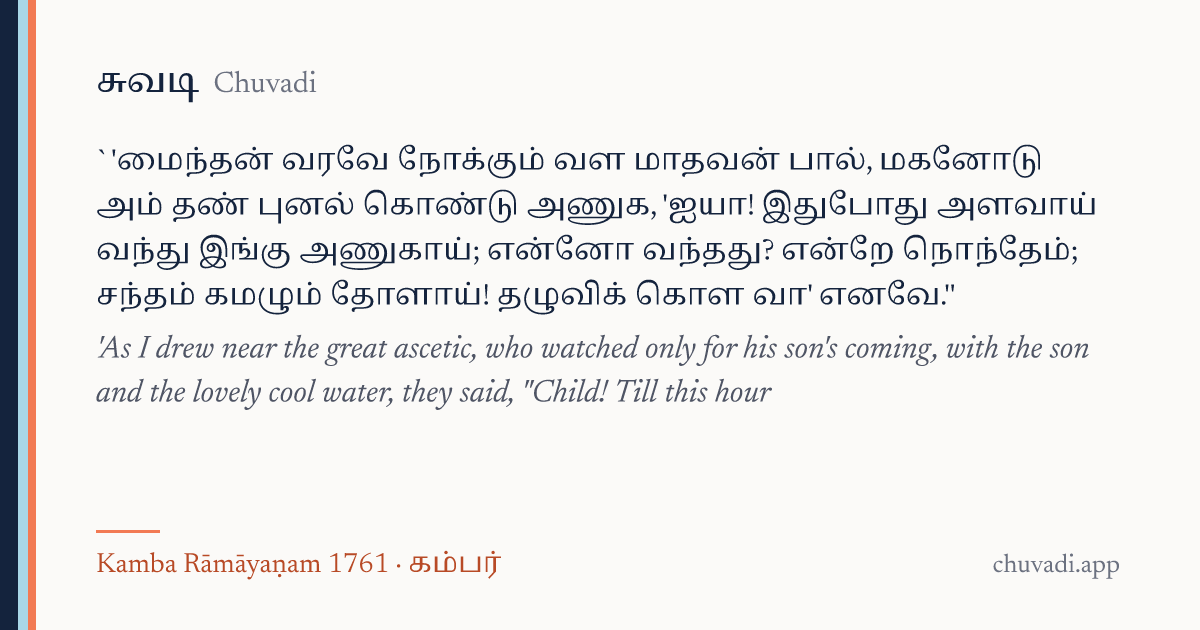
“மைந்தன் வரவே நோக்கும் - மகனது வருகையையே எதிர் பார்த்துக்கொண்டிருக்கின்ற; வள மாதவன்பால் - மிக்க தவத்தை உடைய முனிவனிடம்; மகனோடு - (இறந்த) மகனோடு; அம் தண்புனல் கொண்டு அணுக - அழகிய குளிர்ந்த நீரை எடுத்துக் கொண்டு நெருங்கிச் செல்ல; “ஐயா! - மகனே; இது போது அளவாய் - இவ்வளவு நேரமாய்; வந்து இங்கு அணுகாய் - இங்கு வந்து சேராமையால்; என்னோ வந்தது? - உனக்கு என்ன நேர்ந்ததோ; என்றே - என்று நினைத்து; நொந்தேம்- வருந்தினோம்; சந்தம் கமழும் தோளாய்! - சந்தனம் மணக்கின்ற தோளை உடைய மகனே; தழுவிக் கொள வா' - நாங்கள் தழுவிக் கொள்ளும்படி (அருகில்) வா; என - என்று சொல்லி.
தசரதன் இறந்த மகன் உடலை எடுத்துக்கொண்டு தண்ணீருடன் கண் இழந்த முனி தம்பதிகளை அணுக, அவர்கள் தம் மகன் வந்ததாகவே கருதினர் என்பது இதனால் விளங்கும். “ஏ” ஈற்றசை.
ஆங்கிலம் · English translationAI
Translation
- 'As I drew near the great ascetic, who watched only for his son's coming, with the son
- and the lovely cool water, they said, "Child! Till this hour
- you did not come back here; what has happened to you? we wondered, and grieved;
- you of the sandal-scented shoulders! Come, let us embrace you."'
What the poem says
Tacarataṉ carried the dead boy and the water to the blind couple, who were anxiously waiting.
Hearing someone approach, they took it for their son and called to him: why was he so late? They had been worried; let him come close so they could embrace him. The scene's pathos lies in their not yet knowing.