



கம்பராமாயணம் 1760 · அயோத்தியா 4.78
பாடல் · The poem
Tap a word to see its gloss in the commentary and where else it occurs.
பொருள் · Meaning in Tamil
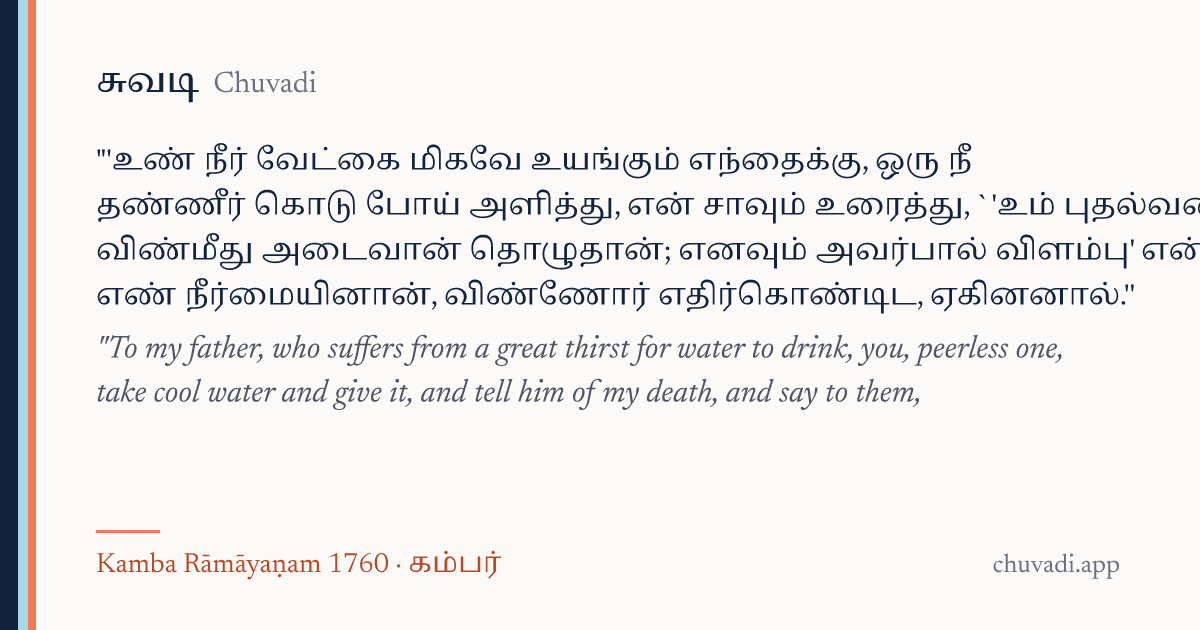
“நீர் உண் வேட்கை மிகவே - நீர் உண்ணுகின்ற விருப்பம் மிகுதலால்; உயங்கும் எந்தைக்கு - வருந்துகின்ற என் தந்தைக்கு; ஒரு நீ- ஒப்பற்ற நீ; தண்ணீர் கொடுபோய் அளித்து - குளிர்ந்த நீரைக் கொண்டுபோய்க் கொடுத்து; என் சாவும் உரைத்து - என் இறப்பையும் அவர்களுக்குத் தெரிவித்து; “உம் புதல்வன் விண்மீது அடைவான் தொழுதான்” எனவும் விளம்பு - உம் மகன் இறந்து சுவர்க்கம் செல்கின்றவன் உம்மை வணங்கினான் என்கின்ற செய்தியையும் அறிவிப்பாயாக; என்று - எனச் சொல்லி; எண் நீர்மையினான் - புகழத்தக்க நற்குண நற் செயல்களால்; விண்ணோர் எதிர்கொண்டிட - தேவர்கள் வரவேற்க; ஏகினன் - (பரலோகத்திற்குச்) சென்றான்.
“எந்தை எனவே தாயும் அடங்கியது. “அவர் என்று பின்வரும் பன்மையும் - உம்” என்ற முன்னிலையும் அதுபற்றி வந்தனவே. செய்த குற்றத்தை நினைத்துக் கசிந்துருகித் துடிக்கும் மனம் உடையவனாயினமை பற்றித் தயரதனை “ஒரு நீ' என்றான் முனிகுமரன். ஆல் ' அசை.
ஆங்கிலம் · English translationAI
Translation
- "To my father, who suffers from a great thirst for water to drink, you, peerless one,
- take cool water and give it, and tell him of my death, and say to them,
- 'Your son, about to reach heaven, bowed to you'"; and saying this,
- he of praiseworthy nature went away, as the gods came to receive him.'
What the poem says
The youth makes a last request: the king should carry the water to his thirsty father, tell them of his death, and say that their son bowed to them as he left for heaven. Then he dies, and the gods come out to welcome him for his virtue.
The commentary notes that 'my father' includes the mother too, and that the boy calls the king 'peerless one' because he could see Tacarataṉ's heart melting with remorse.