



கம்பராமாயணம் 1759 · அயோத்தியா 4.77
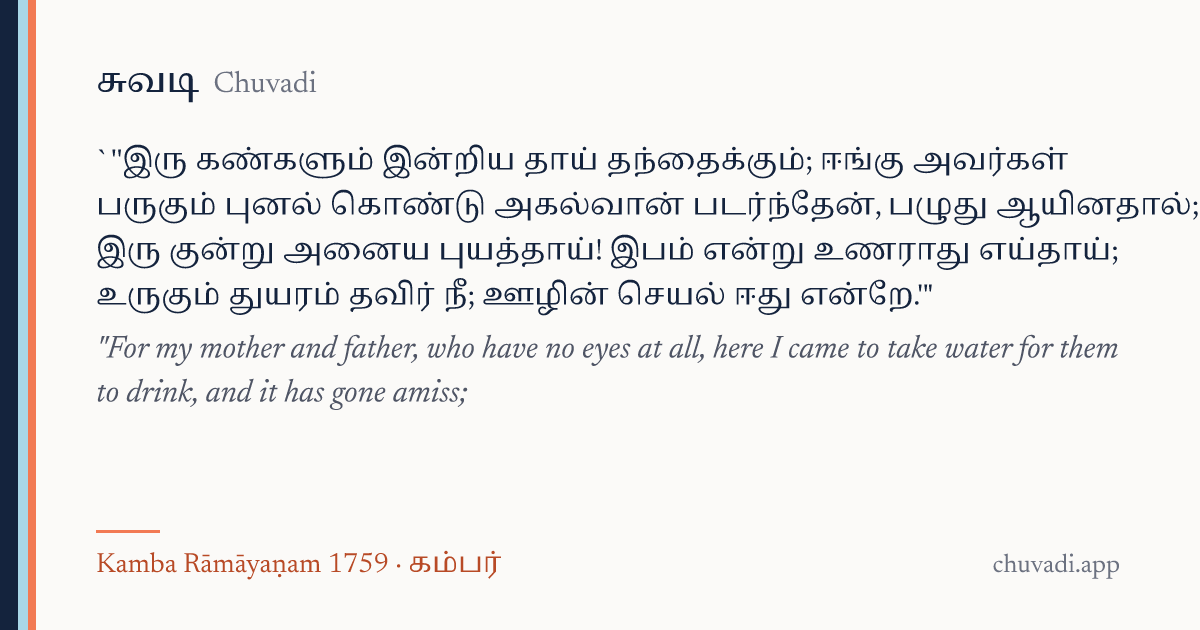
பாடல் · The poem
Tap a word to see its gloss in the commentary and where else it occurs.
பாட வேறுபாடு · Project Madurai reads
பொருள் · Meaning in Tamil
“இரு குன்று அனைய புயத்தாய்! - இரண்டு மலைகளைப் போன்ற தோளை உடையவனே; “ஈங்கு இரு கண்களும் இன்றிய தாய் தந்தைக்கும்- இப்பொழுது இரு கண்களும் இல்லாத தாய் தந்தை இருவர்க்கும்; பருகும் புனல் கொண்டு அகல்வான் படர்ந்தேன் - உண்ணுகின்ற நீரை முகந்து கொண்டு செல்ல வேண்டி வந்தேன்; பழுது ஆயினது - அச்செயல் பழுது ஆய்விட்டது; உணராது - அறியாமல்; இபம் என்று எய்தாய் - யானை என்று கருதி (என்மீது) அம்பு தொடுத்தாய்; ஈது ஊழின் செயல் - இது விதியினது தொழில். (என்று நீ உருகும் துயரம் தவிர்” - நீ மனம் கரைகின்ற துன்பத்தை விடு; என்று- எனச் சொல்லி
“பழுது ஆயினது ' எனக்கு இத்தீமை உண்டாயிற்று எனலும் ஆம். தனக்கு உண்டான தீமை கருதாது பெற்றோர்களுக்கு நீர் கொண்டு போம் செயல் குன்றி விட்டதே என்பதை நினைத்து வருந்துவதாக முனிமகனைக் கூறல் அவனது பண்பை மேலும் சிறப்பிப்பது ஆகும். ஆல்” 'ஏ' அசைகள்.
ஆங்கிலம் · English translationAI
Translation
- "For my mother and father, who have no eyes at all, here
- I came to take water for them to drink, and it has gone amiss;
- you whose shoulders are like twin hills! Not knowing, you shot me, taking me for an elephant;
- put away the grief that melts you; this is the work of fate."
What the poem says
The dying youth explains that he came to fetch drinking water for his blind parents, and his errand has failed. He does not blame the king: Tacarataṉ shot him by mistake, thinking him an elephant, and it was fate.
The commentary admires the boy, who thinks not of his own death but only that his parents will go without water, and who comforts the man who killed him.