



கம்பராமாயணம் 1758 · அயோத்தியா 4.76
பாடல் · The poem
Tap a word to see its gloss in the commentary and where else it occurs.
பாட வேறுபாடு · Project Madurai reads
பொருள் · Meaning in Tamil
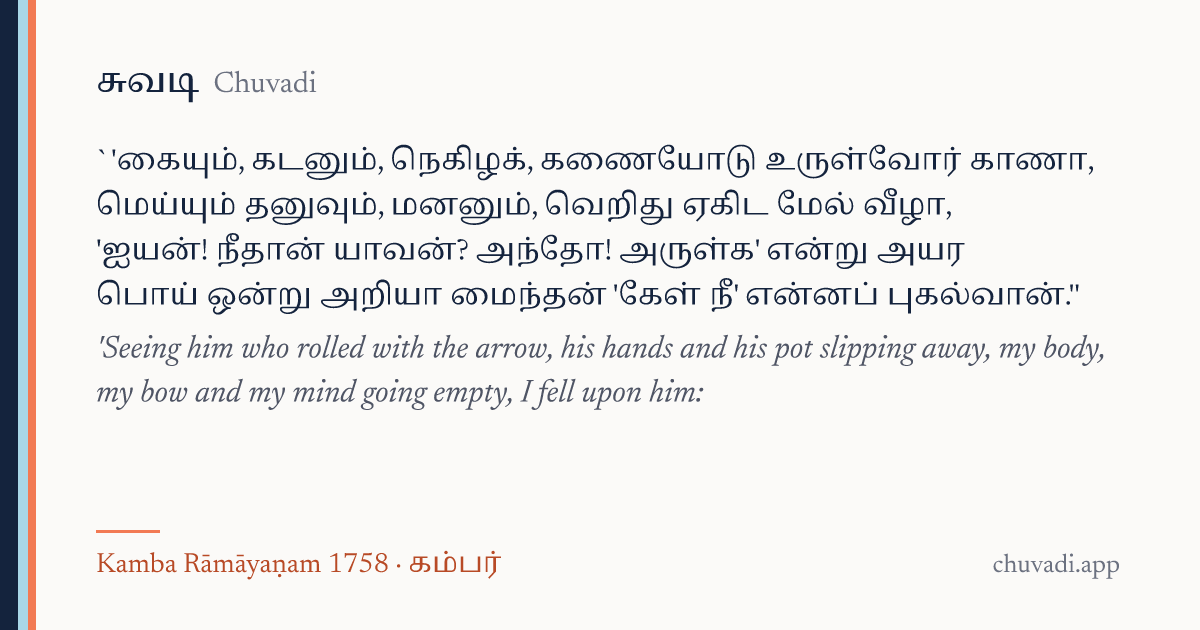
“கையும் கடனும் நெகிழ- கையும் குடமும் நெகிழ்ந்து விலக; கணையோடு உருள்வோன் காணா - அம்போடு தரையில் உருளுகின்ற முனிமகனைக் கண்டு; மெய்யும் தனுவும் மனனும் வெறிது ஏகிட - (என்) உடலும் வில்லும் மனமும் வெறுமையாகிச் செல்ல; மேல் வீழா - மேலே விழுந்து; “அந்தோ!- ஐயோ; ஐய! - ஐயனே; நீதான் யாவன் - நீ யார்; அருள்க” - சொல்வாயாக, ' என்று அயர - என்று கேட்டுச் சோர்வடைய; பொய் ஒன்று அறியா மைந்தன் - சத்திய வாக்கினன் ஆகிய அம் முனி மகன்; “நீ கேள் எனப் புகல்வான் - நீ இதனைக் கேள் என்று தன் வரலாற்றைச் சொல்வானாயினன். '
தான் செய்த தவறால் உள்ளீடற்று மனமும் உடலும் வெறுமையானது என்றானாம். வில் கீழே விழுந்து விட்டதாகலின் வெறுமையானது. கடம் - கடன் போலி; மனன்- மனம்; இதுவும் போலி.
ஆங்கிலம் · English translationAI
Translation
- 'Seeing him who rolled with the arrow, his hands and his pot slipping away,
- my body, my bow and my mind going empty, I fell upon him:
- "Sir! Who are you? Alas! Tell me," I said, fainting;
- and the son who knew no falsehood began to speak: "Hear me."'
What the poem says
Tacarataṉ continues: he found the young man rolling on the ground with the arrow in him, his water pot slipping from his hands. Stunned, the king dropped his bow and fell beside him, asking who he was.
The dying youth, who had never spoken a lie, began to tell him his story. The commentary notes that kaṭaṉ and maṉaṉ are variant forms of kaṭam, pot, and maṉam, mind.