



கம்பராமாயணம் 1757 · அயோத்தியா 4.75
பாடல் · The poem
Tap a word to see its gloss in the commentary and where else it occurs.
பொருள் · Meaning in Tamil
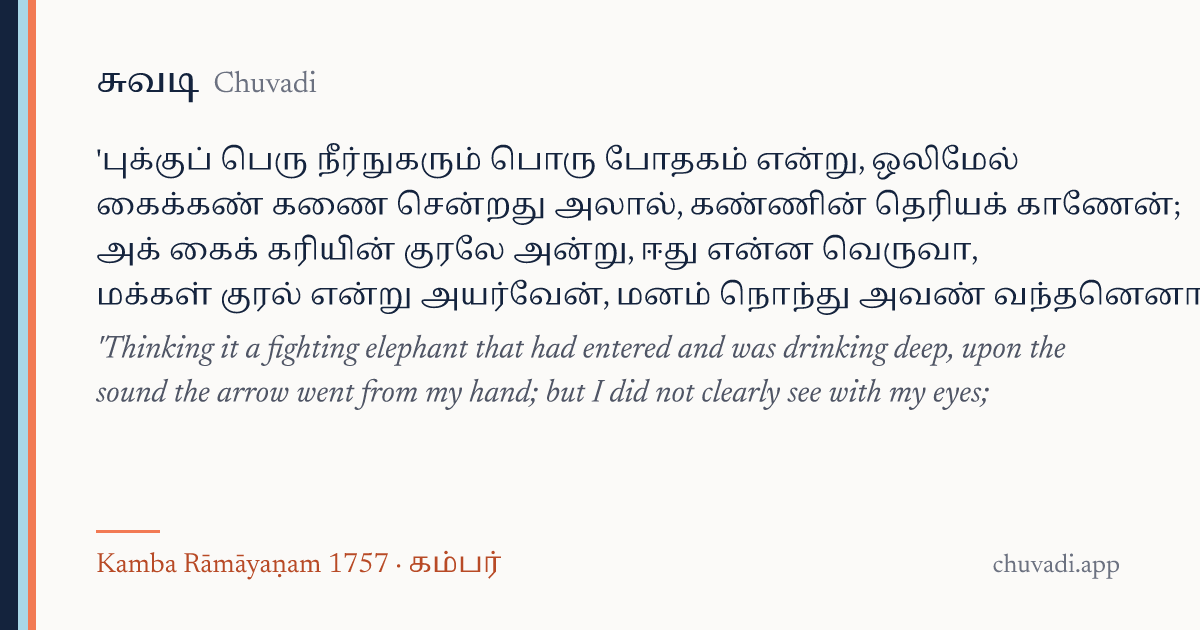
(அது கேட்டு) புக்கு - ஆற்றில் நுழைந்து; பெரு நீர் நுகரும் - மிகுதியான நீரைக் குடிக்கும்; பொரு போதகம் என்று - போரிடும் யானை என்று கருதி (அவ் ஓசைவழியே); கைக்கண் கணை சென்றது அலால் - கையின்கண் இருந்த அம்பு சென்றதே அல்லாமல்; கண்ணின் தெரியக் காணேன் - கண்ணால் நன்கு விளங்கப் பார்க்காத நான்; (அலறும் ஒலி வந்தவுடன்); “ஈது அக் கைக்கரியின் குரல் அன்று” என்ன வெருவா - இது நாம் நினைத்த துதிக்கை உடைய யானையின் ஒலி அன்று என்று கருதிப் பயந்து; “மக்கள் குரல்” என்று அயர்வேன் - மனிதக் குரல் என்று கருதிச் சோர்ந்து; மனம் நொந்து - மனம் வருந்தி; அவண் வந்தனென் - நீர் முகக்கும் துறைக்கு வந்தேன். '
விழுந்து அலறிய போதுதான் மனிதக் குரல் என்று வேறுபாடு அறிந்தேன்.
ஆங்கிலம் · English translationAI
Translation
- 'Thinking it a fighting elephant that had entered and was drinking deep, upon the sound
- the arrow went from my hand; but I did not clearly see with my eyes;
- "This is not the cry of that trunked elephant," I thought in fear,
- "it is a human voice," and fainting, heartsick, I came to that place.'
What the poem says
Tacarataṉ explains that he loosed the arrow at the sound, thinking a great elephant had waded in to drink; he never saw his target.
Only when the cry rose did he realise it was not an elephant but a human being. Frightened and stricken, he ran to the bathing place.