



கம்பராமாயணம் 177 · பால 5.9
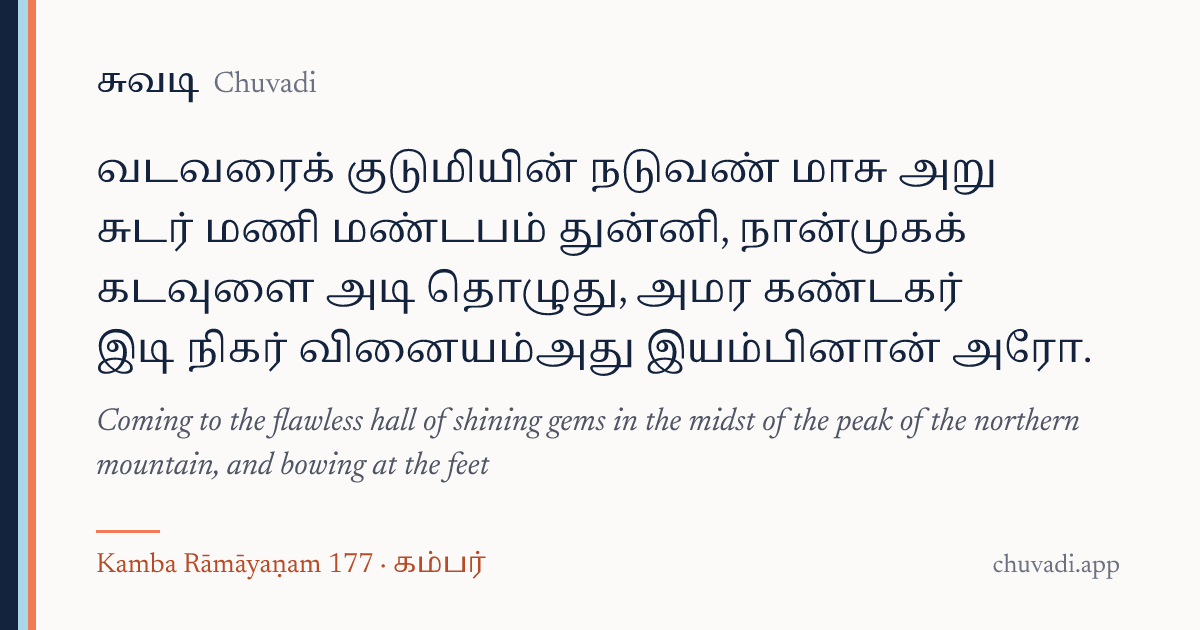
பாடல் · The poem
Tap a word to see its gloss in the commentary and where else it occurs.
பாட வேறுபாடு · Project Madurai reads
பொருள் · Meaning in Tamil
வடவரைக் குடுமியின் நடுவண் - மேருமலையின் சிகரத்தின் மத்தியிலே; மாசு அறு சுடர்மணிமண்டபம் துன்னி - குற்றமற்ற ஒளிமிகுந்த மணிகளாலமைந்த மண்டபத்தை அடைந்து; நான்முகக் கடவுளை அடிதொழுது - (அங்கு வந்து சேர்ந்த) பிரமனை அடிவணங்கி; அமரகண்டகர் - தேவர்களுக்குப் பகைவர்களான அரக்கரது; இடிநிகர் வினையம் அது - இடிபோன்ற அக்கொடும் செயல்களை; இயம்பினான் - சொல்லலானான்.
வடவரை: மேருமலை. தேவர்கள் தன்னைக் காணவருவதை அறிந்த நான்முகன் மேருமலைச் சிகரத்தில் - மணிமண்டபத்தில் வந்து தங்கியிருந்தான். தேவர்கள் உடன்வர, சிவபெருமான் அங்குச் சென்று அரக்கர்தம் கொடுஞ்செயலைக் கூறினார் என்பது கருத்து.
மாசறு சுடர் மணிமண்டபம்: தேவர்கள் கூடி ஆலோசிக்கும் மண்டபம். கண்டகம்: முள். அரக்கர்கள் முள் போன்று துன்பம் விளைவிப்பவர் என்பதால் ‘கண்டகர்’ என்றார். வினை: செயல். ‘அம்’ சாரியை பெற்று ‘வினையம்’ என வந்தது. வரை: இருமடி யாகு பெயராய் மலையைக் குறித்தது. அரோ: அசை.
ஆங்கிலம் · English translationAI
Translation
- Coming to the flawless hall of shining gems
- in the midst of the peak of the northern mountain, and bowing at the feet
- of the four-faced god, he told of the thunderbolt-like deeds
- of those thorns in the side of the gods.
What the poem says
The gods and Śiva reach a hall of jewels on the summit of Mount Meru, the northern mountain at the centre of the world. Brahmā, the four-faced creator, has come there to meet them.
Śiva tells him of the demons' terrible deeds. The demons are called thorns because they torment the gods the way a thorn pricks the flesh.