



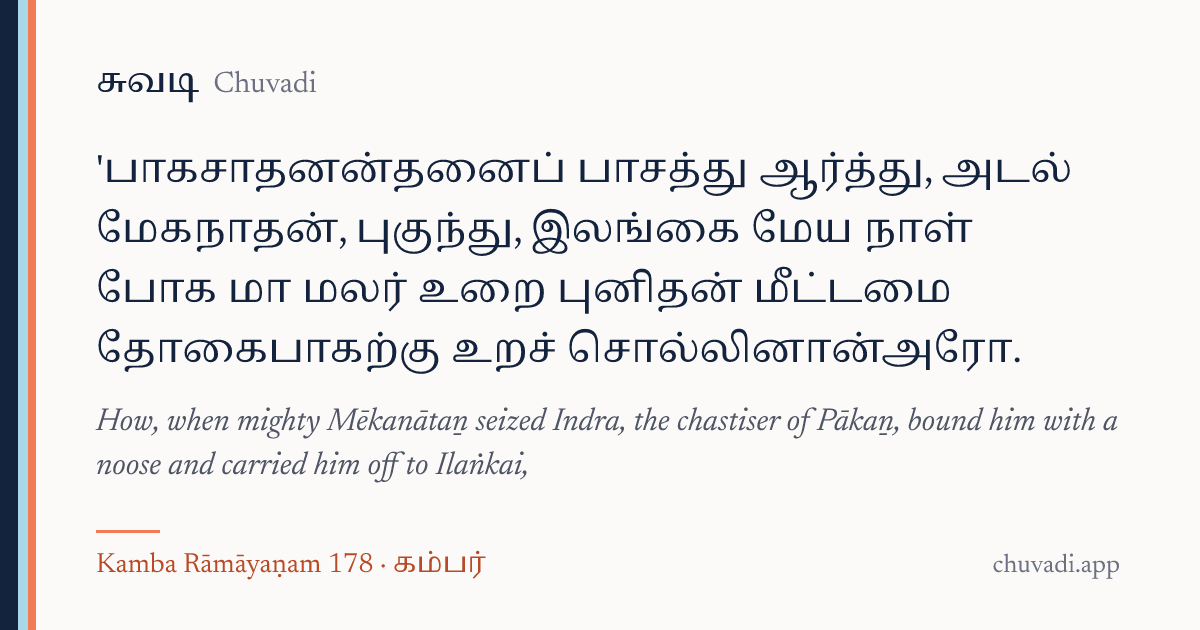
கம்பராமாயணம் 178 · பால 5.10
பாடல் · The poem
Tap a word to see its gloss in the commentary and where else it occurs.
பாட வேறுபாடு · Project Madurai reads
பொருள் · Meaning in Tamil
அடல் மேக நாதன் - (இராவணனது மகனாகிய) வலிமை மிகுந்த மேக நாதன் (இந்திரசித்து) எனுமரக்கன்; புகுந்து பாக சாதனன் தனை - (அமராவதி நகருக்குள்) புகுந்து தேவர்கள் தலைவனான இந்திரனை; பாசத்து ஆர்த்து - கயிற்றால் கட்டி; இலங்கை மேய நாள் - இலங்கைக்குக் கொண்டு போன போது; போக மாமலர் உறை புனிதன் - இன்பம் தரும் அழகிய தாமரையில் வாழும் புனிதனாகிய பிரமன்தான்; மீட்டமை தோகை பாகற்கு உற - அந்த இந்திரனை மீட்டுவந்ததை உமையொருபாகனாகிய சிவபெருமானுக்குப் பொருந்த; சொல்லினான் - எடுத்தியம்பினான்.
பாக சாதனன்: இந்திரன் (புண்ணிய பலன்களை உயிர்கள் பெற உதவுபவன்). மேகநாதன்: பிறந்ததும் மேகத்தைப் போல முழங்கியதால் இப்பெயர் பெற்றான் என்பர். இந்திரனைப் போரில் வென்றபின் பெற்ற சிறப்புப் பெயரே “இந்திரசித்து” என்பது. மேகநாதனிடமிருந்து இந்திரனைத் தான் மீட்டுவந்ததை, நான்முகன், சிவன் முதலானவர்களுக்குச் சொன்னான் என்பது கருத்து.
ஆங்கிலம் · English translationAI
Translation
- How, when mighty Mēkanātaṉ seized Indra,
- the chastiser of Pākaṉ, bound him with a noose and carried him off to Ilaṅkai,
- the holy one who dwells on the great lotus of delight had won him back —
- this he told to the lord who shares his body with the peacock-like Umā.
What the poem says
Brahmā recounts one of the demons' greatest outrages. Mēkanātaṉ, son of Irāvaṇaṉ, invaded heaven, tied up Indra and carried him off to Ilaṅkai. Brahmā himself had to go and secure his release.
He tells this to Śiva, who shares his body with his consort Umā. Mēkanātaṉ is said to have roared like thunder at birth, hence his name 'Cloud-roar'. After this victory he was called Intiracittu, 'Conqueror of Indra'.