



கம்பராமாயணம் 179 · பால 5.11
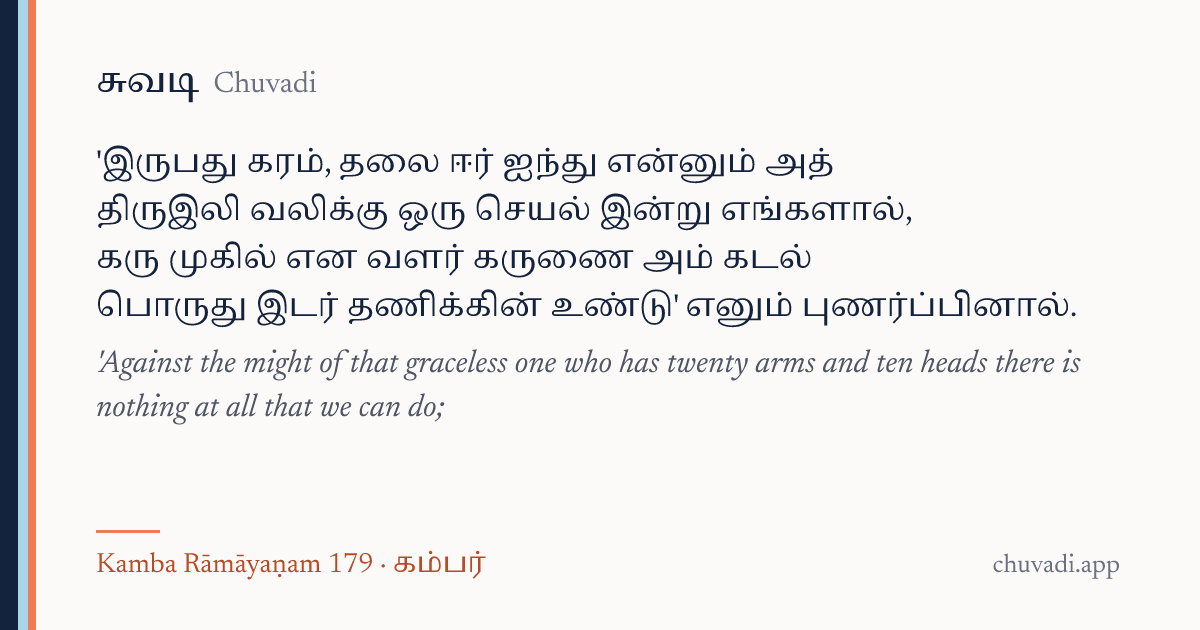
பாடல் · The poem
Tap a word to see its gloss in the commentary and where else it occurs.
பொருள் · Meaning in Tamil
கரம் இருபது தலை ஈரைந்து என்னும் - இருபது கைகளும், பத்துத் தலைகளும் உடையவன் என்று சொல்லப்படும்; அத்திருவிலி வலிக்கு - அந்த அருட் செல்வமில்லாத இராவணனது உரவலிமை, வரவலிமை ஆகிய வல்லமைக்கு; எங்களால் ஒரு செயலின்றி - எங்களால் ஒரு எதிர்ச் செயலும் செய்ய இயலாதவர்களாக இருக்கிறோம்; கருமுகில் என வளர்கருணையங் கடல் - கரிய மேகம் போல (பாற்கடலில்) கண்வளர்கின்ற கருணைக் கடலாகிய திருமால் பொருது; இடர்தணிக்கின் - அவ்வரக்கருடன் போரிட்டு, எங்கள் துன்பத்தைத் தணித்தால்தான்; உண்டு எனும் புணர்ப்பினால் - எங்களுக்கு உய்வுண்டு என்னும் கருத்தினால்.
திருவிலி: செல்வமில்லாதவன். ‘அ’ என்னும் சுட்டால் உய்தற்குக் காரணமாகிய அருட்செல்வத்தை உணர்த்திநின்றது. ஒரு செயல்: சிறு செயலுமாம். ‘ஒரு’ சிறுமையை உணர்த்தும். அருட்செல்வத்தை மிகுதியும் உடைய திருமாலைக் “கருணையங்கடல்” என்றார். கைம்மாறு கருதாது உதவும் தன்மையால் “கருமுகில்” என்று திருமால் போற்றப்படுகிறார். அவர் பொருது - அரக்கரை அழித்தால் நமது துன்பம்தீரும் என்ற கருத்தைத் தேவர் உரைத்தனர் என்பது கருத்து. புணர்ப்பு: தந்திரம் என்ற பொருள் உடையது.
ஆங்கிலம் · English translationAI
Translation
- 'Against the might of that graceless one who has twenty arms and ten heads
- there is nothing at all that we can do;
- only if the ocean of compassion, who lies like a dark cloud,
- fights and ends our distress is there hope' — with this thought in mind,
What the poem says
The gods admit that they are powerless against Irāvaṇaṉ, the ten-headed, twenty-armed demon king. His strength comes both from his own body and from the boons he has won.
Only Viṣṇu, the ocean of compassion who gives freely like a rain cloud, can defeat him. The sentence continues into the next verse.