



கம்பராமாயணம் 1790 · அயோத்தியா 4.108
பாடல் · The poem
Tap a word to see its gloss in the commentary and where else it occurs.
பொருள் · Meaning in Tamil
“பெற்றுடைய மண் அவளுக்கு ஈந்து - (வரத்தால்) பெற்றுத் தனக்குச் சொந்தமாகிக்கொண்ட இராச்சியத்தைக் கைகேயிக்குக் கொடுத்து; பிறந்து - (மூத்தவனாகப்) பிறந்து; உலகம் முற்றுடைய கோவை - உலகம் முழுதும் தனக்கு உரியதாகப் பெற்ற இராமனை; பிரியாது - பிரிந்து நகரத்தில் வாழாது; யாரும் மொய்த்து ஈண்டி உற்று உறைதும் - எல்லாரும் நெருங்கிச் சென்று (அவனுடைய) தங்கி வசிப்போம்; உறையவே - (அவ்வாறு நாம் எல்லாம் சென்று தங்கி) வசிக்கவே; புற்று உடைய காடு எல்லாம் நாடு ஆகிப் போம்' - பாம்புப் புற்றுகளை உடைய காடுகள் மக்கள் வசிக்கும் நாடாகிவிடும்; ' என்பார்.
'பெற்றுடைய மண்: “பிறந்துடைய மண்” என்பது அழகிய வாசகம். மக்கள் சென்று உறையக் காடு நாடாகும் என்பதால், இராமனின்றிக் கைகேயி பெற்றுடைய மண்ணை ஆளும் பொழுது மக்கள் இல்லாத நாடு காடாகிவிடும் என்றாராம். இராமன் சென்ற காடும் நாடாம், கைகேயி ஆளும் நாடும் காடாகும் ஆதலின் இராமனுக்குக் கைகேயி அளித்த காட்டை நாம் அவளுக்கு அவள் இருக்கிற நகரத்திலேயே உண்டாக்ககிவிடுவோம் என்பதும் நகர மாந்தர் குறிப்பாகக் கொண்டு நயம் காணலாம்.
ஆங்கிலம் · English translationAI
Translation
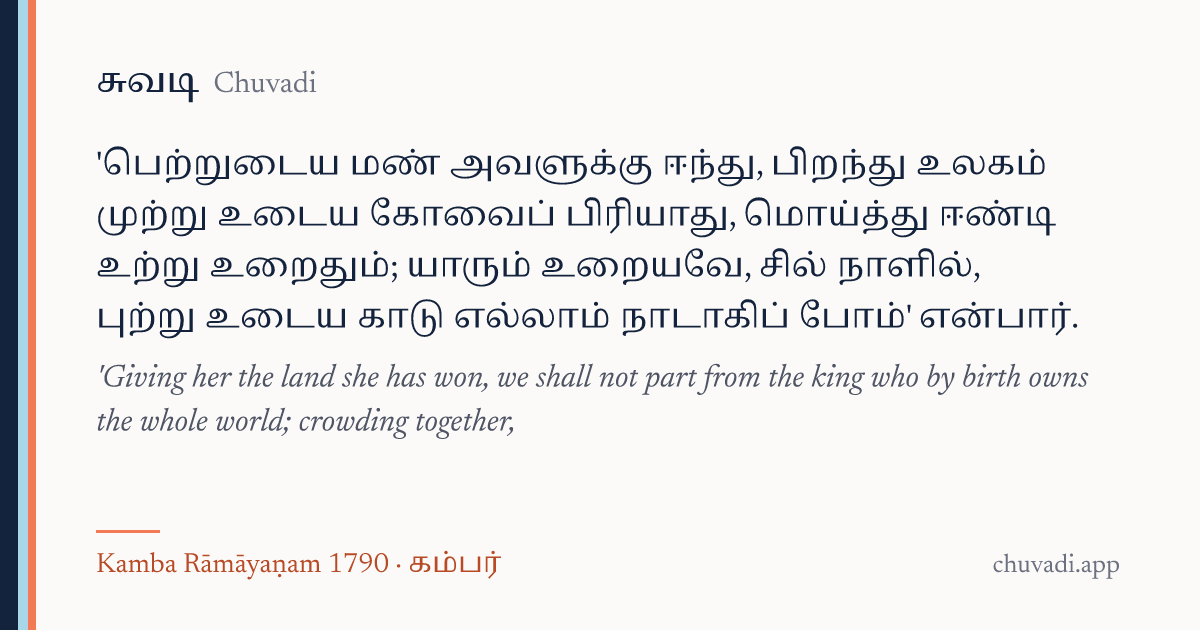
- 'Giving her the land she has won, we shall not part from the king
- who by birth owns the whole world; crowding together,
- we will go and dwell there; and as everyone dwells there, in a few days
- all the forest of anthills will become a country,' some said.
What the poem says
Some citizens propose leaving the kingdom Kaikēyi has won to her and following Irāmaṉ, who by birth is rightful lord of the whole world.
If everyone goes and lives with him, the wild forest full of snake-holes will soon become a settled land, and Ayōttī, empty of people, will turn into a wilderness. As the commentary puts it, they would give Kaikēyi back the forest she gave Irāmaṉ, right in her own city.