



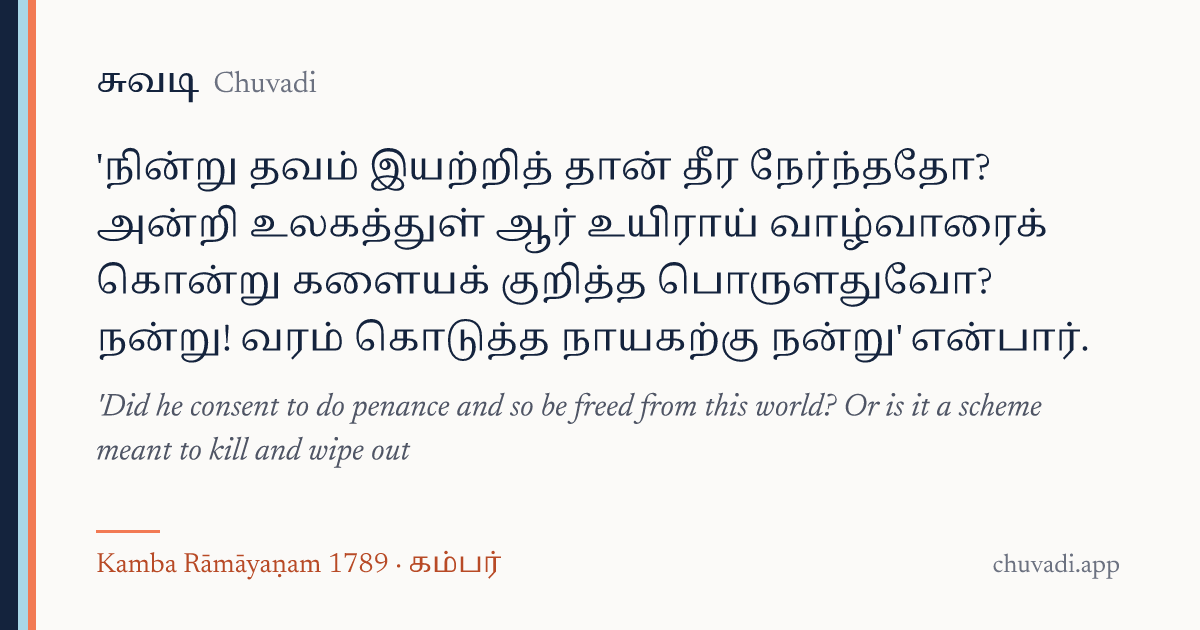
கம்பராமாயணம் 1789 · அயோத்தியா 4.107
பாடல் · The poem
Tap a word to see its gloss in the commentary and where else it occurs.
பொருள் · Meaning in Tamil
“தான் - சக்கரவர்த்தி; தவம் இயற்றி - (காடு சென்று) தவம் செய்து; தீர நேர்ந்ததோ? - இவ்வுலகினின்று விடுதலை பெற உடன் பட்டதோ; அன்றி - அதுவல்லாமல்; உலகத்துள் - இப்பூமியின்கண்; ஆர் உயிர் ஆய் - அரிய உயிரோடு கூடி; வாழ்வாரை - வாழ்கின்ற மக்களையெல்லாம்; கொன்று களையக் குறித்த பொருளதுவோ? - கொன்று அடியோடு அழிக்க மனத்தில் கருதிய காரியமோ; நன்று! - நன்றாயிருந்தது; வரம் கொடுத்த நாயகற்கு - வரம் கொடுத்த தயரதனுக்கு; நன்று! - வரம் கொடுத்த செயல் மிக நன்றாயிருந்தது; ' என்பார் -.
நன்று நன்று என்பது இகழ்ச்சிக் குறிப்பு. இவ்வரத்தால் இராமன் காடு செல்லின் மக்கள் இறந்துபடுவர் என்பது அரசன் அறியாததன்று. அறிந்தே மக்களைக் கொன்று தீர்க்க வரம் கொடுத்தானோ எனப் புலம்பினர். 'உலகத்துள்ளார் உயிராய் வாழ்வார் இராமனை உயிராகக் கொண்டு வாழ்பவர் ஆகிய உலகினரை' எனினும் ஆம்.
ஆங்கிலம் · English translationAI
Translation
- 'Did he consent to do penance and so be freed from this world?
- Or is it a scheme meant to kill and wipe out
- those who live in the world with precious life?
- Fine! Fine indeed for the husband who gave the boon!' some said.
What the poem says
The people speak with bitter irony of Tacarataṉ. Did he grant the boon so that he could go off to do penance and be free of the world? Or did he mean to kill everyone who lives, knowing that Irāmaṉ's exile would be the death of his subjects?
'Fine, fine' is mockery. The phrase about precious life can also mean the people who live with Irāmaṉ as their very life.